TL;DR
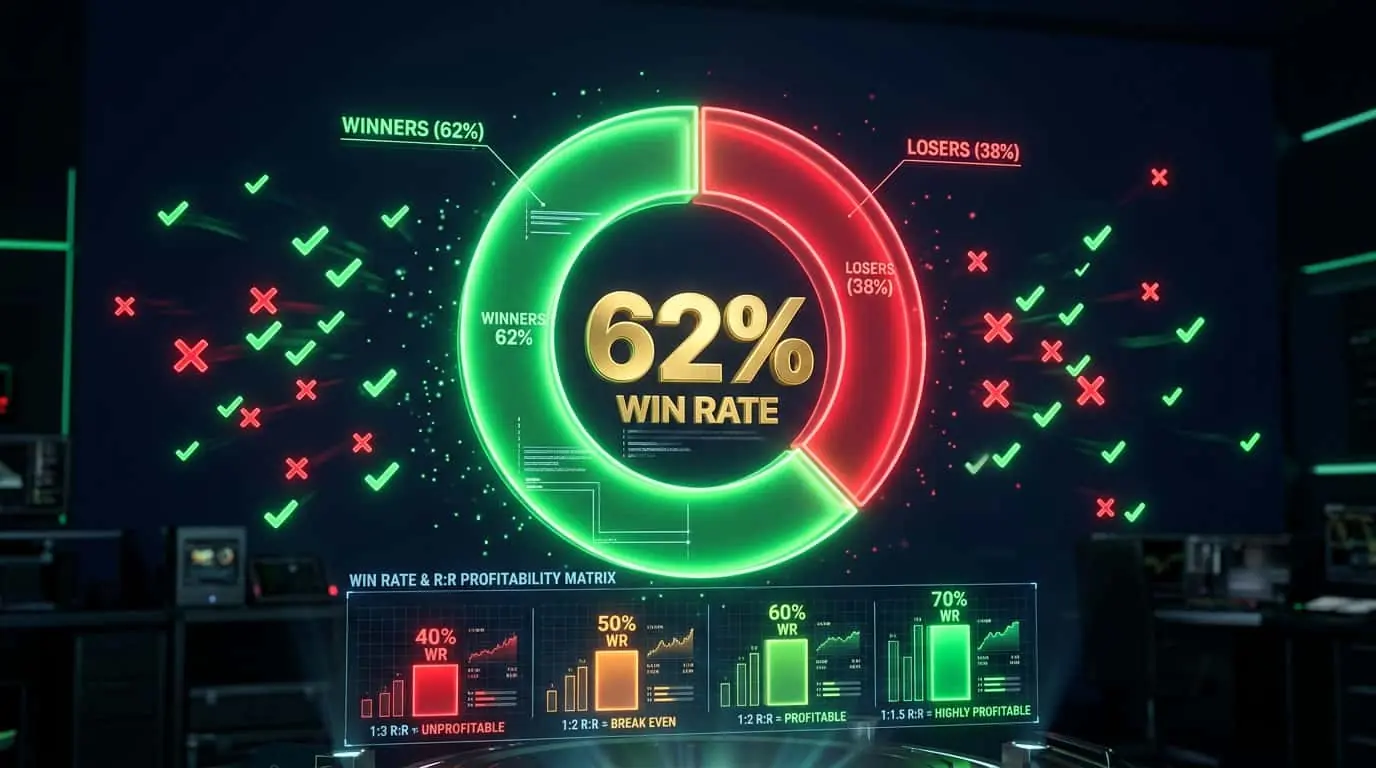
Win rate is the percentage of trades that result in a profit. However, win rate alone does not determine profitability. A 40% win rate with large winners can be more profitable than a 70% win rate with small winners. Win rate must always be evaluated alongside risk-reward ratio.
Win rate is the percentage of trades that result in a profit out of the total number of trades taken. It is calculated by dividing the number of winning trades by the total number of trades and multiplying by 100. Win rate is one of the most commonly cited performance metrics, but it is also one of the most misunderstood. A high win rate does not guarantee profitability, and a low win rate does not mean a strategy is unprofitable. The critical insight that separates professional traders from amateurs is understanding that win rate is only meaningful when evaluated alongside the risk-reward ratio. A strategy with a 90% win rate can lose money if the average loss is many times larger than the average win. Conversely, a strategy with a 30% win rate can be highly profitable if the average win is many times larger than the average loss.
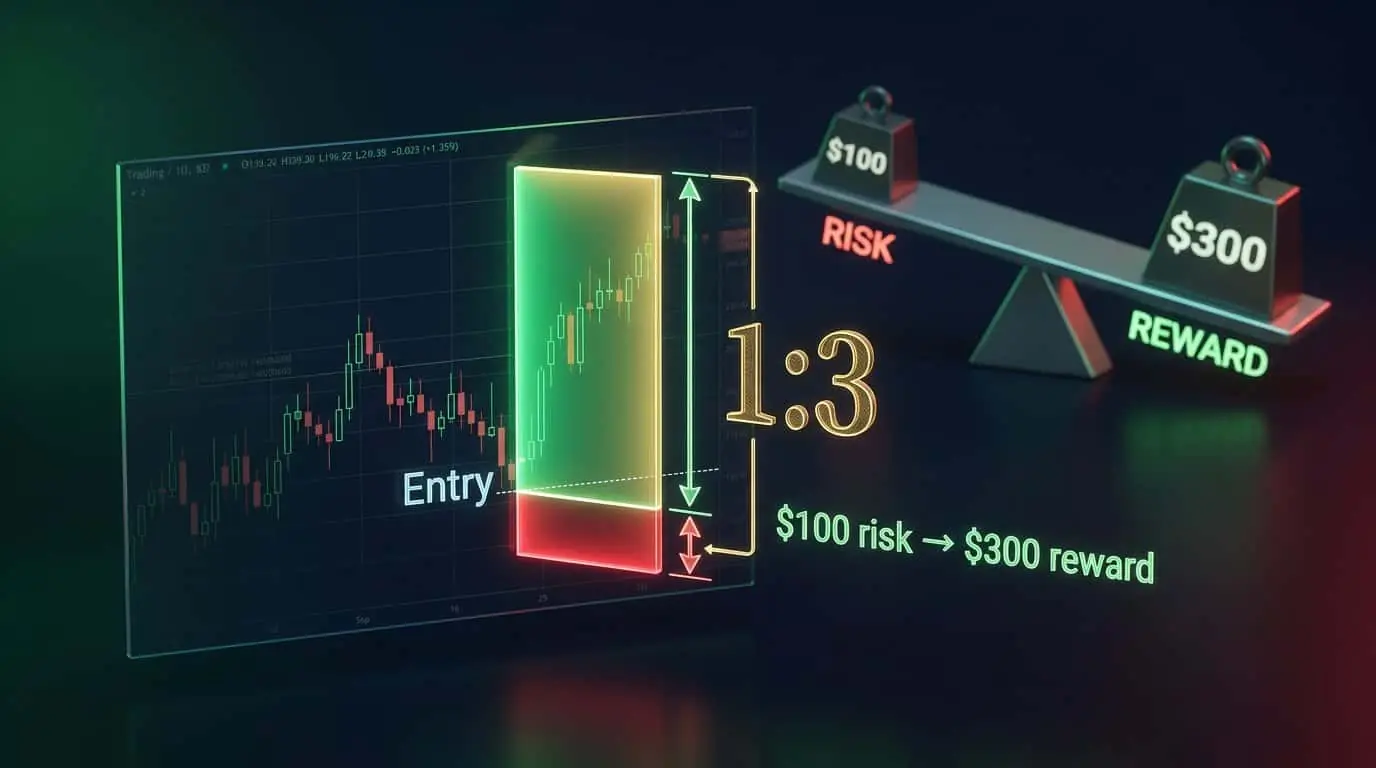
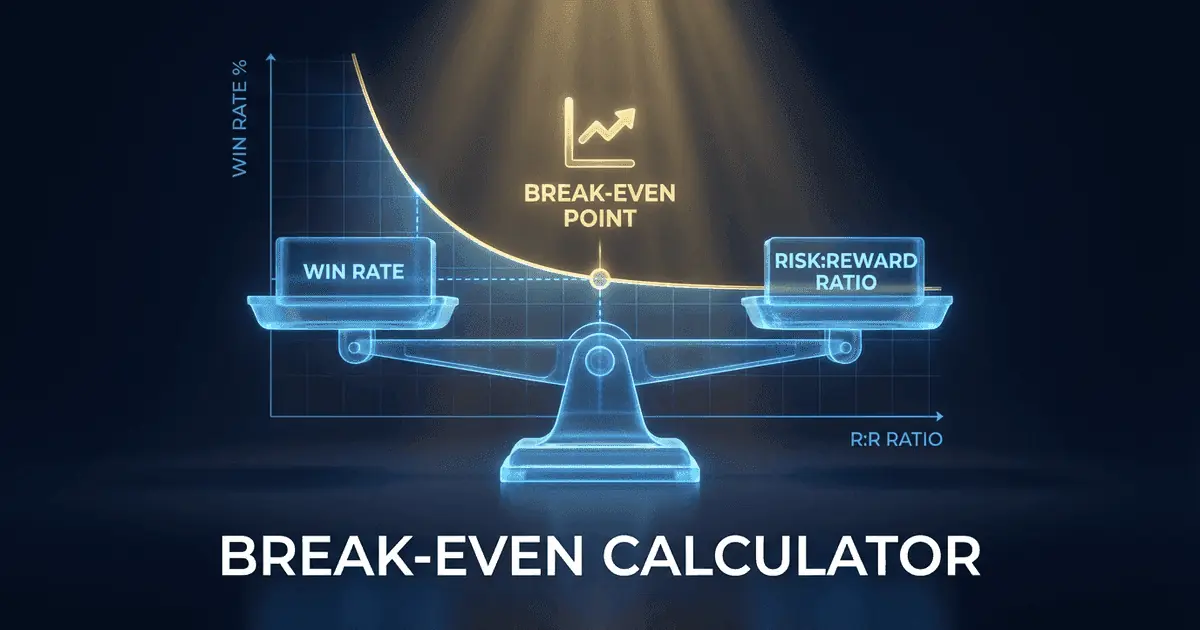
Win rate calculation is simple: divide winners by total trades and multiply by 100. But the more useful calculation is the break-even win rate, which tells you the minimum win rate needed for profitability given your risk-reward ratio. The formula is: Break-Even Win Rate = 1 / (1 + R:R). At a 1:1 R:R, you need more than 50% wins to be profitable. At a 1:2 R:R, you only need 33.3%. At 1:3, just 25%. This formula reveals why trading styles with higher R:R ratios can afford lower win rates. It also explains why scalpers need high win rates (since their R:R is typically near 1:1) while trend followers can be profitable with win rates as low as 25-35%.
Win Rate = (Winning Trades / Total Trades) x 100Winning Trades — Number of trades closed with a profit
Total Trades — Total number of completed trades
| Risk:Reward Ratio | Break-Even Win Rate | Common Strategy Type |
|---|---|---|
| 1:0.5 | 66.7% | Scalping (tight targets) |
| 1:1 | 50.0% | Scalping, mean reversion |
| 1:1.5 | 40.0% | Day trading |
| 1:2 | 33.3% | Swing trading |
| 1:3 | 25.0% | Trend following |
| 1:5 | 16.7% | Position trading |
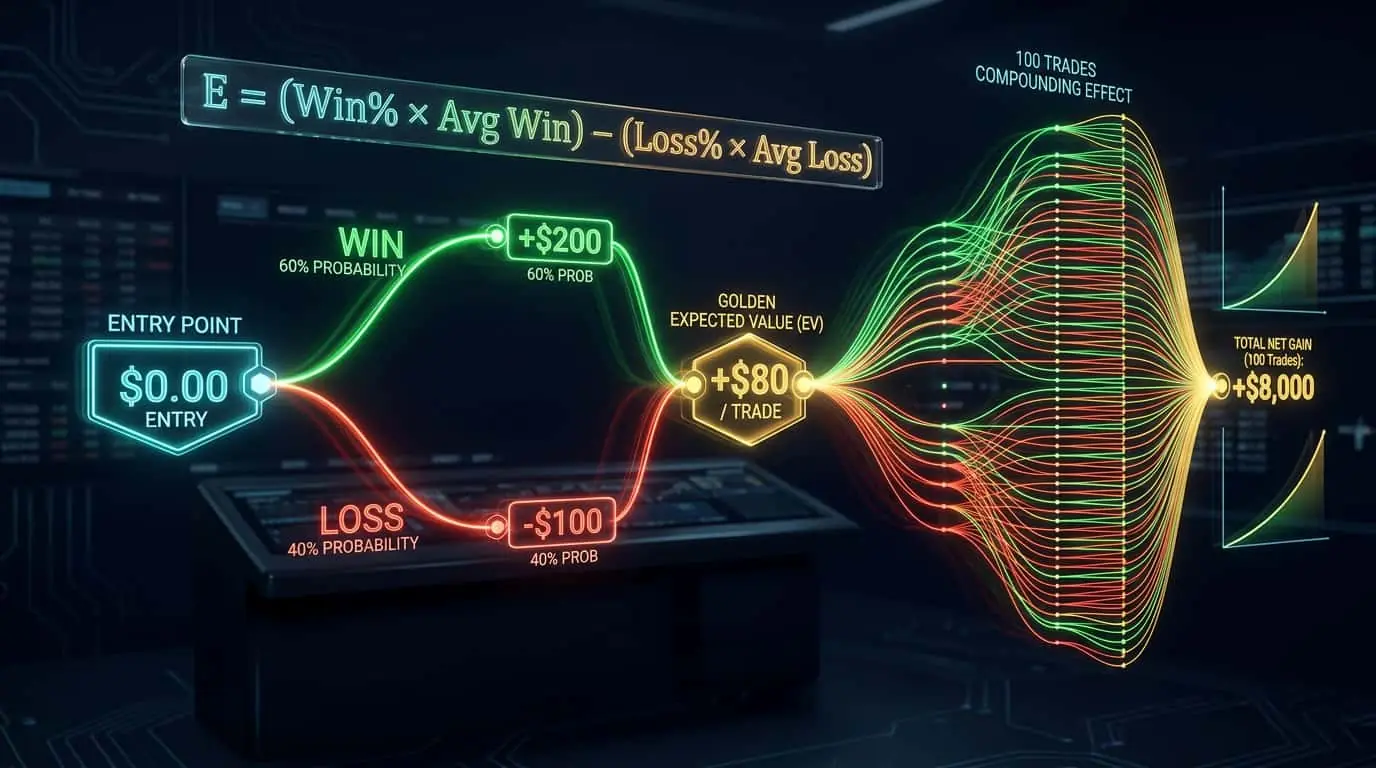
The relationship between win rate and profitability is counterintuitive for most beginners. Consider two traders: Trader A has a 70% win rate with an average win of $100 and average loss of $300. Their expected value per trade is (0.70 x $100) - (0.30 x $300) = $70 - $90 = -$20 per trade. Despite winning 70% of the time, Trader A loses money. Trader B has a 40% win rate with an average win of $500 and average loss of $150. Their expected value is (0.40 x $500) - (0.60 x $150) = $200 - $90 = $110 per trade. Trader B is far more profitable despite losing 60% of their trades. This example illustrates why win rate worship is one of the most dangerous mindsets in trading. What matters is the expected value per trade (expectancy), which combines win rate and the average sizes of wins and losses.
Pro Tip
Stop chasing a high win rate. Focus instead on your expectancy (average profit per trade). A 45% win rate with a 1:2 R:R produces an expectancy of 0.35R per trade, which is far more valuable than a 65% win rate with a 1:0.5 R:R (expectancy of -0.025R per trade, which is actually losing money).
Different trading styles naturally produce different win rates, and understanding this helps set realistic expectations. Scalpers and high-frequency traders typically achieve 55-75% win rates because they use tight targets and accept smaller wins. Day traders usually fall in the 45-60% range, balancing win frequency with reward size. Swing traders often see 40-55% win rates because they hold through more volatility in pursuit of larger moves. Trend followers typically have 25-40% win rates because they endure frequent small losses while waiting for large trend moves that produce outsized returns. Mean reversion strategies can achieve 60-75% win rates because price tends to revert to the mean more often than it trends. The key takeaway is that no single win rate is inherently good or bad. The right win rate depends on your trading style and the corresponding risk-reward ratio.
| Trading Style | Typical Win Rate | Typical R:R | Why It Works |
|---|---|---|---|
| Scalping | 55-75% | 1:0.5 to 1:1.5 | Many small wins offset rare large losses |
| Day Trading | 45-60% | 1:1.5 to 1:2.5 | Balanced frequency and reward size |
| Swing Trading | 40-55% | 1:2 to 1:4 | Larger wins compensate for lower frequency |
| Trend Following | 25-40% | 1:3 to 1:10+ | Rare massive winners offset frequent small losses |
| Mean Reversion | 60-75% | 1:0.5 to 1:1.5 | Price reverts more often than it trends |
Improving win rate without reducing your risk-reward ratio requires better trade selection, not tighter targets. Adding confluence to your entry criteria (multiple confirming signals) increases win rate by filtering out weaker setups. Trading in the direction of the higher timeframe trend improves win rate because you are aligned with the dominant market direction. Avoiding trades during high-impact news events removes a source of random, unpredictable outcomes. Using time filters (trading only during high-liquidity sessions) can improve win rate by ensuring your trades are executed in more orderly markets. However, there is always a trade-off: stricter filters increase win rate but reduce the number of trades you take, which means fewer opportunities to profit. The optimal balance maximizes total profit (expectancy x number of trades) rather than win rate alone.
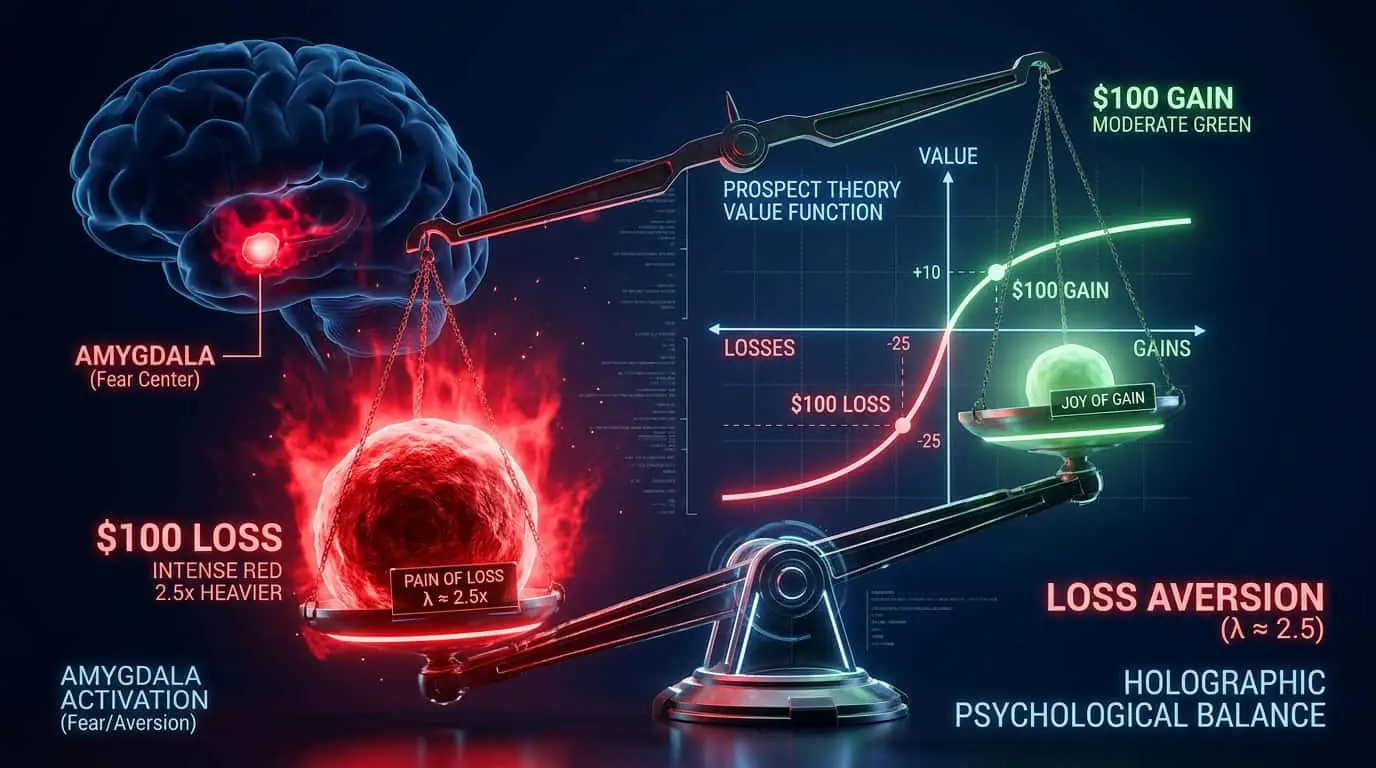
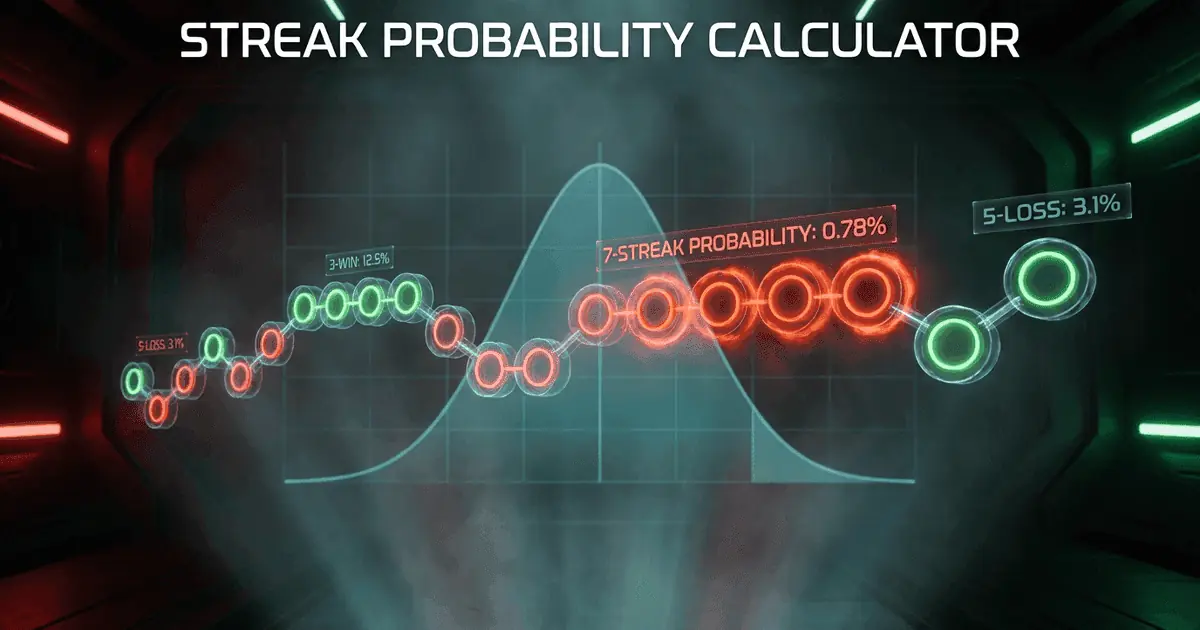
Win rate has a profound psychological impact on traders that often overrides rational decision-making. Human beings are wired to dislike losing, and a strategy with a 35% win rate means experiencing two losses for every win — a pattern that feels emotionally painful even when the strategy is highly profitable. This psychological tension explains why most beginners gravitate toward high win rate strategies: the frequent wins provide a dopamine reward that reinforces trading behavior. However, this emotional preference can be financially destructive when it leads to strategies with poor risk-reward ratios. Consider a real-world example: a trader using a trend-following strategy with a 30% win rate and 1:4 R:R has an expectancy of (0.30 x 4) - (0.70 x 1) = 0.50R per trade. Over 100 trades risking $200 each, the expected profit is $10,000. But the trader will experience losing streaks of 8-12 trades regularly, which can last two to three weeks. During those streaks, the trader may abandon the strategy because it 'feels broken,' even though it is performing exactly within statistical expectations. The solution is to pre-calculate the expected losing streaks using probability theory. For a 30% win rate, the probability of 10 consecutive losses is 0.70^10 = 2.8%, which means over 1,000 trades, a 10-loss streak is virtually guaranteed to occur approximately 28 times. Knowing this in advance transforms the experience from 'something is wrong' to 'this is expected.' Professional traders manage the psychology of win rate by focusing on process rather than outcomes, journaling every trade to verify adherence to rules, and reviewing performance over 50-100 trade blocks rather than reacting to individual results. Building this mental framework is as important as having a positive-expectancy strategy.
Pro Tip
Before trading a low win rate strategy, simulate 500 trades in a spreadsheet using your win rate and R:R. See the losing streaks visually. When they happen in real trading, you will recognize them as normal rather than panicking.
Accurately tracking and interpreting your win rate requires understanding basic statistics. A common mistake is reacting to short-term win rate fluctuations as if they indicate a strategy change. In reality, win rate naturally varies over small samples due to random chance, and traders must distinguish between normal variance and genuine edge deterioration. The concept of confidence intervals helps frame this problem. For a strategy with a true 50% win rate, over 30 trades the observed win rate could range from 33% to 67% purely due to chance (95% confidence interval). Over 100 trades, the range narrows to approximately 40%-60%. Over 500 trades, it tightens to 46%-54%. This means a trader who measures win rate over only 30 trades and sees 40% might incorrectly conclude the strategy is underperforming when the true win rate has not changed at all. To track win rate effectively, maintain a rolling 100-trade window and plot it on a chart over time. This rolling win rate should fluctuate within a predictable band around the long-term average. If it drops below two standard deviations for a sustained period (more than 50 trades), the strategy's edge may genuinely be degrading. A practical formula for the expected standard deviation of win rate is: SD = sqrt(WR x (1 - WR) / N), where WR is the win rate as a decimal and N is the number of trades. For a 50% win rate over 100 trades: SD = sqrt(0.50 x 0.50 / 100) = 0.05 or 5%. So you would expect the observed win rate to be between 40% and 60% about 95% of the time. Only if it consistently falls outside this range should you investigate further.
Win Rate Standard Deviation = sqrt(WR x (1 - WR) / N)WR — Win rate as a decimal (e.g., 0.50 for 50%)
N — Number of trades in the sample
| Sample Size (N) | 95% Confidence Range (50% WR) | Interpretation |
|---|---|---|
| 30 trades | 33% - 67% | Very wide, unreliable for decisions |
| 50 trades | 36% - 64% | Still too wide for confident assessment |
| 100 trades | 40% - 60% | Reasonable estimate, moderate confidence |
| 200 trades | 43% - 57% | Good reliability for strategy evaluation |
| 500 trades | 46% - 54% | High confidence, true performance visible |
Pro Tip
Never change your strategy based on fewer than 100 trades of data. Short-term win rate fluctuations are almost always noise. Track your rolling 100-trade win rate and only investigate if it falls more than two standard deviations below your historical average for a sustained period.
Mistake
Chasing a high win rate by using very tight take profits
Correction
Tight take profits increase win rate but destroy R:R. A 80% win rate at 1:0.3 R:R has negative expectancy. Ensure your take profit is at least 1.5x your stop loss distance for most strategies.
Mistake
Abandoning a strategy because the win rate dropped temporarily
Correction
Win rate fluctuates naturally over short periods. A true 50% win rate strategy can easily produce 35% over 30 trades. Evaluate win rate over 100+ trades before making strategy changes.