
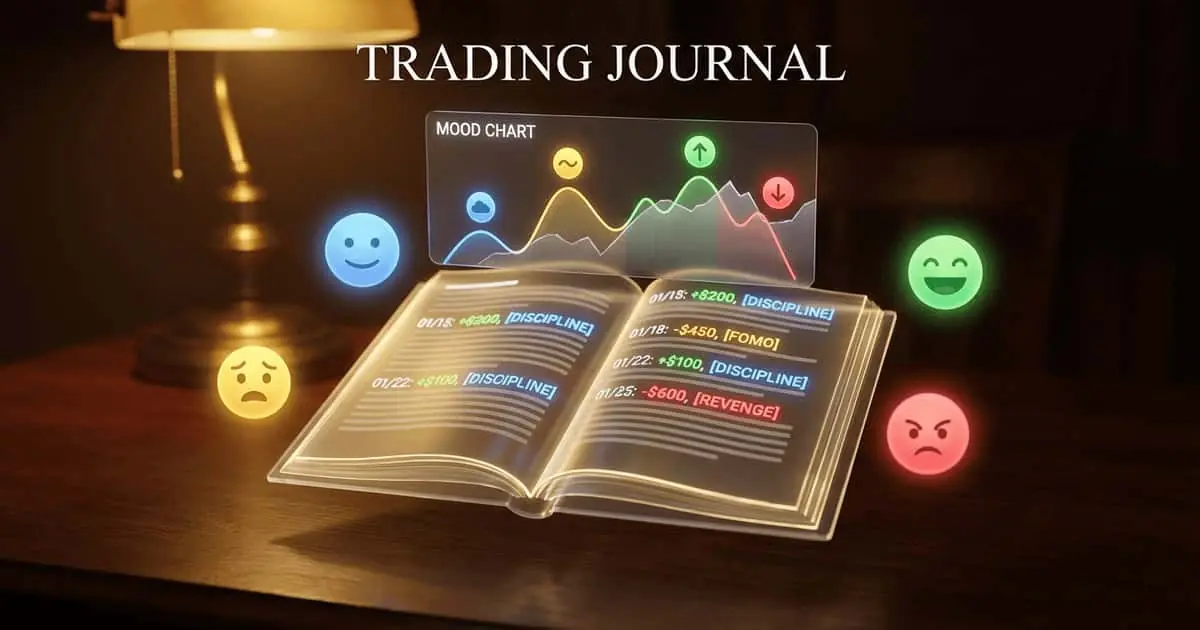
Document every trade, analyze your psychological patterns, and turn your data into an edge. Your memory lies. Your journal never does.
| Date | Instrument | Direction | Setup | Psychology | Plan | PnL ($) | Actions |
|---|---|---|---|---|---|---|---|
| Your journal is empty. Click "New Trade" to get started. | |||||||
The human brain is a machine built for forgetting and rationalizing. After a loss, it will tell you: "It wasn't my fault, it was the market." After a lucky win, it will tell you: "I'm a genius." Both are lies.
Neuroscience studies have demonstrated that we all suffer from selective memory bias. We remember our wins with precision, but our losses become fuzzy, "not that bad," or outright attributed to external factors. This phenomenon is called the self-serving bias, and it silently destroys thousands of trading accounts every year.
A trading journal is a ruthless mirror. It doesn't lie. It shows you the raw truth of your decisions, your emotions, and their financial consequences. Keeping a journal isn't optional for a serious trader -- it's a professional obligation.
The idea of documenting trades is not new. The earliest trading journals date back to the early 1900s, when Jesse Livermore, one of the greatest speculators of all time, meticulously kept notebooks of his operations. In his memoirs ("Reminiscences of a Stock Operator", 1923), he explains how analyzing his past mistakes helped him understand his destructive patterns.
Livermore made and lost several fortunes throughout his career. But every time he bounced back, it was thanks to the analysis of his journals. He had identified that his catastrophic losses always followed the same pattern: a series of wins made him overconfident, he abandoned his rules, and the market punished him.
More recently, trading psychologist Brett Steenbarger (author of "The Psychology of Trading" and coach for hedge funds) systematized the approach. In his research, he demonstrated that traders who keep a journal improve their performance by 20 to 30% on average, simply because they become aware of their unconscious patterns.
Mark Douglas, in "Trading in the Zone", goes even further: he argues that the journal is the fundamental tool for shifting from a gambler's mindset to a probabilistic mindset. Without objective data on your trades, you're just playing roulette in a trader's suit.
Your success or failure depends on your ability to recognize and control these five destructive psychological states. The greatest edge you can develop isn't technical -- it's psychological.
The ideal state. You waited for your setup, followed your entry rules, placed your stop correctly, and you accept the outcome whatever it may be. Whether you win or lose, it was a "good" trade because you executed your plan.
"Fear Of Missing Out" -- the fear of missing the move. You see price taking off without you, and you chase in recklessly, often at the worst possible moment. FOMO makes you buy the tops and sell the bottoms. It's the number one enemy of beginners.
The most efficient account killer. After a loss, you feel the irresistible urge to "get your money back." You take an impulsive trade, often with a larger position size. Statistically, revenge trades have a catastrophic success rate.
The market is consolidating, nothing is happening, but you've been staring at your screens for 3 hours. So you "invent" a setup. "That looks like a pattern," you tell yourself. This is the boredom trade, and it's almost always a loser.
Paradoxically, winning can be as dangerous as losing. After a series of wins, you feel invincible. You increase your size, you take marginal trades, you get sloppy. Euphoria often precedes the worst drawdowns.
This journal lets you track these 5 states. After 50 trades, filter by emotion and look at the statistics. You'll probably discover that 80% of your losses come from just 20% of your trades: the impulsive ones.
The "I followed my plan" checkbox may be the most important data point in this journal. Here's why: a trade can be a winner but bad, and a trade can be a loser but good.
If you followed all your rules and lost, it was a good trade. Losses are part of the game. On the other hand, if you won while breaking your rules, it was a bad trade, because it reinforces behavior that will cost you dearly in the long run.
Compare your win rate on "Discipline" trades vs the rest. If the difference is greater than 15%, you have an emotional control problem that's costing you money. This journal automatically calculates this metric for you.
The Profit Factor (Total Wins / Total Losses) is the king of metrics. A PF above 1.5 indicates a robust strategy. Between 1 and 1.5, it's fragile. Below 1, you're losing money. Aim for a PF of 2+ to be comfortable.
Compare the total PnL of trades where you followed your plan vs those where you didn't. If the "plan broken" trades are negative, you have mathematical proof that discipline pays.
Export your data and analyze it by day of the week and by time slot. You might discover that you consistently lose on Friday afternoons or during the New York open. These patterns are gold.
The "Setup" field lets you categorize your trades. After 100 trades, you'll know exactly which setups are profitable and which ones to drop. Double down on what works, eliminate the rest.
Your average win should be greater than your average loss. If it's not, you have a trade management problem: you're cutting winners too early and/or letting losers run too long.
Every Sunday, re-read the notes from all your trades that week. You'll see recurring patterns: "I moved my stop," "I didn't wait for confirmation," "I felt rushed." These observations are worth their weight in gold for your development.
Jake, 28, had been trading for 2 years. After blowing 3 prop firm accounts, he decided to keep a journal for 3 months. Here's what he discovered:
The revelation: Out of his 150 trades, 72 were impulsive (FOMO, Revenge, Boredom). Those 72 trades accounted for -$4,200 in losses. His 78 disciplined trades had generated +$3,800.
The simple math: If he had ONLY taken his disciplined trades, he would have had a profitable account at +$3,800 instead of a -$400 drawdown.
The action: Jake implemented a strict rule: after every loss, he closes his screens for at least 1 hour. He never trades when he feels FOMO anymore -- he waits for the next clean setup. Result: he passed his next FTMO challenge on the first try.
Not tomorrow, not tonight. Right after closing the trade, while the emotions are still fresh.
Nobody reads this journal but you. If it was FOMO, write FOMO. Lying to your journal is lying to yourself.
A picture is worth a thousand words. Note the market context, your analysis, your zones.
How did you feel BEFORE taking the trade? Tired? Stressed? Confident?
Write down the dollar amount risked. It forces you to be aware of what's at stake.
Block 1 hour every Sunday to review your weekly journal and extract insights.
After 50 trades, patterns emerge. That's where the magic happens.
A disciplined trade that loses deserves a green check. You did your job.
In poker, a 'tell' gives away your hand. In trading, identify the signals that precede your impulsive trades.
Even after a winning streak, keep journaling. Euphoria is just as dangerous as despair.
You have strict drawdown rules. Your priority is risk management, not absolute performance.
You take 10-50 trades per day. Journaling efficiency is critical -- you don't have 10 minutes per trade.
You take 2-5 trades per week. You have the luxury of time for an in-depth analysis of each trade.
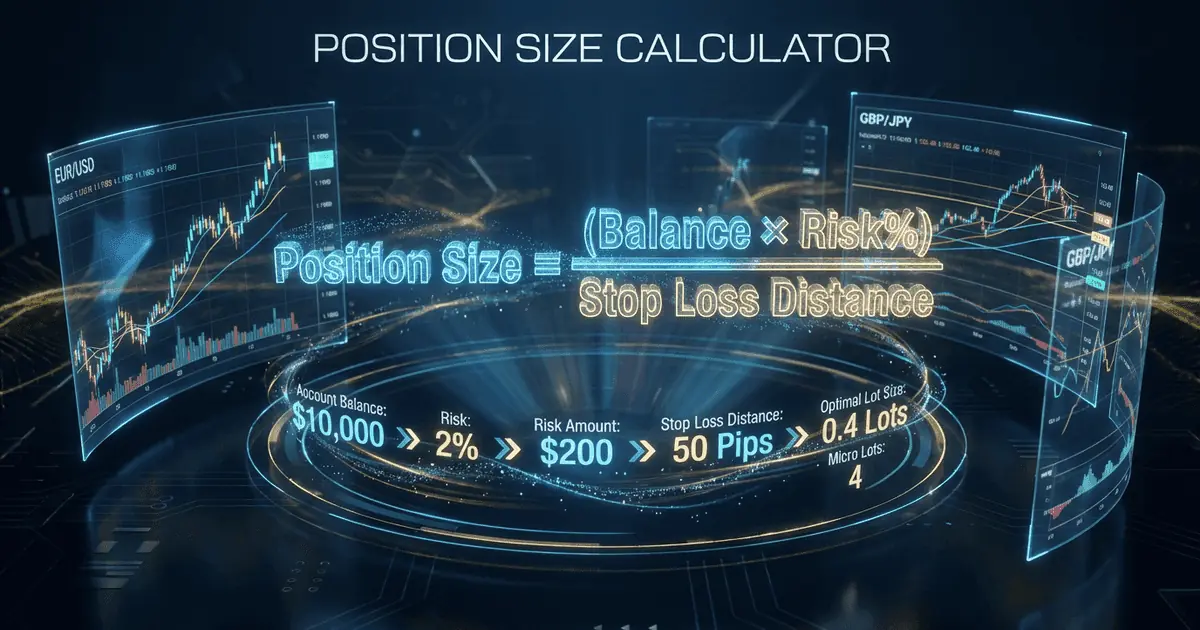
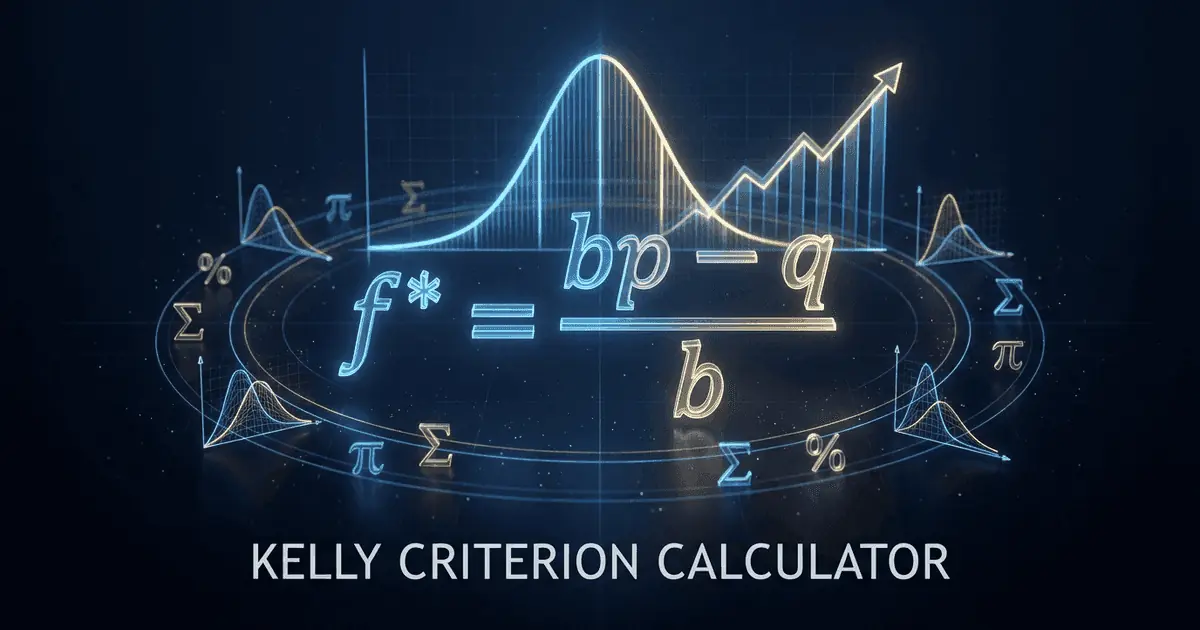
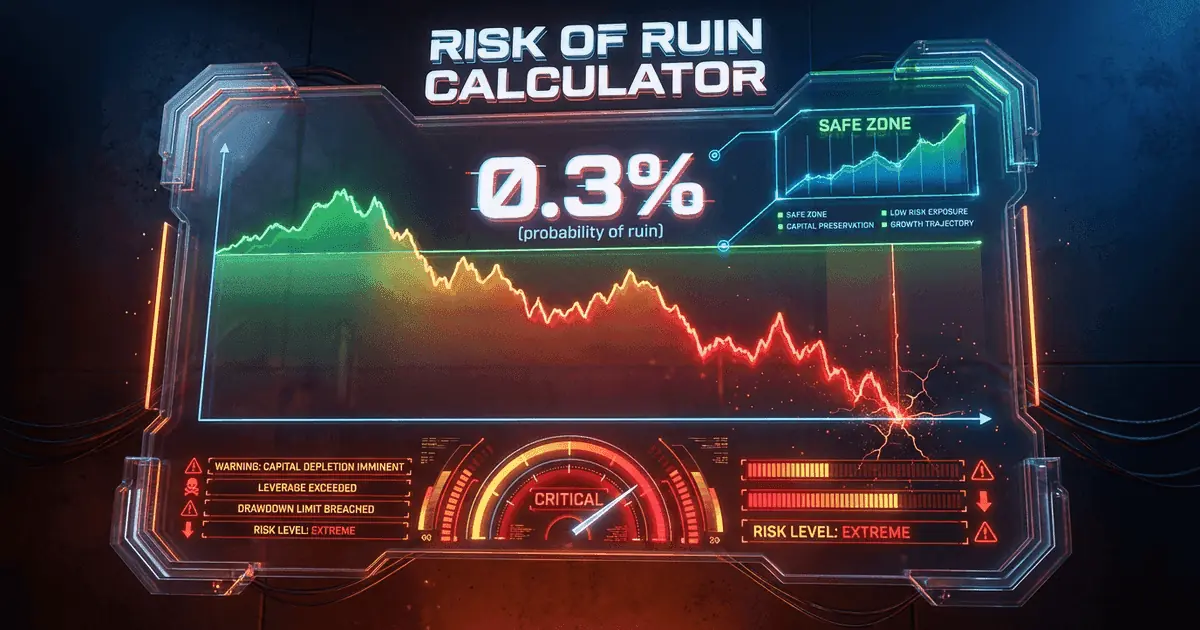


Successful traders are not those who never make mistakes. They are those who learn from their mistakes. And to learn, you must first document.
Start today. Document every trade. In 3 months, you'll have a gold mine of data about yourself. In 6 months, you'll be a transformed trader.
Discover our premium NinjaTrader 8 indicators — precision-coded tools that do the heavy lifting for you.
Browse IndicatorsLoading reviews...
Loading reviews