TL;DR
Backtesting tests a trading strategy against historical data to evaluate how it would have performed. It is essential for validating a strategy before risking real money. However, backtests can be misleading due to curve-fitting, unrealistic assumptions, and overly optimistic fills.
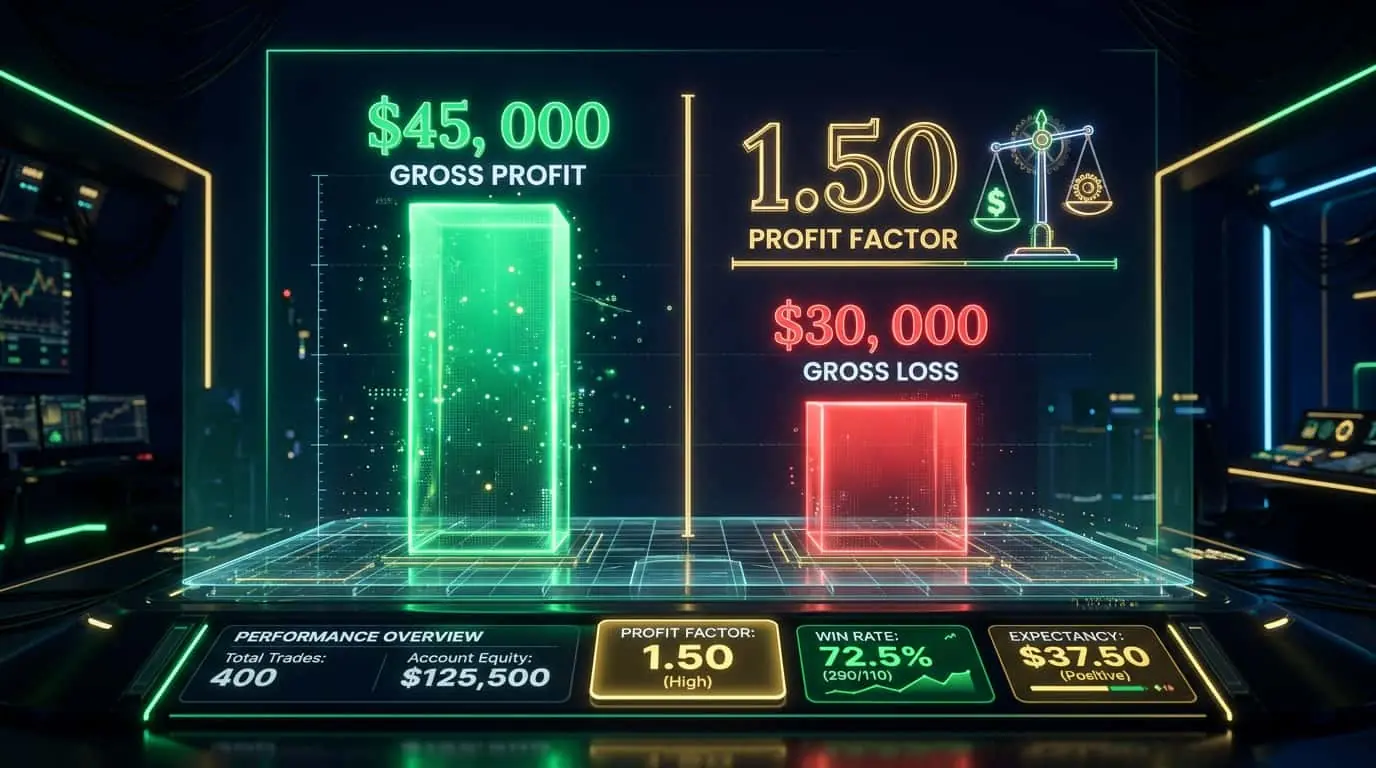
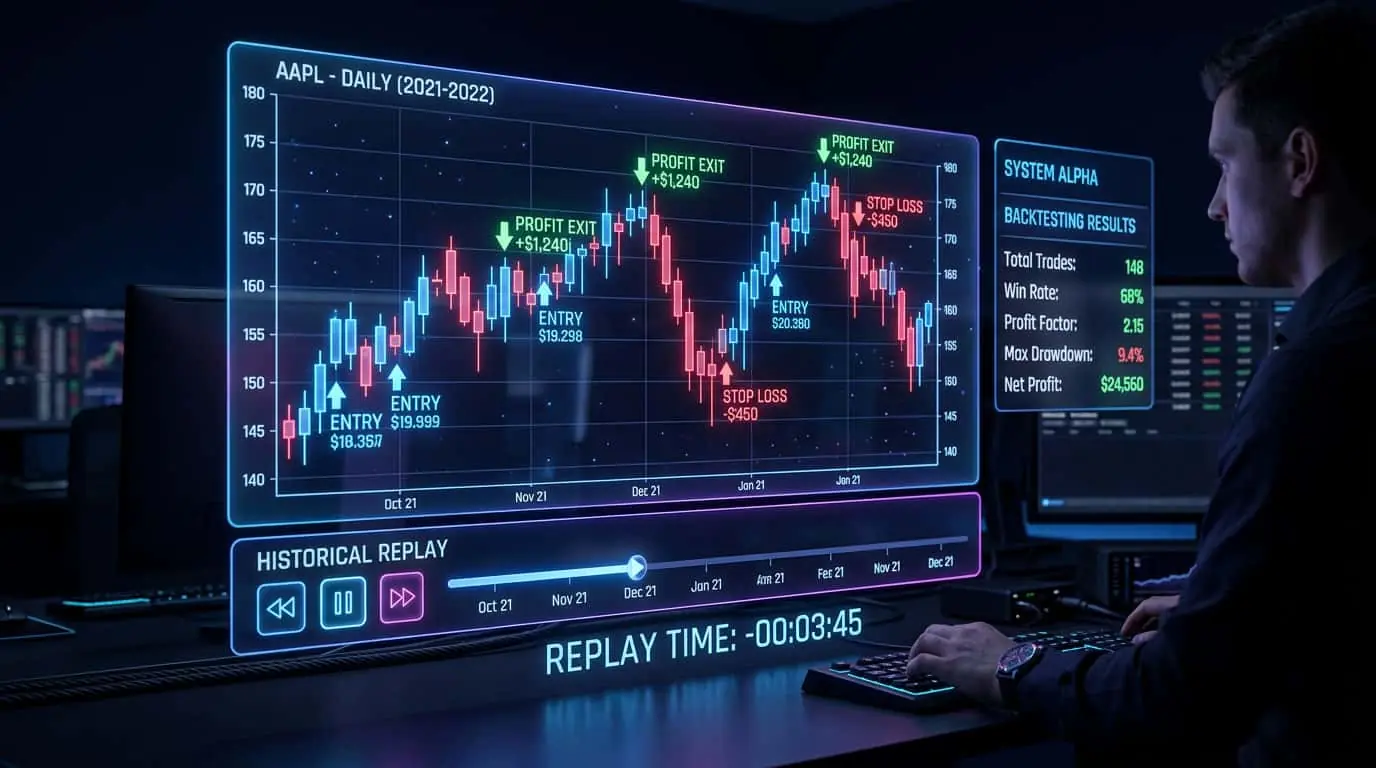
Backtesting is the process of testing a trading strategy against historical market data to evaluate how it would have performed in the past. It applies the strategy's rules (entries, exits, position sizing) to past price data to generate performance statistics such as profit factor, win rate, maximum drawdown, and total return. Backtesting is essential for strategy validation because it provides empirical evidence of whether a strategy has a statistical edge. Without backtesting, traders are essentially gambling based on untested assumptions. A properly conducted backtest reveals the expected performance characteristics of a strategy, including its risk profile, expected drawdowns, and sensitivity to different market conditions. However, backtesting has significant limitations: past performance does not guarantee future results, and poorly conducted backtests can create dangerous false confidence.
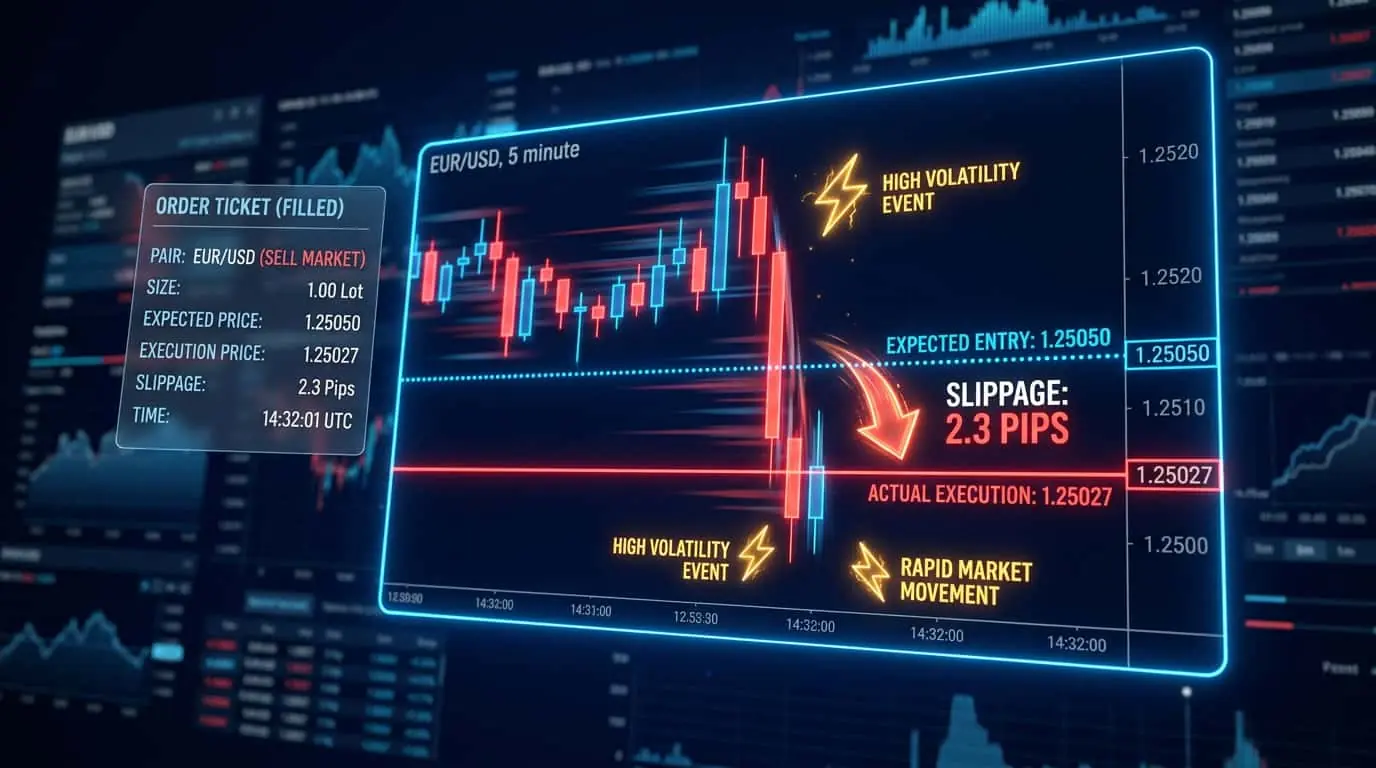
A proper backtest follows a rigorous process. First, define strict, unambiguous entry and exit rules before looking at any data. The rules must be mechanical enough that two different people would produce the same trades. Second, split your historical data into two parts: an in-sample period (for developing and optimizing the strategy) and an out-of-sample period (for validating it). Never optimize on data you will use for validation. Third, use realistic assumptions for slippage (at least 1 tick per side for futures, 0.5-1 pip for forex), commissions, and spreads. Fourth, ensure sufficient sample size: at least 100 trades, preferably 200+. Fifth, test across multiple market conditions (trending, ranging, high volatility, low volatility) to ensure robustness. Sixth, record all metrics and examine the equity curve for consistency rather than just the final profit number.
| Backtest Step | What to Do | Why It Matters |
|---|---|---|
| Define rules | Write mechanical entry/exit rules before viewing data | Prevents hindsight bias |
| Split data | Use 70% in-sample, 30% out-of-sample | Prevents curve-fitting |
| Add costs | Include commissions, slippage, spread | Makes results realistic |
| Check sample size | Require 100+ trades minimum | Ensures statistical significance |
| Test conditions | Run across trending, ranging, volatile, and quiet periods | Verifies robustness |
| Analyze results | Examine equity curve, drawdowns, and consistency | Reveals risk profile |
The most dangerous pitfall in backtesting is curve-fitting (also called overfitting or data-mining bias). Curve-fitting occurs when a strategy is optimized to fit historical data so closely that it captures noise rather than genuine market patterns. A curve-fit strategy produces impressive backtest results but fails in live trading because the noise patterns do not repeat. Signs of curve-fitting include: unusually high profit factors (above 3.0), a large number of optimizable parameters (more than 3-5), dramatically different results with small parameter changes, and poor out-of-sample performance. Look-ahead bias occurs when the strategy uses information that would not have been available at the time of the trade (e.g., using the daily close price to make a decision at market open). Survivorship bias is another pitfall: backtesting only on stocks that still exist today excludes those that went bankrupt, inflating results.
Pro Tip
The best defense against curve-fitting is simplicity. Strategies with 2-3 parameters are far more likely to be robust than those with 10+. If your strategy requires precise parameter values to be profitable, it is almost certainly curve-fit.
Walk-forward analysis (WFA) is the gold standard for validating backtested strategies. It addresses the curve-fitting problem by iteratively optimizing on a rolling in-sample window and testing on the subsequent out-of-sample window. The process works as follows: optimize the strategy on months 1-12, test on months 13-15. Then optimize on months 4-15, test on months 16-18. Continue this rolling process through the entire dataset. The out-of-sample results (stitched together) represent the true expected performance because each test period uses parameters that were optimized on data the strategy had never seen. If the walk-forward results are significantly worse than the in-sample results, the strategy is likely curve-fit. A walk-forward efficiency ratio (out-of-sample profit / in-sample profit) above 0.5 suggests the strategy has genuine predictive power.
Pro Tip
NinjaTrader's Strategy Analyzer includes built-in walk-forward optimization. Use it with a minimum of 3 out-of-sample segments and a walk-forward efficiency target of 0.5 or higher to validate strategy robustness.
The transition from backtesting to live trading should be gradual and methodical. After a successful backtest and walk-forward analysis, the next step is paper trading (simulation) for at least 1-3 months to verify that the strategy performs as expected in real-time market conditions. Paper trading reveals issues that backtesting cannot: execution delays, partial fills, emotional reactions to real-time uncertainty, and the impact of trading during actual market hours. After paper trading confirms the strategy's viability, begin live trading with reduced position sizes (e.g., 50% of normal size or micro lots) for another 1-3 months. Only after this validation period should you trade at full size. Throughout this process, compare live results to backtest expectations. If live performance falls within one standard deviation of backtest results (accounting for the expected 20-30% degradation), the strategy is performing as expected.
Choosing the right backtesting platform significantly impacts the quality and reliability of your results. NinjaTrader's Strategy Analyzer is one of the most powerful backtesting tools for futures traders, offering tick-by-tick replay, built-in walk-forward optimization, Monte Carlo analysis, and detailed performance reports including equity curves, trade distributions, and dozens of performance metrics. It supports NinjaScript (C#-based) strategy development, allowing precise control over entry and exit logic. MetaTrader 4 and 5 offer built-in strategy testers with varying quality: MT5's multi-threaded tester is significantly faster than MT4's single-threaded version. However, both platforms have limitations with tick data accuracy and handling of complex order types. Python-based backtesting using libraries like Backtrader, Zipline, or vectorbt offers maximum flexibility and transparency. Python allows custom data handling, complex statistical analysis, and integration with machine learning models. The disadvantage is that it requires programming skills and careful implementation to avoid look-ahead bias and other coding errors. TradingView's Pine Script strategy tester is popular for its accessibility but has significant limitations: it runs on bar-close data only (not tick-by-tick), cannot simulate realistic slippage or partial fills, and has limited ability to model complex position sizing. For serious strategy development, use a platform that supports tick-by-tick data replay, realistic fill simulation, and proper handling of market gaps and limit order queuing. The choice of platform should match your market, programming ability, and the complexity of the strategies you intend to test.
| Platform | Best For | Data Quality | Programming Language | Key Limitation |
|---|---|---|---|---|
| NinjaTrader | Futures, forex | Tick-by-tick | NinjaScript (C#) | Steeper learning curve |
| MetaTrader 5 | Forex, CFDs | Tick approximation | MQL5 | Limited custom analysis |
| Python (Backtrader) | All markets | Custom data | Python | Requires coding skills |
| TradingView | Quick prototyping | Bar-close only | Pine Script | No tick-level accuracy |
| QuantConnect | Multi-asset | Tick-by-tick | Python / C# | Cloud-based, latency |
Pro Tip
Always verify your backtesting platform's fill assumptions. Some platforms assume fills at the exact limit price, which is unrealistic. In reality, limit orders require price to trade through your level (not just touch it) for a reliable fill. Adjust fill logic to be conservative.
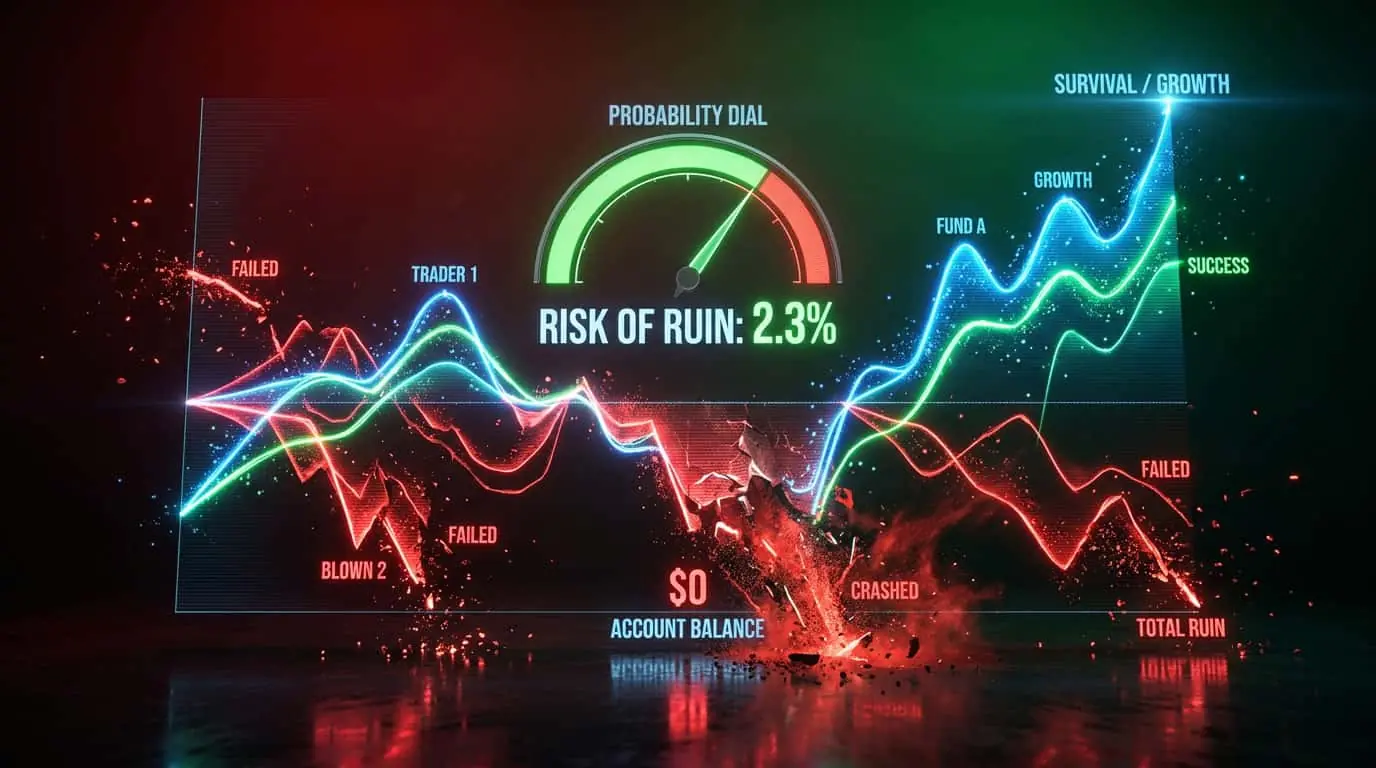
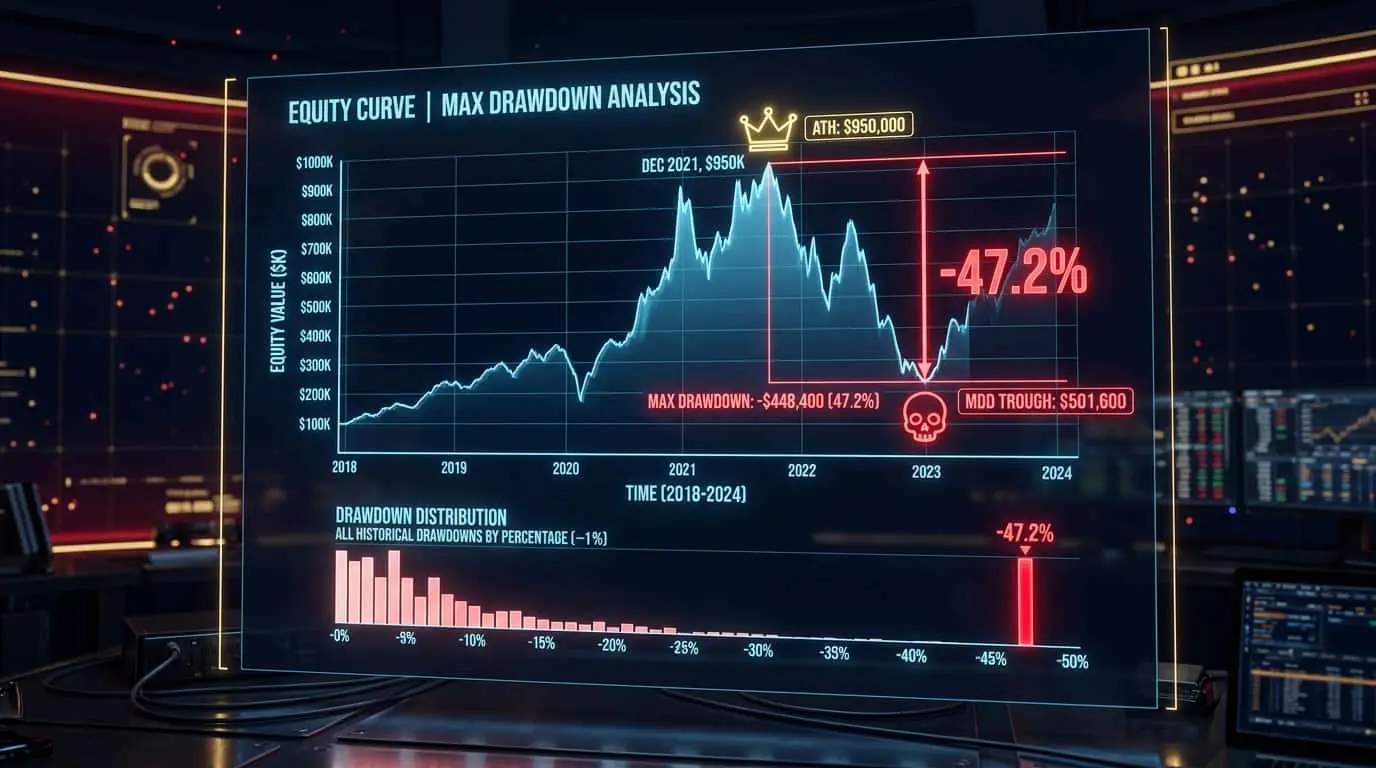
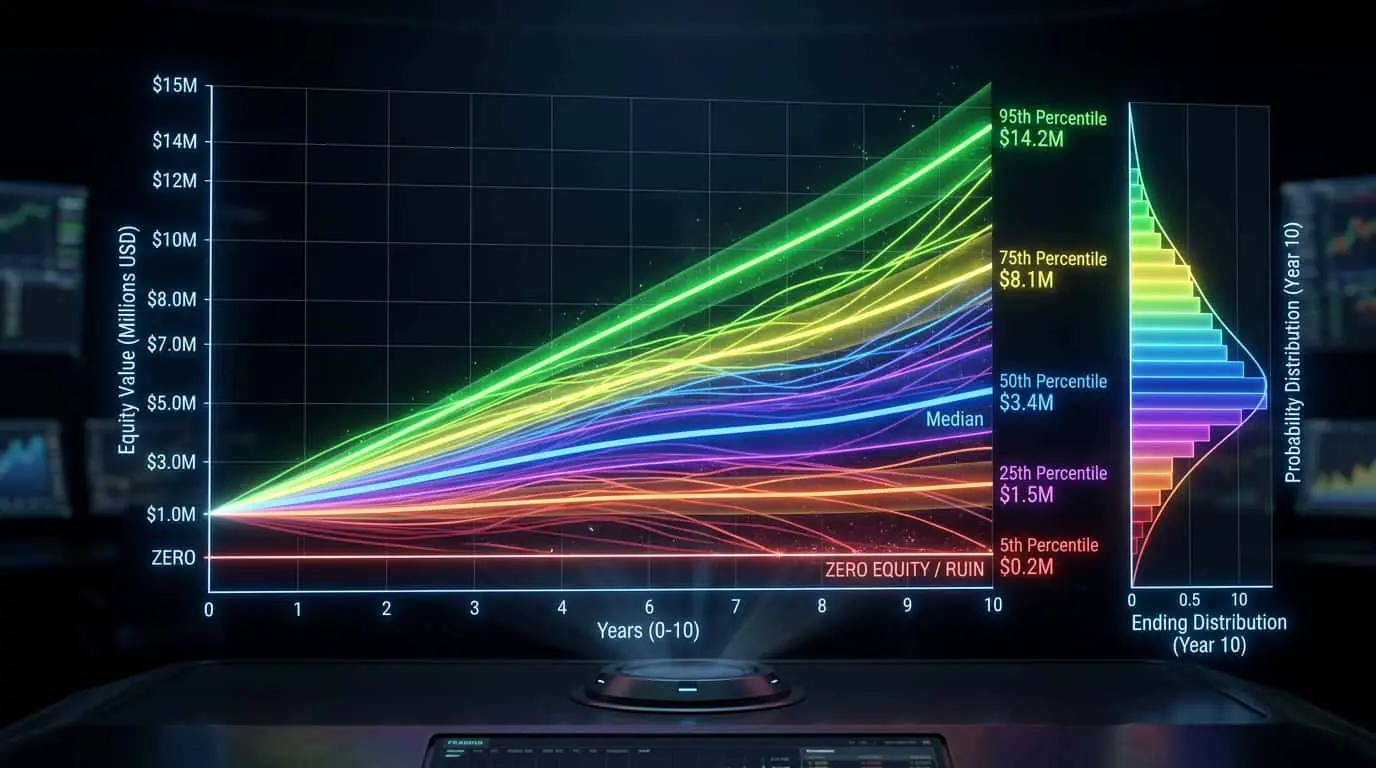
Monte Carlo analysis is a powerful complement to traditional backtesting that addresses one of backtesting's fundamental limitations: a backtest shows what happened with one specific sequence of trades, but that sequence will never repeat exactly. Monte Carlo simulation takes your backtest results and randomizes the order of trades thousands of times (typically 1,000-10,000 iterations) to generate a distribution of possible outcomes. This reveals the range of equity curves your strategy might produce, the probability of different drawdown levels, and the confidence interval for expected returns. For example, a backtest might show a maximum drawdown of 15%, but Monte Carlo analysis could reveal that in 5% of randomized sequences, the maximum drawdown exceeds 30%. This is critical for risk management because it tells you the drawdown you should realistically prepare for, not just the one that happened to occur in the historical sequence. The Monte Carlo process works as follows: take your list of trade results (e.g., +$200, -$150, +$350, -$100, etc.), randomly shuffle the order, plot the resulting equity curve, record the key metrics (max drawdown, total return, longest losing streak), and repeat thousands of times. The distribution of results across all iterations gives you percentile-based expectations. The 95th percentile maximum drawdown (meaning only 5% of sequences produced a worse drawdown) is a conservative planning figure. If your account can survive the 95th percentile drawdown, you have a 95% probability of surviving any sequence of trades your strategy produces. Professional traders use Monte Carlo analysis to determine appropriate position sizes, set realistic drawdown expectations, and decide whether a strategy's risk profile is acceptable before committing real capital.
Pro Tip
After running a Monte Carlo simulation, use the 95th percentile maximum drawdown (not the backtest maximum drawdown) to size your positions. This ensures your account can survive virtually any sequence of trades your strategy might produce.
Mistake
Optimizing a strategy on all available data without an out-of-sample test
Correction
Always reserve 20-30% of your data as out-of-sample for validation. Optimizing on all data virtually guarantees curve-fitting. Better yet, use walk-forward analysis.
Mistake
Backtesting without slippage and commission costs
Correction
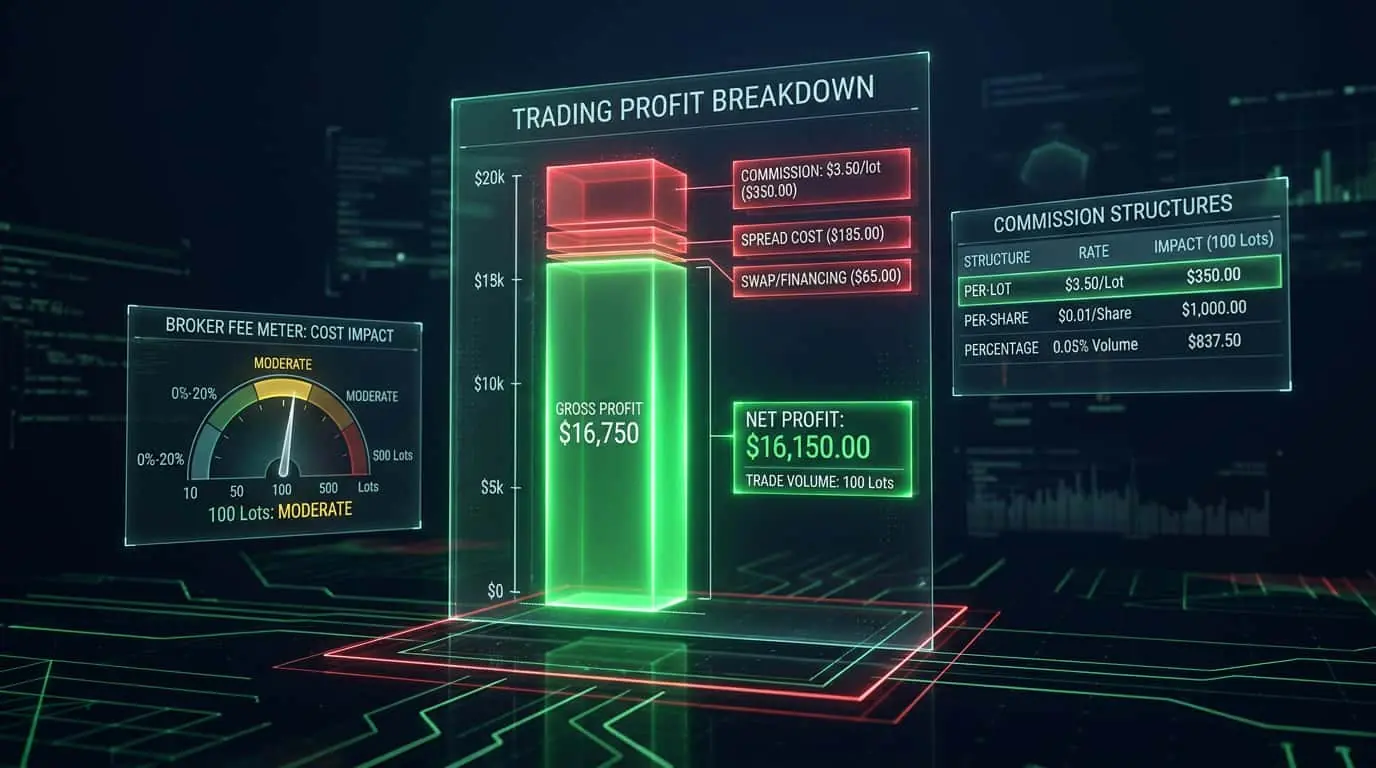
Always include realistic trading costs. For futures, add at least 1 tick of slippage per side plus commissions. For forex, include spread plus 0.5-1 pip slippage. A profitable gross strategy can be a net loser after costs.
Mistake
Going straight from backtest to full-size live trading
Correction
Follow a staged approach: backtest, walk-forward analysis, paper trading (1-3 months), reduced-size live trading (1-3 months), then full-size trading. Each stage validates the strategy in increasingly realistic conditions.