TL;DR
A trend line is a straight line drawn along swing highs or swing lows on a chart to define trend direction. Ascending trend lines connect higher lows in uptrends, descending trend lines connect lower highs in downtrends, and breaks of established trend lines signal potential reversals.
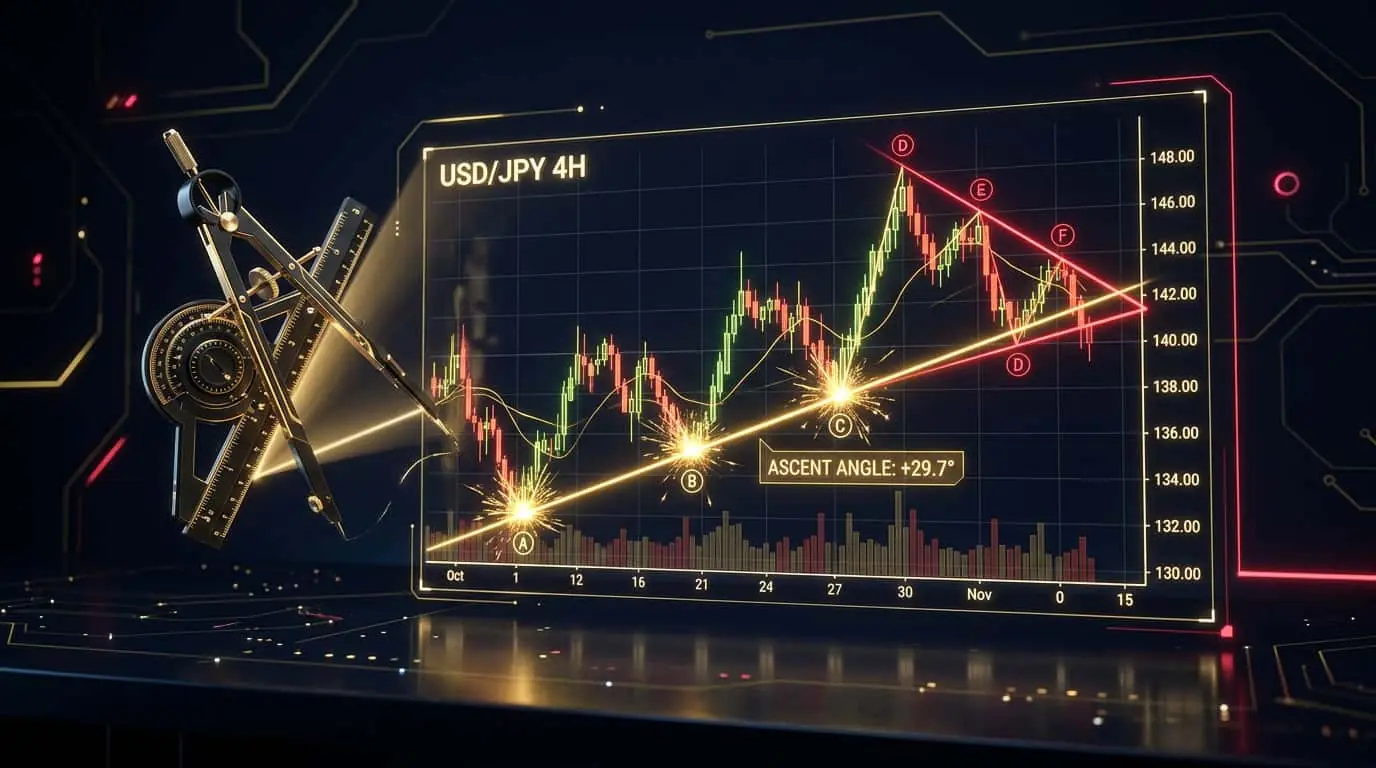
A trend line is one of the most basic yet powerful tools in technical analysis. It is a straight line drawn on a price chart that connects two or more price points and extends into the future to act as a line of support or resistance. In an uptrend, a trend line is drawn along the swing lows (ascending trend line), connecting progressively higher lows. In a downtrend, a trend line is drawn along the swing highs (descending trend line), connecting progressively lower highs. The concept is straightforward: in an uptrend, buyers consistently step in at higher price levels, creating an upward-sloping support line. In a downtrend, sellers consistently appear at lower price levels, creating a downward-sloping resistance line. Trend lines help traders visualize the current trend, identify potential entry points at the trend line, and recognize when a trend may be changing if the line is broken.
Drawing accurate trend lines is a skill that requires practice and consistency. A valid trend line requires a minimum of two touch points, and the trend line becomes more significant with each additional touch. The first rule is to connect the most prominent swing points, not minor fluctuations. For an ascending trend line, connect at least two significant swing lows where price clearly reversed upward. For a descending trend line, connect at least two significant swing highs where price clearly reversed downward. There is ongoing debate about whether to use candle bodies or wicks for trend line placement. Using wicks captures the full price action but may create trend lines that are broken more frequently. Using bodies focuses on where the majority of trading occurred but may miss extreme levels. Most professional traders use wicks for initial placement and allow some flexibility, recognizing that trend lines are zones rather than exact lines.
Pro Tip
A trend line validated by three or more touches is considered confirmed and produces the highest-probability trading opportunities. Each touch reinforces the line as institutional traders place orders at these levels.
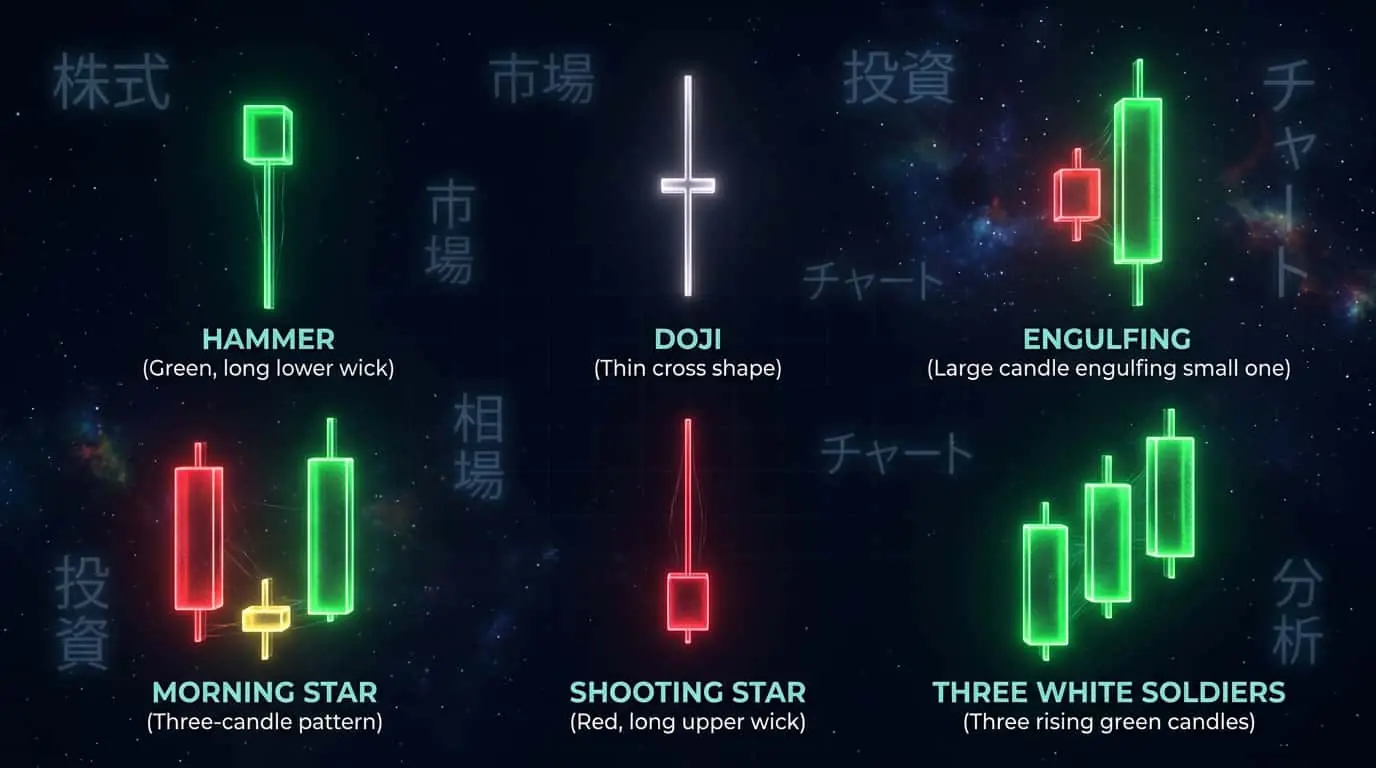
The primary trading strategy with trend lines is the bounce. In an uptrend, when price pulls back to an ascending trend line, traders look for buying opportunities because the trend line represents a level where buyers have historically stepped in. The ideal setup is to wait for price to touch or slightly penetrate the trend line, then show a bullish candlestick reversal pattern (hammer, bullish engulfing) before entering long. The stop loss is placed below the trend line, and the take profit targets the previous swing high or a Fibonacci extension. In a downtrend, the same logic applies in reverse: sell at the descending trend line with a stop above it. The risk-reward ratio on trend line bounces is typically favorable because the stop loss distance (below the trend line) is usually smaller than the distance to the profit target (the previous swing high or higher). The key is patience: wait for price to reach the trend line rather than chasing entries in the middle of the move.
When a well-established trend line is broken, it often signals a significant change in market dynamics. A break of an ascending trend line suggests that buyers are no longer willing to step in at progressively higher prices, which may lead to a trend reversal or at least a deeper correction. A break of a descending trend line suggests that sellers are losing control. However, not every trend line break leads to a reversal. False breaks (brief penetrations followed by a return above the line) are common. To distinguish between genuine breaks and false breaks, traders look for several confirmation factors: a decisive close beyond the trend line (not just a wick), above-average volume on the break, a retest of the broken trend line from the other side, and follow-through in the direction of the break. The more touches the trend line had before the break, the more significant the break is likely to be.
The angle of a trend line reveals important information about the sustainability of the trend. Steep trend lines (angles above 60 degrees from horizontal) indicate rapid, aggressive price movement that is difficult to sustain. These trends often end with a sharp reversal or correction because the pace of buying (or selling) is unsustainable. Moderate trend lines (30-45 degrees) represent the healthiest, most sustainable trends. These trends allow for orderly pullbacks and show balanced participation between aggressive entries and profit-taking. Shallow trend lines (below 20 degrees) indicate a weak, grinding trend that may not offer enough movement to compensate for transaction costs and time risk. When a steep trend line breaks, price often does not reverse entirely but instead transitions to a more moderate angle. Drawing a new, shallower trend line after a steep trend line break can identify the continuation of the broader move at a more sustainable pace. This concept is called fan lines: after the first steep trend line breaks, a second trend line is drawn at a shallower angle, and if that breaks, a third at an even shallower angle. The break of the third fan line typically signals the end of the entire trend. A practical example: ES futures rallies from 4,900 to 5,100 in two weeks along a steep 65-degree trend line. The line breaks, and price pulls back to 5,040. A new trend line from the 4,900 origin through the 5,040 low creates a 40-degree angle. This moderate trend line supports the continuation of the rally at a sustainable pace, eventually reaching 5,200 over the next month.
| Angle Range | Trend Character | Sustainability | Trading Approach |
|---|---|---|---|
| 60-80 degrees | Steep, aggressive | Low, prone to sharp correction | Trail stops tight, take partial profits early |
| 30-45 degrees | Moderate, healthy | High, most sustainable angle | Standard trend-following entries at the line |
| 15-30 degrees | Shallow, grinding | Moderate but slow | Wider stops, lower position sizes |
| Below 15 degrees | Flat, minimal trend | N/A, not a meaningful trend | Avoid trend trading, consider range strategies |
False breakouts of trend lines are common and can be both a trap and an opportunity. A false breakout occurs when price temporarily breaks through a trend line but fails to follow through and reverses back inside the trend. Research suggests that 40-50% of trend line breaks on intraday charts are false, while higher timeframe breaks have a lower false rate of about 25-30%. Identifying false breakouts requires attention to several factors. First, check the close: a bar that pierces the trend line intraday but closes back on the original side of the line is likely a false break. Wait for a decisive close beyond the line. Second, check volume: genuine breakouts are accompanied by above-average volume. A break on light volume is suspect. Third, check the time of day: breakouts during the first 30 minutes of the session and during the lunch hour (11:30 AM - 1:00 PM ET for US markets) have a higher false rate because these are periods of lower institutional participation and higher noise. Fourth, check momentum: if RSI is not confirming the break (for example, price breaks below an ascending trend line but RSI stays above 40), the break may be false. Trading false breakouts is a profitable strategy for experienced traders. The setup is simple: when price breaks a trend line but shows the signs of a false break listed above, enter a trade in the direction of the original trend with a stop beyond the extreme of the false break. The target is the opposite end of the trend's range. This works because false breakouts trap traders on the wrong side, and their forced exits fuel the subsequent move back inside the trend.
Pro Tip
In NinjaTrader, set an alert on your trend line so you are notified the moment price touches it. Then switch to a lower timeframe (1-minute or tick chart) to assess whether the break is genuine or false. Look for immediate rejection and a snap back inside the trend as your signal that the breakout is failing.
A trend channel is formed by drawing a parallel line to the main trend line on the opposite side of price action. In an uptrend, the main ascending trend line connects the swing lows, and the parallel channel line is drawn along the swing highs. This creates a channel that contains price movement and provides both support (lower line) and resistance (upper line). Channels are valuable because they allow traders to trade both bounces: buying at the lower channel line and selling (or taking partial profit) at the upper channel line. The channel width represents the normal range of price oscillation within the trend. When price breaks above the upper channel line, the trend may be accelerating. When price breaks below the lower channel line, the trend may be reversing. Many traders use channels to set profit targets: after buying at the trend line, the channel line on the opposite side provides a natural target. Some charting platforms offer an auto-channel feature that draws parallel channels automatically based on your trend line.
Mistake
Forcing trend lines to fit the price action by using too many minor swing points
Correction
Use only clear, significant swing points that are visible without zooming in. If you have to force a trend line through multiple points, the trend may not be clean enough to trade. The best trend lines are obvious and connect naturally.
Mistake
Acting immediately on a trend line break without waiting for confirmation
Correction
Wait for a decisive close beyond the trend line, preferably with above-average volume. Then watch for a retest of the broken trend line from the other side, which provides a lower-risk entry point with clear stop loss placement.