TL;DR
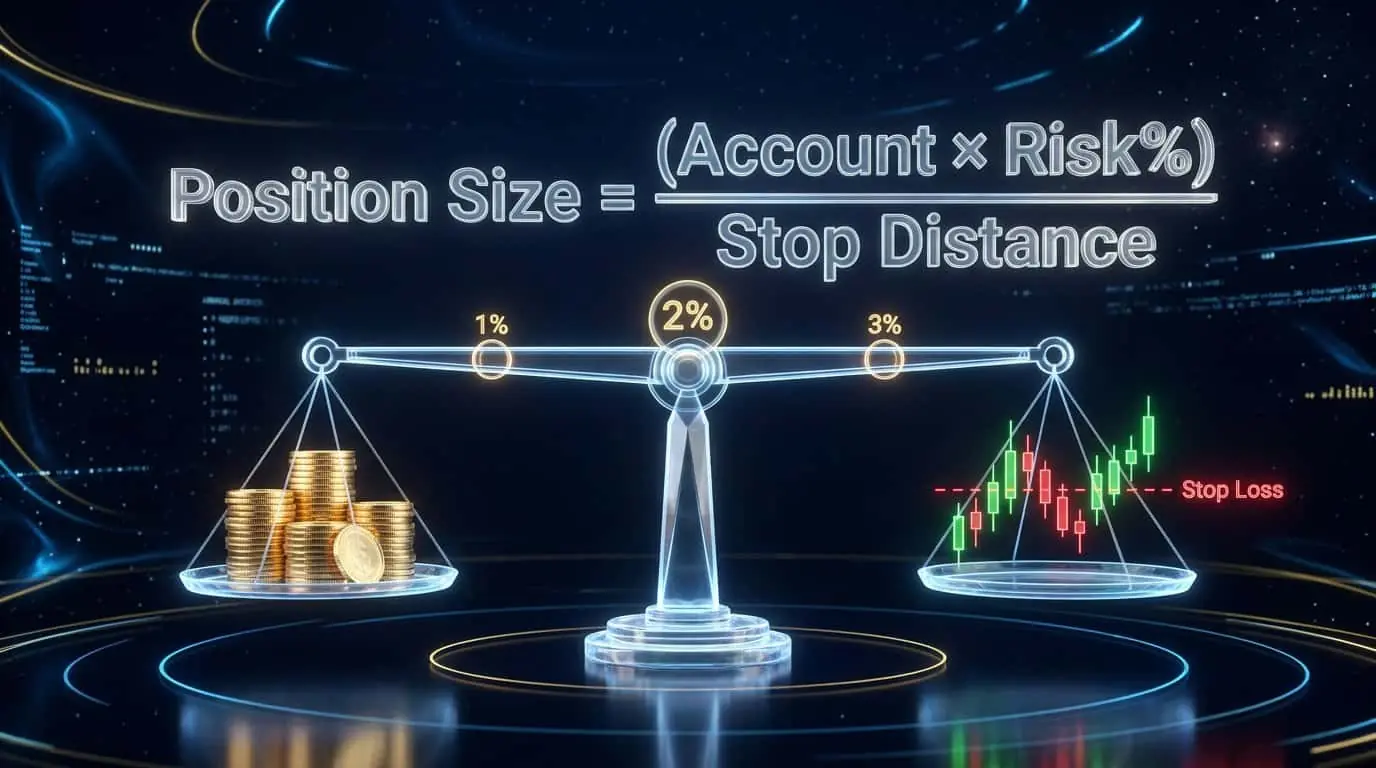
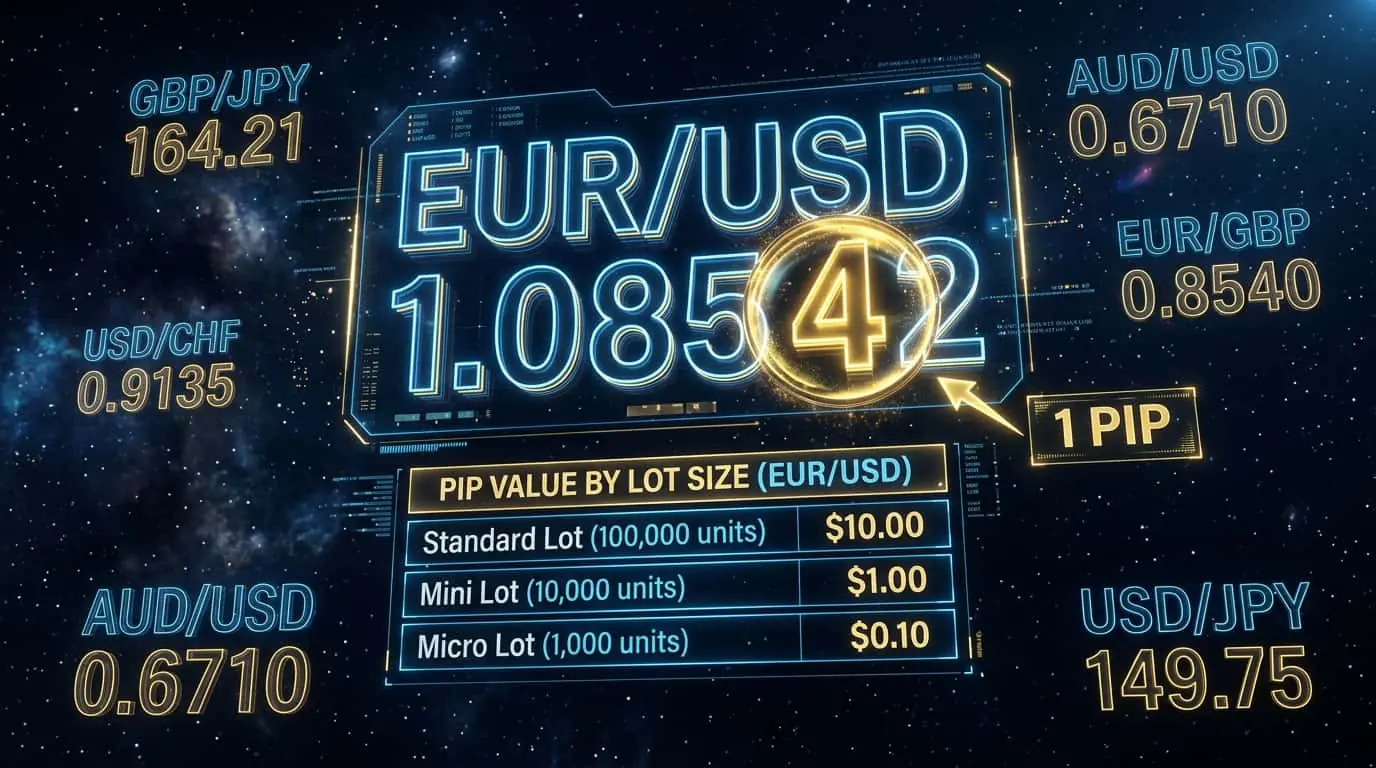
Lot size is the standardized unit of measurement for trade volume. In forex, a standard lot is 100,000 units, a mini lot is 10,000, and a micro lot is 1,000. The correct lot size for any trade is determined by your position sizing formula, not by preference or convention.
Table of Contents
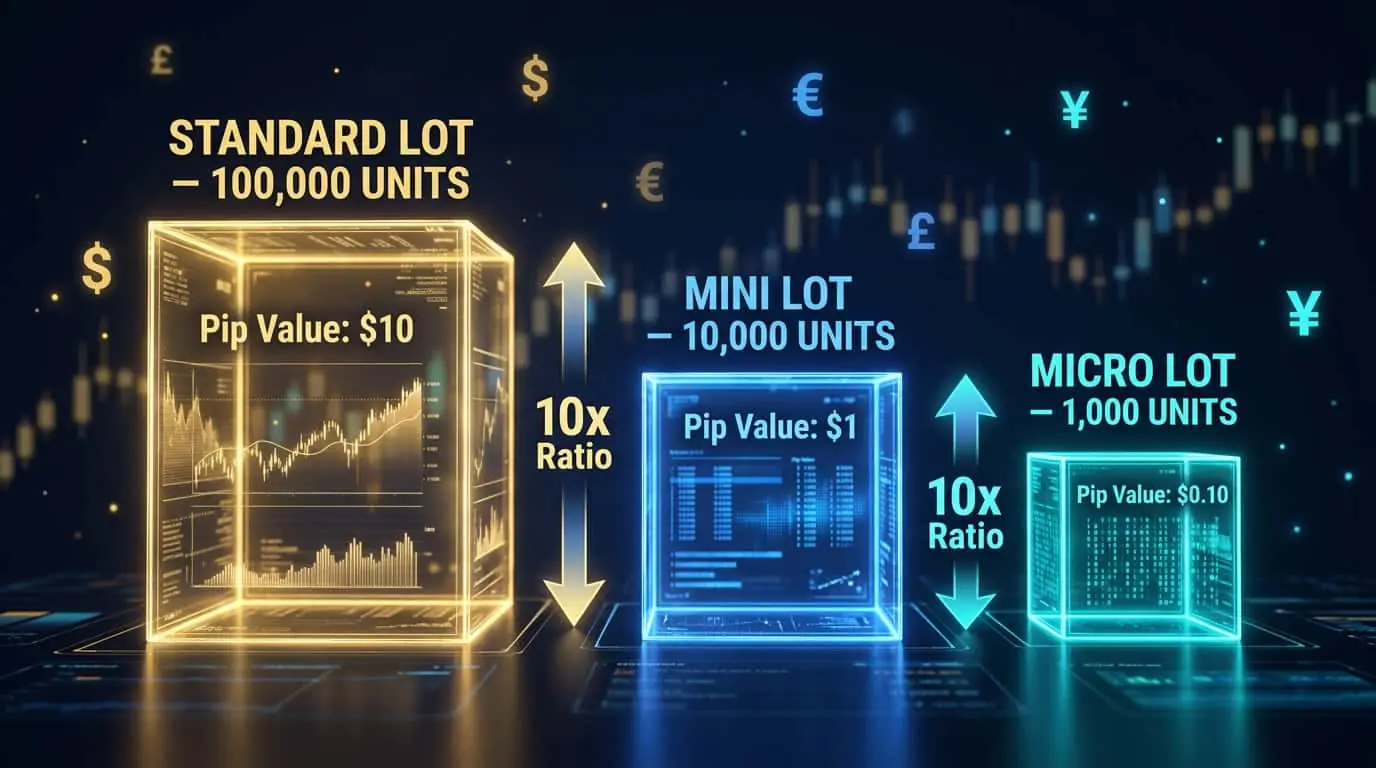
Lot size is the standardized quantity of units in a single trade. In forex trading, lot sizes are fixed at specific values: a standard lot equals 100,000 units of the base currency, a mini lot equals 10,000 units, a micro lot equals 1,000 units, and a nano lot equals 100 units. Lot size determines the monetary value of each pip movement and, therefore, the profit or loss for any given price change. Choosing the correct lot size is not about preference or convention; it is determined by your position sizing formula based on your account balance, risk percentage, and stop loss distance. A trader who always uses 1 standard lot regardless of these variables is ignoring position sizing, which leads to inconsistent risk and potential account destruction. The lot size should change with every trade to maintain consistent risk.
| Lot Type | Units | Pip Value (EUR/USD) | Margin at 1:100 |
|---|---|---|---|
| Standard | 100,000 | $10.00 | $1,000 |
| Mini | 10,000 | $1.00 | $100 |
| Micro | 1,000 | $0.10 | $10 |
| Nano | 100 | $0.01 | $1 |
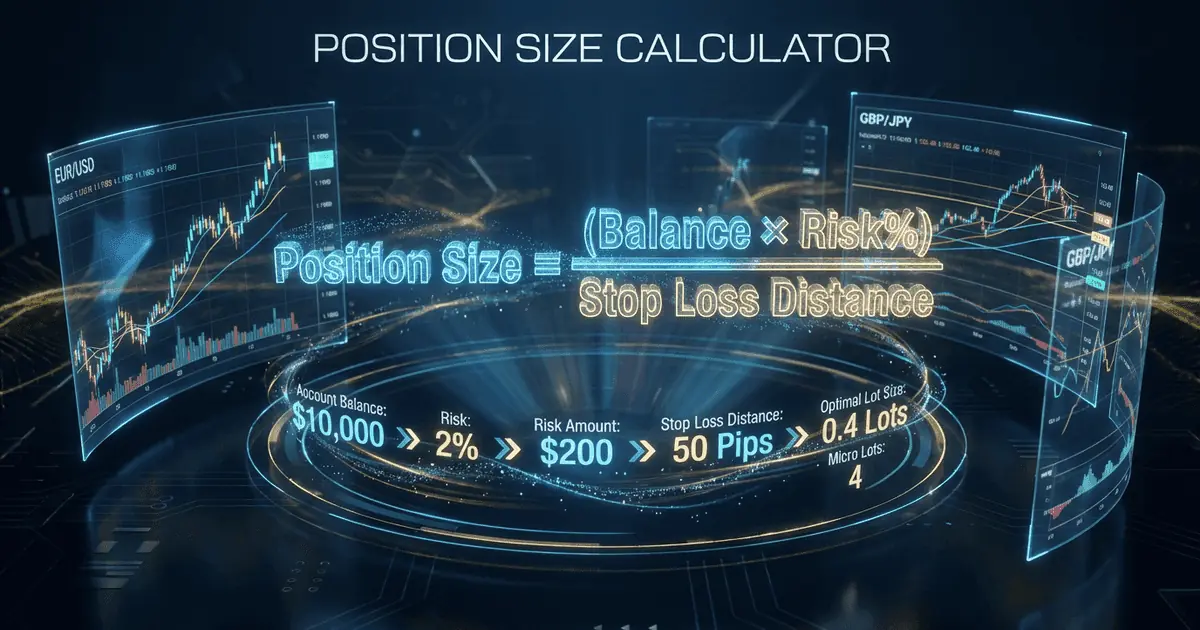
The relationship between lot size and risk management is direct: lot size is the output of the position sizing formula. Here is how it works in practice. A trader with a $10,000 account risks 2% ($200) per trade. They plan to trade EUR/USD with a 25-pip stop loss. Each pip is worth $1 for a mini lot. To risk exactly $200 with a 25-pip stop: $200 / (25 pips x $1 per pip) = 8 mini lots. If the stop loss were 50 pips instead, the calculation becomes: $200 / (50 x $1) = 4 mini lots. The lot size halved because the stop doubled, keeping the dollar risk constant at $200. This automatic adjustment is the entire point of position sizing. Many brokers now support fractional lot sizes (e.g., 0.83 standard lots or 8.3 mini lots), making precise position sizing easier.
Lot Size = Dollar Risk / (Stop Loss in Pips x Pip Value per Lot)Dollar Risk — Account balance x risk percentage
Stop Loss in Pips — Distance from entry to stop loss
Pip Value per Lot — $10 for standard, $1 for mini, $0.10 for micro
Pro Tip
If your calculated lot size is a fraction (e.g., 2.7 mini lots), always round down, not up. Rounding up increases your risk beyond your target percentage. Most brokers support increments of 0.01 lots (micro lots).
The correct lot type depends on your account size and risk parameters. Smaller accounts ($500-$5,000) should use micro lots because mini lots may result in too much risk per trade. For example, a $2,000 account risking 1% ($20) with a 20-pip stop can only afford 1 micro lot ($20 / (20 x $0.10) = 10 micro lots or 0.1 mini lots). Medium accounts ($5,000-$25,000) typically use mini lots, which provide sufficient granularity for precise position sizing. Large accounts ($25,000+) can use standard lots, with mini lots providing fine-tuning. The general rule is to use the smallest lot type that allows you to size positions precisely while staying within your risk parameters. There is no prestige in trading standard lots; a trader making 5% per month on micro lots with excellent risk management is far more successful than one blowing accounts with standard lots.
| Account Size | Recommended Lot Type | Risk 1% per Trade | Typical Range |
|---|---|---|---|
| $500 - $2,000 | Micro (0.01) | $5 - $20 | 1-5 micro lots |
| $2,000 - $10,000 | Mini (0.1) / Micro | $20 - $100 | 2-10 mini lots |
| $10,000 - $50,000 | Mini (0.1) / Standard | $100 - $500 | 1-5 standard lots |
| $50,000+ | Standard (1.0) | $500+ | 1-10+ standard lots |
Futures markets do not use the forex lot system. Instead, each futures contract has a fixed specification set by the exchange. One E-mini S&P 500 (ES) contract has a point value of $50 and trades in 0.25-point increments ($12.50 per tick). One Micro E-mini S&P 500 (MES) contract is 1/10th the size: $5 per point, $1.25 per tick. Crude Oil (CL) contracts represent 1,000 barrels of oil at $10 per tick. Unlike forex where you can trade fractional lots, futures contracts must be traded in whole numbers. This means position sizing in futures sometimes requires rounding to the nearest contract, which can result in slight deviations from your target risk. Micro futures contracts (MES, MNQ, MYM, M2K) were introduced specifically to allow smaller accounts to implement proper position sizing with manageable risk per contract.
| Contract | Symbol | Point Value | Tick Size | Tick Value |
|---|---|---|---|---|
| E-mini S&P 500 | ES | $50 | 0.25 | $12.50 |
| Micro E-mini S&P | MES | $5 | 0.25 | $1.25 |
| E-mini Nasdaq | NQ | $20 | 0.25 | $5.00 |
| Micro E-mini Nasdaq | MNQ | $2 | 0.25 | $0.50 |
| Crude Oil | CL | $10 | 0.01 | $10.00 |
Converting a risk percentage into an exact lot size is a calculation every trader must master. The process has four steps, each building on the previous one. Step 1: Determine your dollar risk. Multiply your account balance by your risk percentage. For a $15,000 account risking 1.5%, the dollar risk is $15,000 x 0.015 = $225. Step 2: Determine your stop loss distance in pips. This comes from your chart analysis — suppose your stop is 35 pips based on the nearest support level plus a small buffer. Step 3: Calculate the required pip value. Divide your dollar risk by the stop loss distance: $225 / 35 pips = $6.43 per pip. Step 4: Convert the pip value to lot size. Since one standard lot = $10 per pip on EUR/USD, divide the required pip value by $10: $6.43 / $10 = 0.643 standard lots. Round down to 0.64 standard lots (or 6.4 mini lots, or 64 micro lots). At this lot size, your actual risk is 35 pips x $6.40 per pip = $224, which is within your target of $225. This process ensures that whether your stop loss is 15 pips or 80 pips, your dollar risk stays the same. The lot size automatically adjusts to compensate for the stop distance. Consider another example on a different pair: trading GBP/JPY with a $20,000 account, 2% risk ($400), and a 60-pip stop. If the pip value on GBP/JPY for a standard lot is approximately $6.50 (at USD/JPY 150.00): $400 / (60 x $6.50) = 1.03 standard lots. Round down to 1.0 standard lot. Actual risk: 60 x $6.50 = $390, which is 1.95% of the account — close to the target 2%.
Lot Size = (Account Balance x Risk %) / (Stop Loss Pips x Pip Value per Lot)Account Balance — Current account equity in dollars
Risk % — Maximum percentage of account to risk (e.g., 0.01 for 1%)
Stop Loss Pips — Distance from entry to stop loss in pips
Pip Value per Lot — Dollar value of one pip for one lot of the chosen type
| Account | Risk % | Dollar Risk | Stop (pips) | Pip Value | Lot Size |
|---|---|---|---|---|---|
| $5,000 | 1% | $50 | 20 | $10 (std) | 0.25 standard |
| $10,000 | 2% | $200 | 30 | $1 (mini) | 6.6 mini |
| $15,000 | 1.5% | $225 | 35 | $0.10 (micro) | 64 micro |
| $25,000 | 1% | $250 | 50 | $10 (std) | 0.50 standard |
| $50,000 | 2% | $1,000 | 25 | $10 (std) | 4.0 standard |
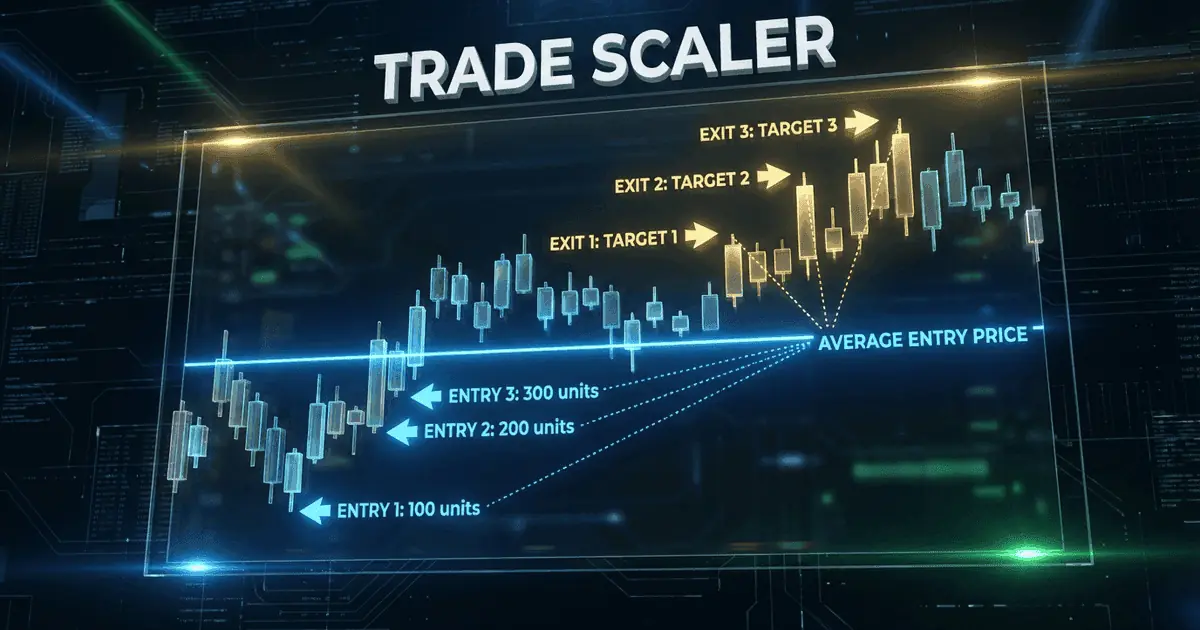
Advanced traders use scaling techniques to manage lot size during a trade, either adding to a winning position (scaling in) or taking partial profits at predefined levels (scaling out). Scaling out involves reducing your lot size as the trade moves in your favor by closing a portion of the position at the first target and letting the remainder run for a larger target. For example, a trader enters EUR/USD with 6 mini lots and a plan to take profit at two levels. At the first target (+20 pips), they close 3 mini lots, securing $60 profit and moving their stop to breakeven on the remaining 3 mini lots. The remaining position now has zero risk and can run to the second target (+50 pips) for an additional $150 in profit. Total profit: $210. Without scaling, the same trade with a single 40-pip target would have yielded 6 mini lots x 40 pips x $1 = $240 if the target was hit, but nothing if the price reversed after reaching only 20 pips. Scaling provides a psychological benefit (locking in partial profits) and reduces the variance of returns (fewer all-or-nothing outcomes). Scaling in (adding to a position) is a more advanced technique where you start with a smaller lot size and add as the trade confirms your thesis. A trader might enter with 2 mini lots initially, add 2 more after the price breaks a key level confirming momentum, and add a final 2 after a pullback to a key level holds. This approach concentrates lot size in confirmed moves while reducing exposure on unconfirmed entries. The risk is that adding too aggressively moves your average entry price closer to the current price, tightening the effective stop. Always recalculate your total risk (all lots combined) after each scale-in to ensure you remain within your risk parameters.
Pro Tip
A simple scaling rule that works well: close 50% at 1R profit, move stop to breakeven, and let the remaining 50% run for 2-3R. This locks in a small profit on most winners while preserving upside on strong moves.
Lot size errors are among the most costly mistakes in trading because they directly affect the amount of money at risk. The most common error is failing to adjust lot size when switching between currency pairs with different pip values. A trader accustomed to EUR/USD ($10 per pip per standard lot) who switches to GBP/JPY (approximately $6.50 per pip per standard lot) and trades the same lot size is inadvertently taking 35% less risk than intended. Conversely, switching to EUR/GBP (approximately $13 per pip per standard lot) means taking 30% more risk. Another frequent mistake is using the same lot size regardless of stop loss distance. A trader who always trades 1 mini lot with a 20-pip stop risks $20, but with a 50-pip stop risks $50 — a 150% increase in risk from the same lot size. The position sizing formula should produce a different lot size for every trade to maintain consistent dollar risk. A third costly error is entering the wrong lot size due to decimal place confusion on the platform. On some platforms, 1.00 means 1 standard lot ($10/pip), while on others, 1.00 means 1 micro lot ($0.10/pip). Entering 10.00 instead of 1.00 creates a position 10x larger than intended. This error has caused catastrophic losses for traders who did not verify their platform's lot size convention before placing a trade. To prevent these errors: always verify the pip value for the specific pair you are trading, always use the position sizing formula to calculate lot size per trade, and always double-check the lot size before confirming any order.
| Mistake | What Happens | Financial Impact Example |
|---|---|---|
| Same lot size for all pairs | Inconsistent risk across pairs | $300 risk on EUR/USD vs $195 risk on USD/JPY |
| Fixed lot size regardless of stop | Risk varies with stop distance | $100 risk (10-pip stop) vs $500 risk (50-pip stop) |
| Decimal place confusion | Position 10x too large or small | $5,000 loss instead of $500 on adverse move |
| Not rounding down fractional lots | Risk exceeds target percentage | 2.1% risk instead of intended 2.0% |
| Ignoring lot size after adding positions | Total risk exceeds plan | Three 2% positions = 6% total account risk |
Mistake
Using a fixed lot size for every trade regardless of stop loss distance
Correction
Lot size must change with every trade based on the position sizing formula. A fixed lot size means your risk varies wildly depending on stop distance, violating consistent risk principles.
Mistake
Trading standard lots on a small account because it feels more serious
Correction
One standard lot with a 30-pip stop on a $5,000 account risks $300, which is 6% of the account. Use micro or mini lots to keep risk at 1-2%. There is no achievement in trading large lots; survival and consistency are what matter.