
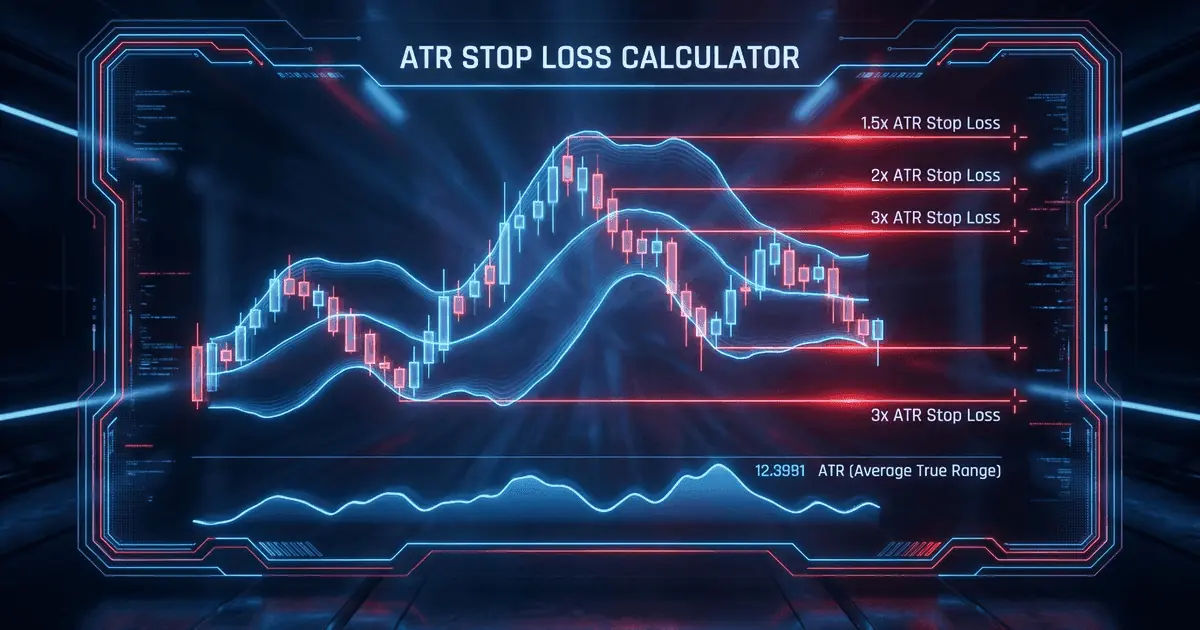
Calculate your Stop Loss levels based on actual market volatility using the Average True Range (ATR).
14 periods = Wilder standard
50 pips
= 0.00500
1.09000
Distance : 100 pips (0.01000)
1.10000
LONG ↑
Calm market, consolidation. Movements are contained. Tighter stops possible.
Standard market volatility. Ideal conditions for applying standard multipliers.
High volatility, major news. Widen your stops or reduce your position size.
The Average True Range, developed by J. Welles Wilder Jr. in 1978 in his book "New Concepts in Technical Trading Systems", measures the volatility of an asset. Unlike other indicators, ATR does not give a directional signal - it simply measures the amplitude of movements.
The "True Range" of a candle is the greatest of three calculations: the current High minus the current Low, the absolute value of the current High minus the previous Close, or the absolute value of the current Low minus the previous Close. ATR is the average of these True Ranges over X periods (typically 14).
This measure captures not only intra-candle movements but also gaps between sessions. In Forex where gaps are rare, ATR primarily reflects intraday volatility. In stocks, it also captures overnight gaps.
Stops based on fixed distances (e.g., 20 pips on every trade) are a common mistake. 20 pips on a calm EUR/USD (ATR 40 pips) gives you a reasonable stop. But 20 pips on a volatile GBP/JPY (ATR 150 pips) will be hit by normal market noise.
ATR automatically adapts your stop to current volatility. In a calm market, your stops are tight. In a choppy market, they widen. This dynamic adaptation is what separates professional traders from amateurs.
The goal is to place your stop far enough away not to be taken out by market "noise", while keeping it close enough to limit your losses if the trade is truly invalidated. ATR finds this balance.
Very tight stop. Used by scalpers and momentum traders who want quick exits. High premature stop rate, but limited losses when it does not work. Requires a high win rate or exceptional R:R ratios.
Good compromise for active day trading. Gives some room for normal fluctuations while remaining protective. Popular among traders who enter on breakouts.
The benchmark choice, recommended by Wilder himself. Provides enough room for normal market movements. Ideal for swing trading and positions held for several hours to days.
For particularly erratic markets or assets with long wicks (crypto, certain indices). Reduces false stops but increases risk per trade.
Used for long-term positions or during anticipated high-volatility events (elections, NFP, etc.). Gives the trade a lot of room. Requires a reduction in position size to maintain risk.
Here is a fundamental concept that many traders ignore: when your ATR stop is wider, you MUST REDUCE your position size. The risk in dollars must remain constant, not the stop distance.
Account: $10,000 | Risk per trade: 1% ($100)
In all cases, the risk remains $100. It is the size that adjusts.
The ATR period determines how many candles the average is calculated over. A short ATR (7) reacts quickly to volatility changes but can be erratic. A long ATR (20-50) is more stable but reacts slowly.
14 periods is the Wilder standard and remains the most popular choice. It is a good compromise between reactivity and stability. However, adjust based on your style:
ATR 7 on M5/M15
Reactive to micro-changes
ATR 14 on H1/H4
Balanced standard
ATR 14-20 on Daily
Stable overview
ATR also excels for trailing stops. Instead of following the price at a fixed distance, your trailing adapts to volatility. Chuck LeBeau's "Chandelier Exit" method is particularly popular.
Principle: Place your trailing stop X ATR below the most recent high (for a long). When the price makes a new high, the stop moves up. It never moves down. This keeps you in trends while protecting profits.
ATR takes on its full importance around major economic announcements. Before an NFP or rate decision, ATR shows you the "normal" volatility. During the announcement, this volatility can double or triple.
If you trade the news, consider using 3x pre-news ATR as a minimum stop. Better yet, calculate the historical volatility during similar previous announcements to get an idea of the potential movement.
Alternative: exit your positions before major news and re-enter once the market has stabilized. The post-news ATR will give you a measure of the "new normal" of volatility.
The ATR-based Stop Loss represents a professional approach to risk management. By adapting your stops to actual market volatility, you avoid both stops that are too tight (hit by noise) and stops that are too wide (excessive losses).
Start with 2x ATR as the standard multiplier. Observe how your trades perform. If you are often stopped just before the price moves in your direction, try 2.5x. If your stops are never hit but you hold losers too long, tighten to 1.5x.
ATR is not a magic formula, but a solid foundational tool on which to build your trading system. Combined with good technical analysis, appropriate position management, and discipline, it will transform your approach to risk.
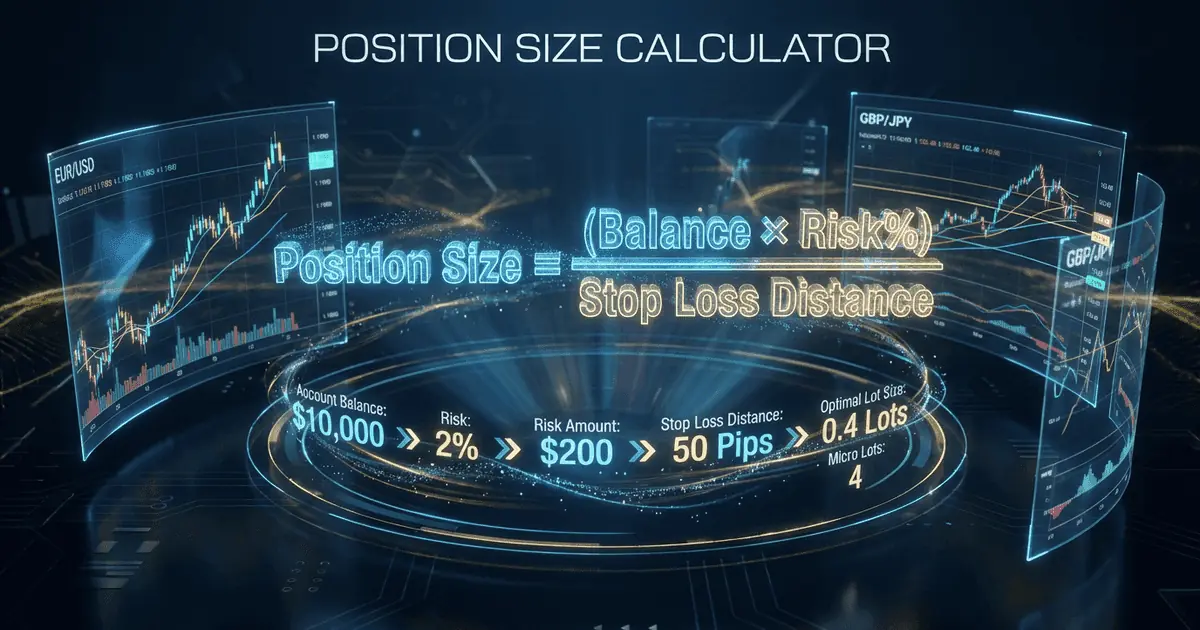
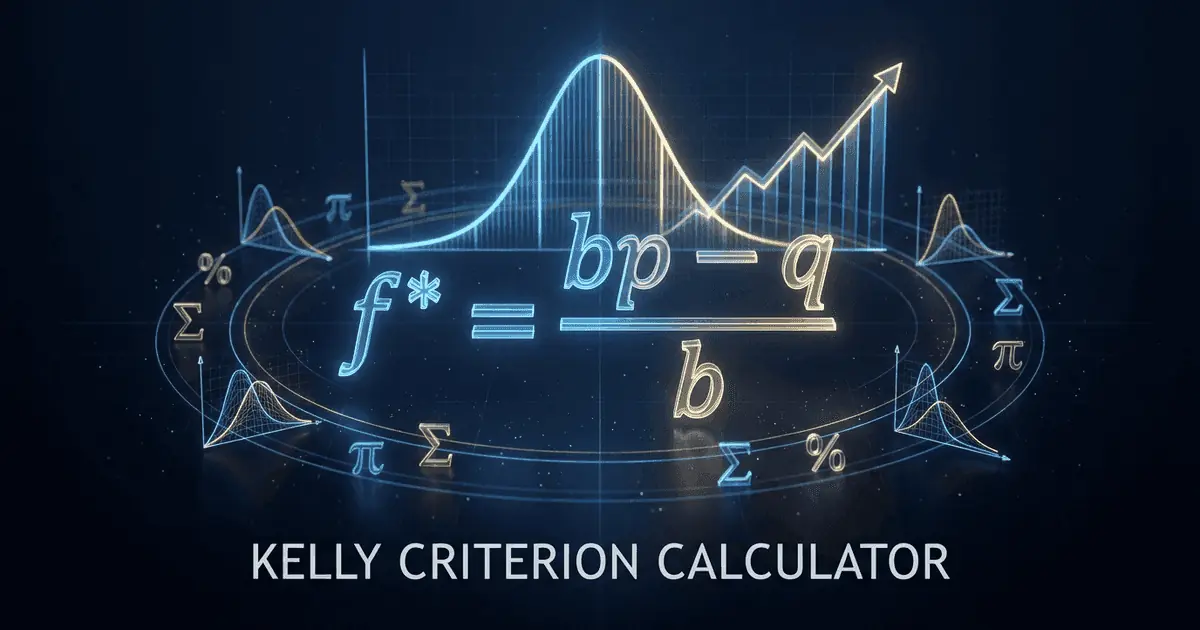
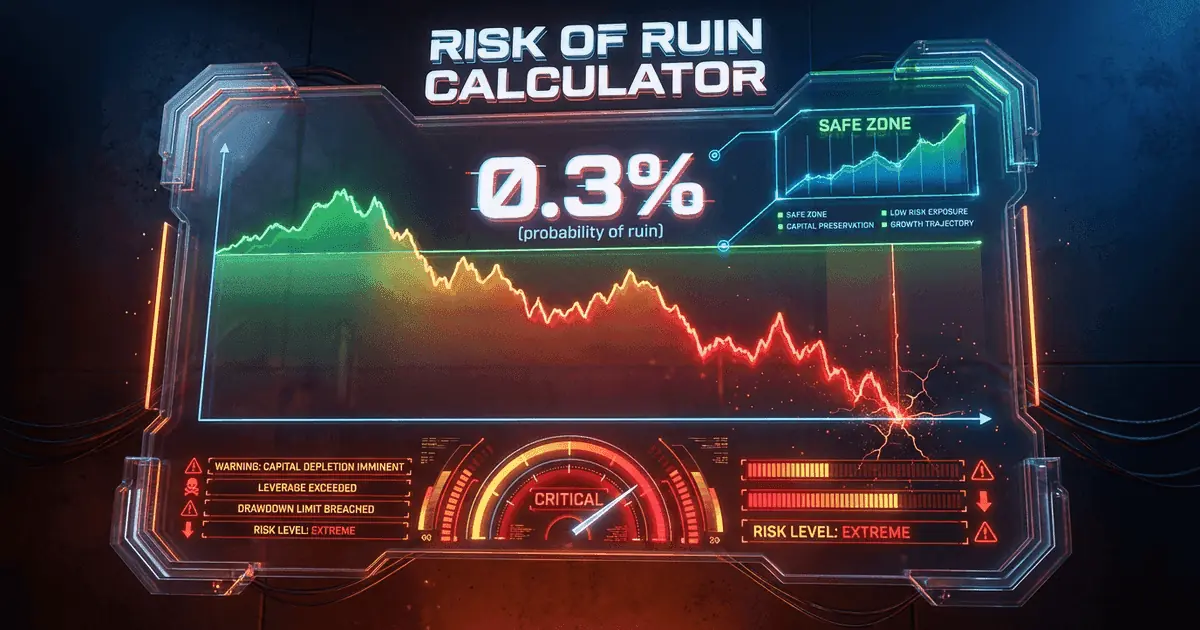





Discover our other calculators for optimal money management
Discover our premium NinjaTrader 8 indicators — precision-coded tools that do the heavy lifting for you.
Browse IndicatorsLoading reviews...
Loading reviews