
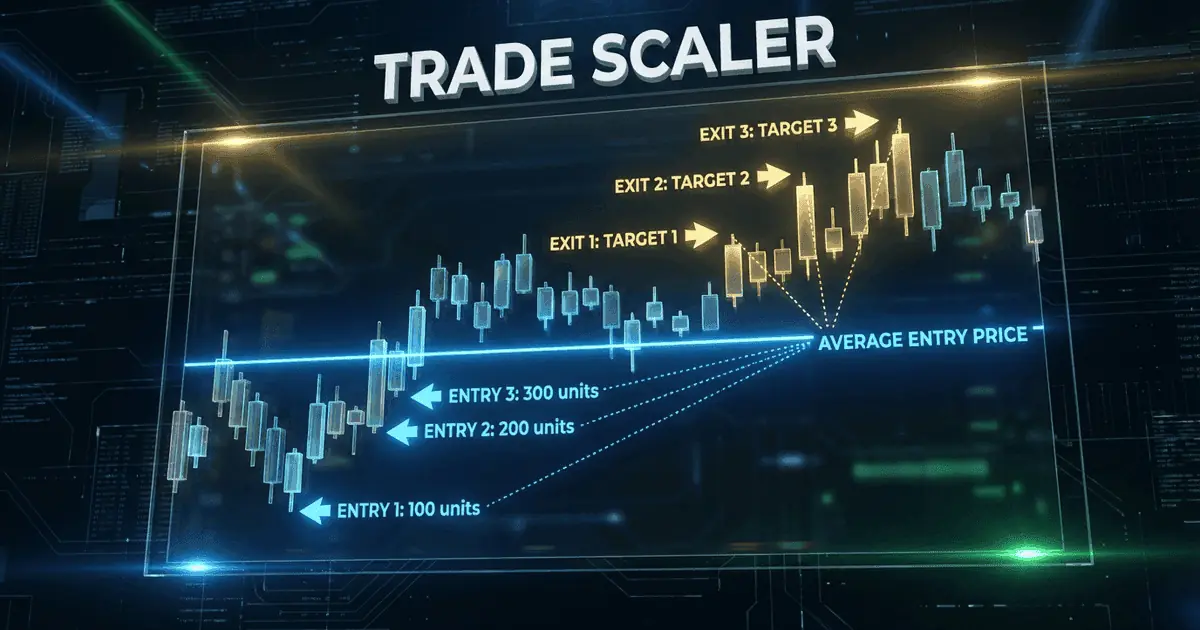
Plan your scale-in entries and scale-out exits to optimize your average price and manage your risk effectively.
+2350.00 $
-1650.00 $
These levels are calculated between your average entry price and your target. Adjust according to your strategy and technical levels.
Enter with the largest position first, then add smaller positions if the price improves.
Divide your total position into equal parts at different predetermined levels.
Start small and add more if the trade confirms your thesis.
Scaling is an advanced money management technique that involves entering or exiting a position in multiple tranches rather than all at once.
First, scaling reduces the impact of timing. Nobody can predict exactly the best entry price. By spreading your entry over multiple levels, you get an average price more representative of the zone rather than depending on a single point.
Second, scaling allows for healthier psychological management. Entering gradually reduces the stress of the "perfect entry" and allows you to adjust your exposure based on market developments.
Scale-in involves building a position gradually. There are several methods:
If the price drops to 1.0900, you have a better average price than if you had entered entirely at 1.1000.
Scale-out is the inverse: gradually exiting a winning position. This technique allows you to lock in profits while leaving part of the position running to capture large moves.
The classic approach is the rule of thirds: close 1/3 of the position when you reach 1R of profit (1 times your initial risk), another 1/3 at 2R, and leave the last 1/3 with a trailing stop for exceptional moves.
The main danger of scale-in is turning a losing position into a catastrophe. The classic mistake is to keep adding positions to a trade going against you, hoping for a reversal. This is uncontrolled "averaging down", and it is a recipe for disaster.
The golden rule: plan ALL your scale-in levels BEFORE entering the trade. Calculate your total risk if all entries are stopped. This total risk must respect your money management rules (e.g., never more than 2% of the account).
The goal of scale-in is to get a better average price than if you had entered all at once. To achieve this effectively, several techniques exist:
Scaling is not just a technique, it's a trading philosophy that acknowledges the inherent uncertainty of markets. Nobody knows the perfect price, so why pretend otherwise?
With scale-in, you admit that your first level may not be optimal, and you give yourself options. With scale-out, you acknowledge that you don't know exactly where the price will stop, so you capture profits along the way while maintaining exposure to large moves.
Use this calculator to plan your trades before execution. Visualize your average price, total risk, and exit scenarios. A well-planned trade is halfway to success.
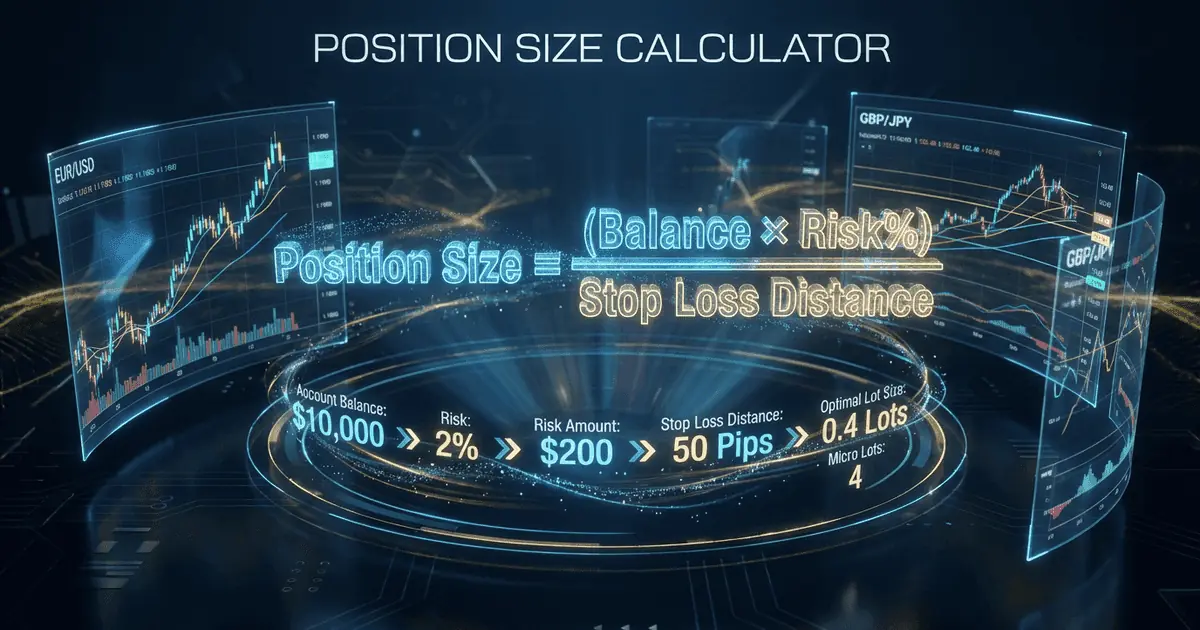

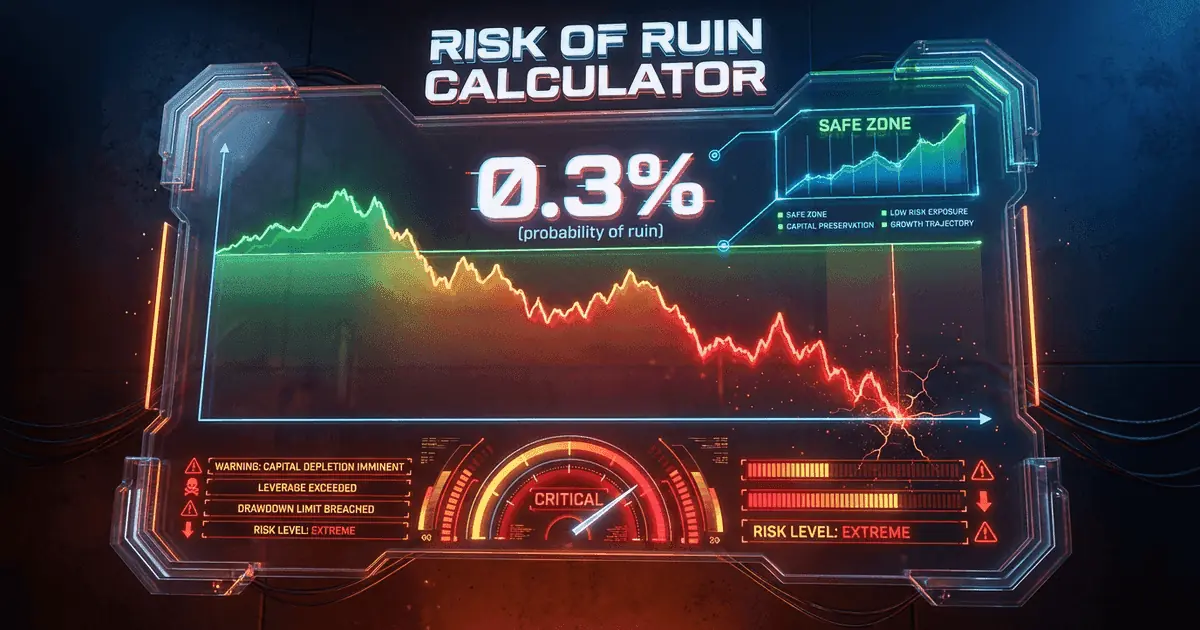
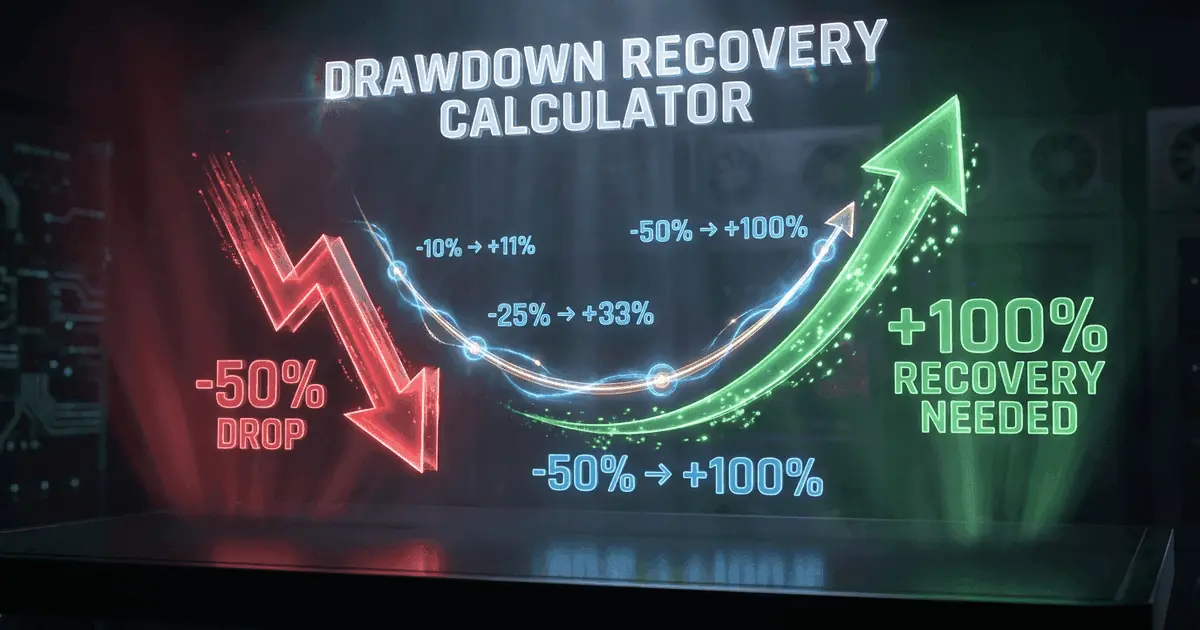






Discover our other advanced calculators
Discover our premium NinjaTrader 8 indicators — precision-coded tools that do the heavy lifting for you.
Browse IndicatorsLoading reviews...
Loading reviews