Learn key trading concepts and terminology. From position sizing to Monte Carlo simulations, master the fundamentals that separate profitable traders from the rest.
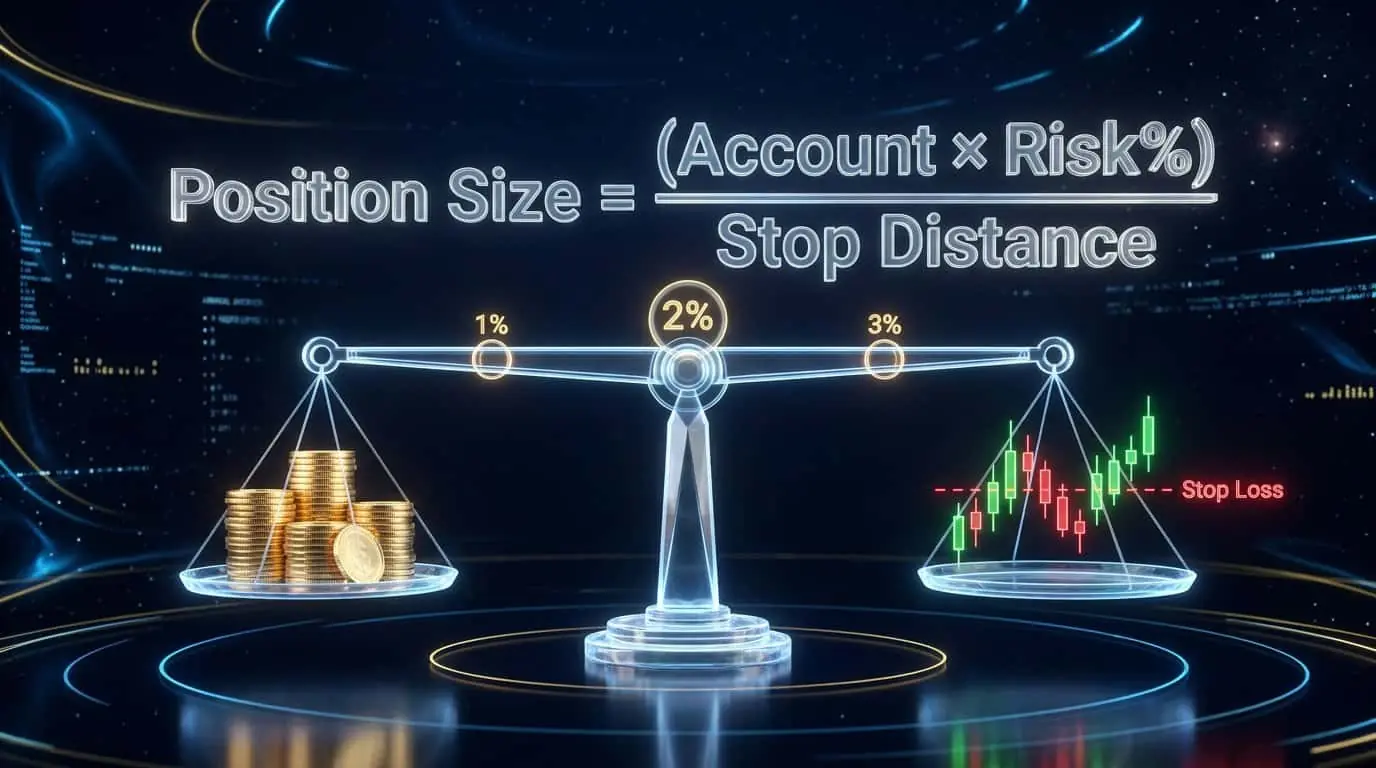
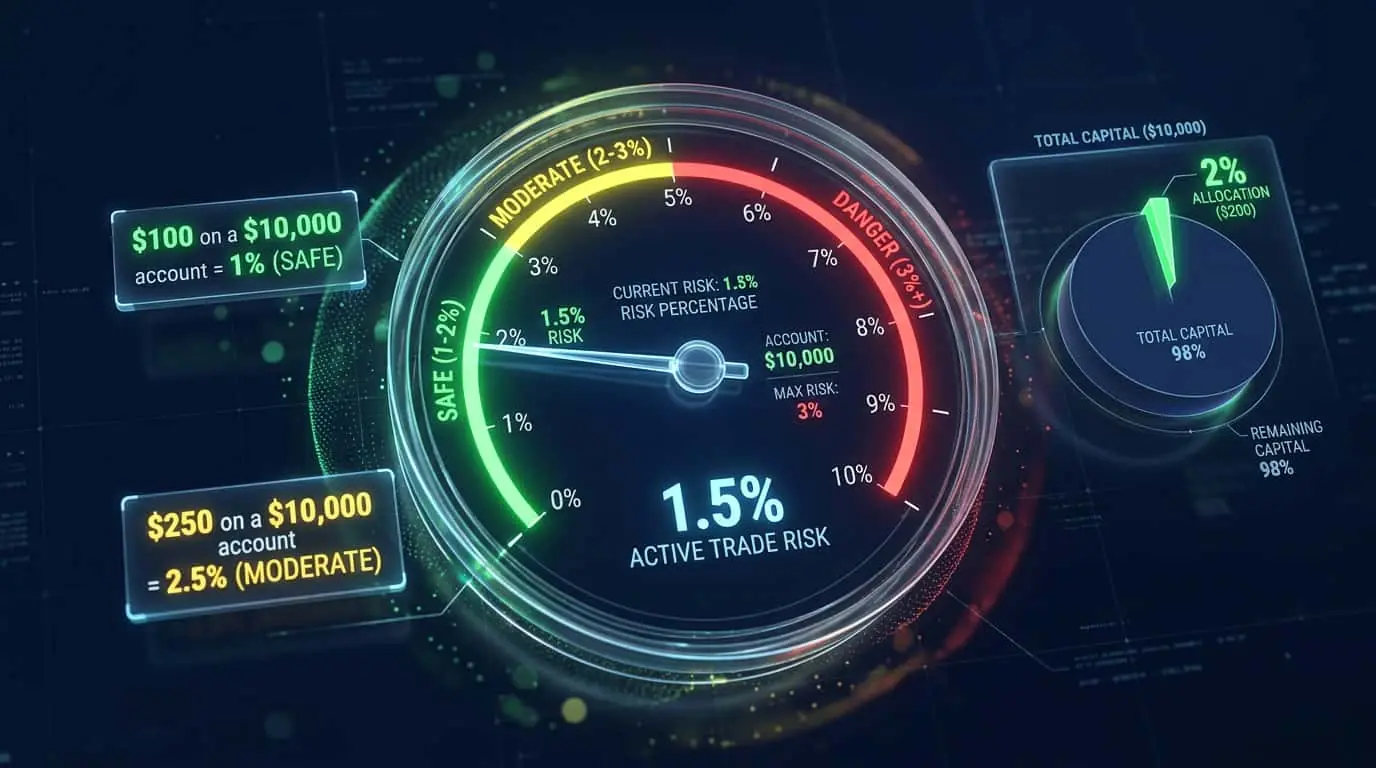
Position sizing is the process of determining how many units of an asset to buy or sell based on your account size and risk tolerance. It is the single most important risk management technique in trading, ensuring that no single trade can cause catastrophic damage to your portfolio.
Risk-reward ratio (R:R) is a measure that compares the potential loss of a trade to its potential profit. It is expressed as a ratio such as 1:2 or 1:3, meaning you risk one unit to potentially gain two or three units.
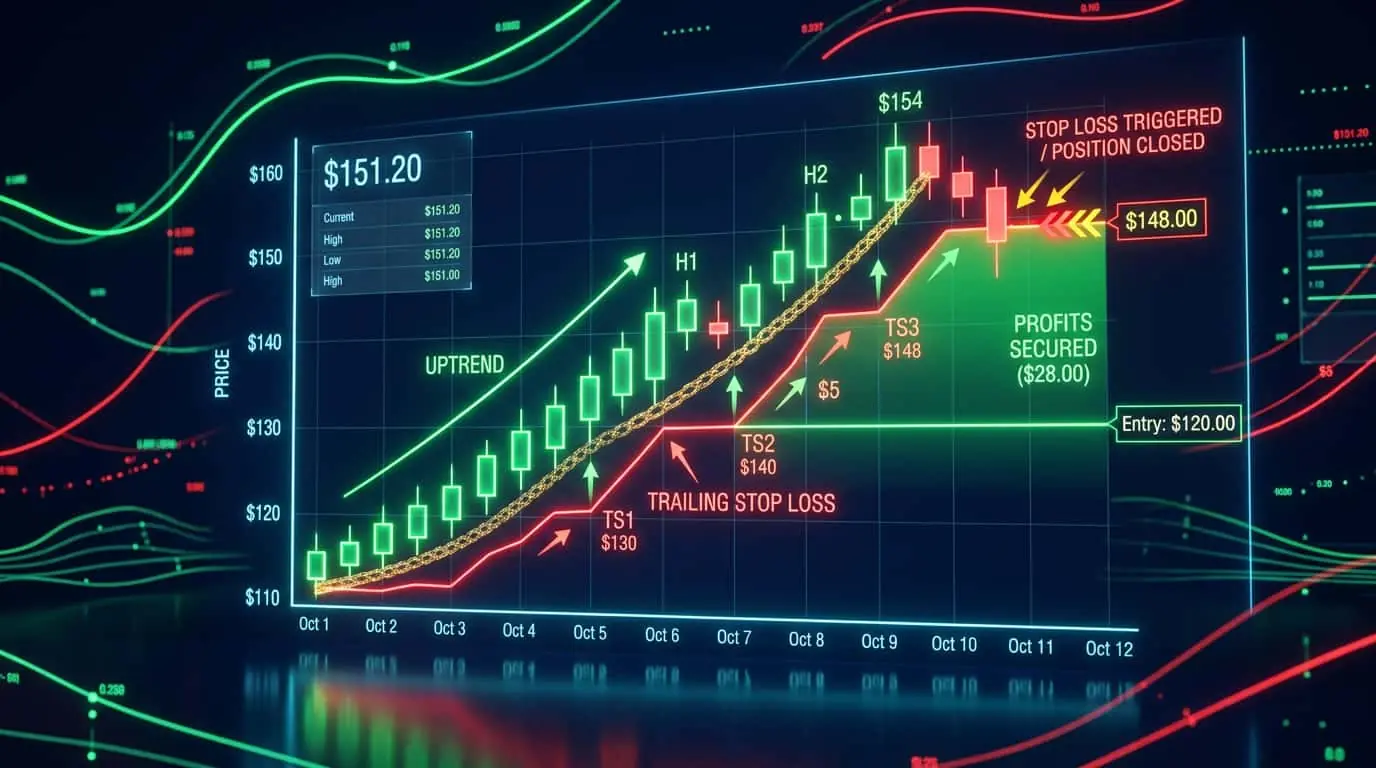
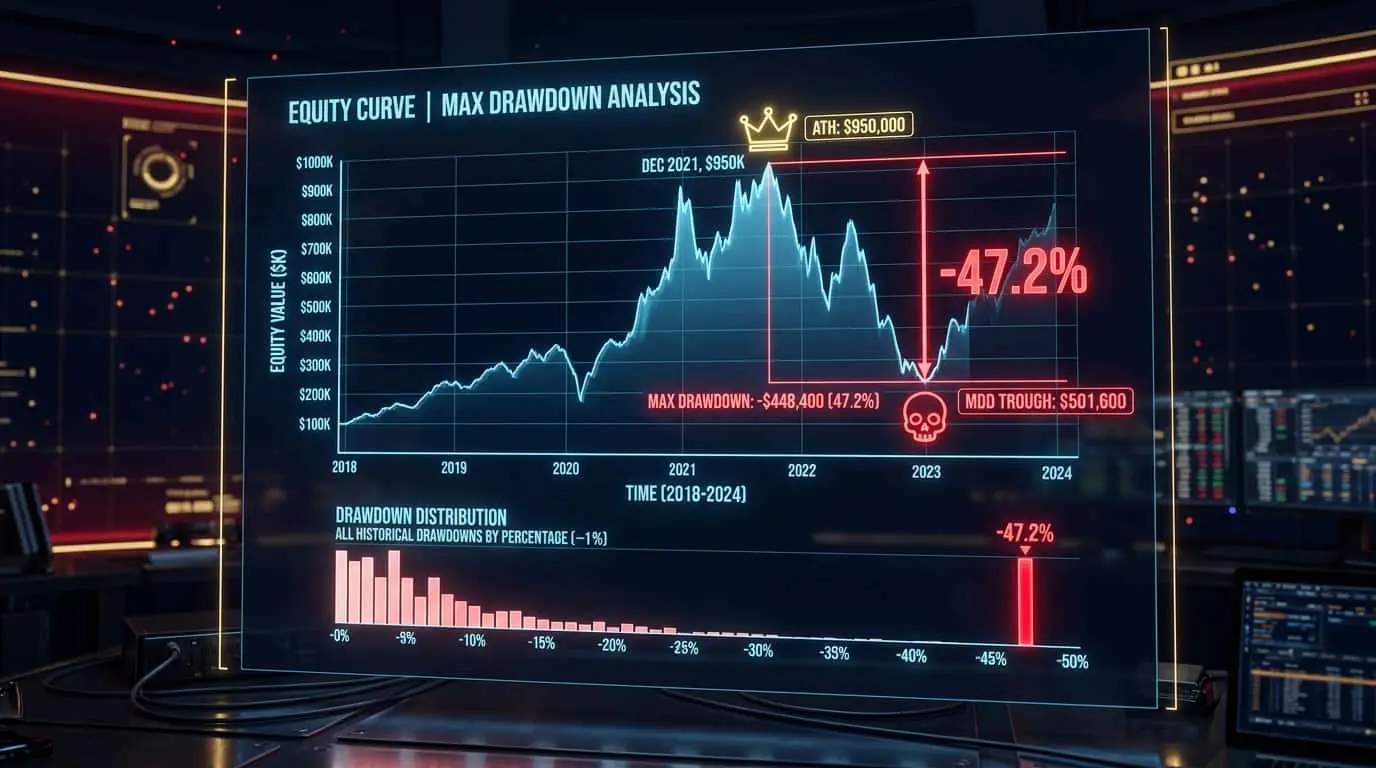
Drawdown is the peak-to-trough decline in the value of a trading account, expressed as a percentage from the highest equity point to the lowest point before a new high is reached. It is the most widely used measure of downside risk and trading strategy performance.
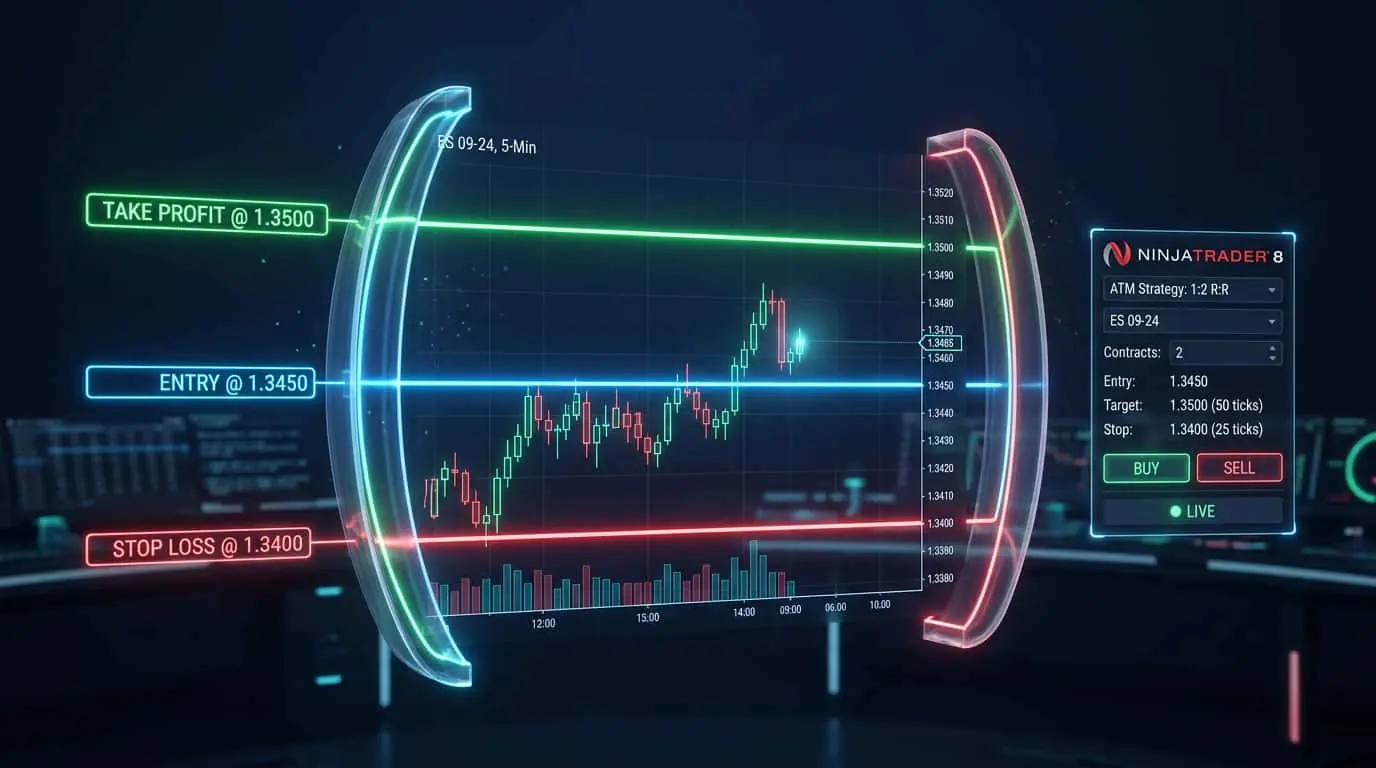
A stop loss is a predetermined price level at which a trader exits a losing position to limit their loss. It is an order placed with a broker to automatically sell (or buy, for short positions) a security when it reaches a specific price, preventing further losses beyond a defined threshold.
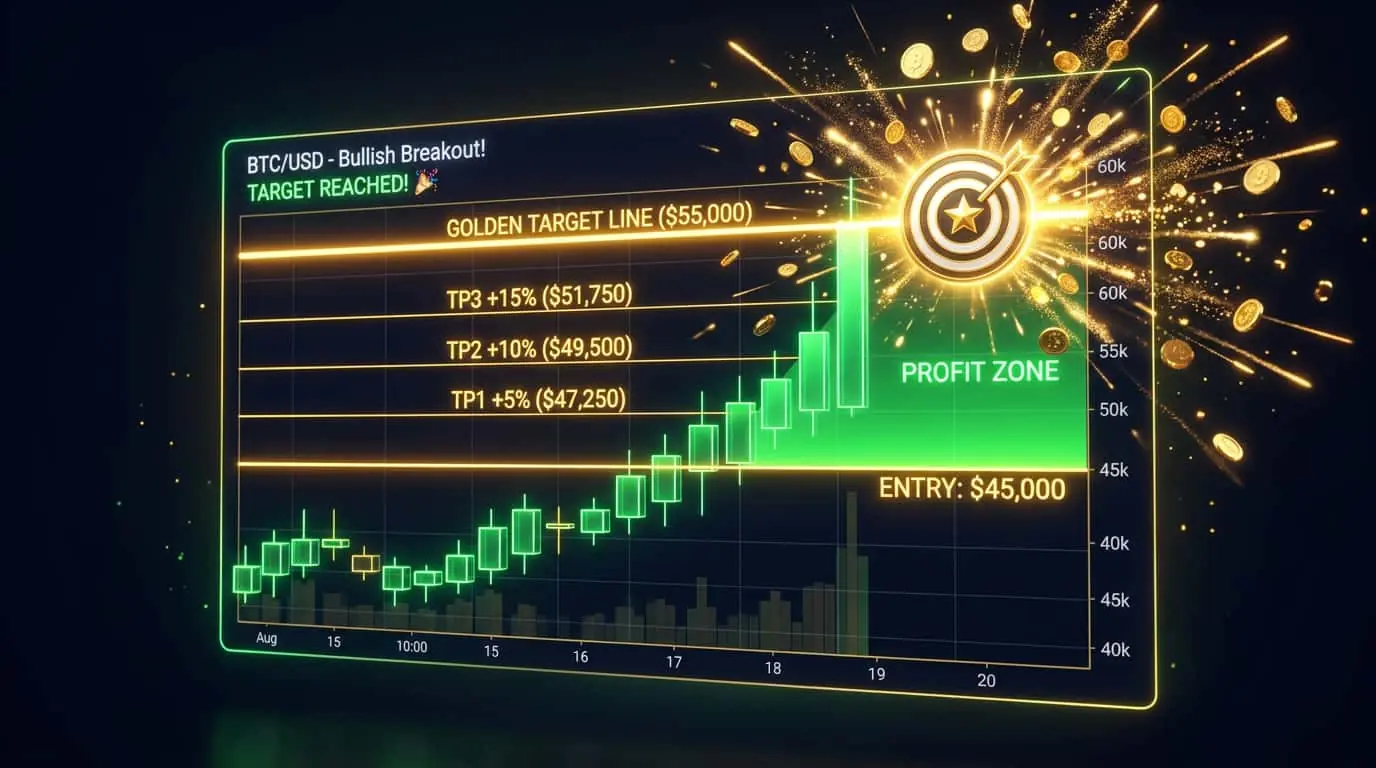
Take profit is a predetermined price level at which a trader exits a winning position to secure gains. It is an order that automatically closes a trade when the price reaches a specified target, ensuring profits are locked in before the market can reverse.
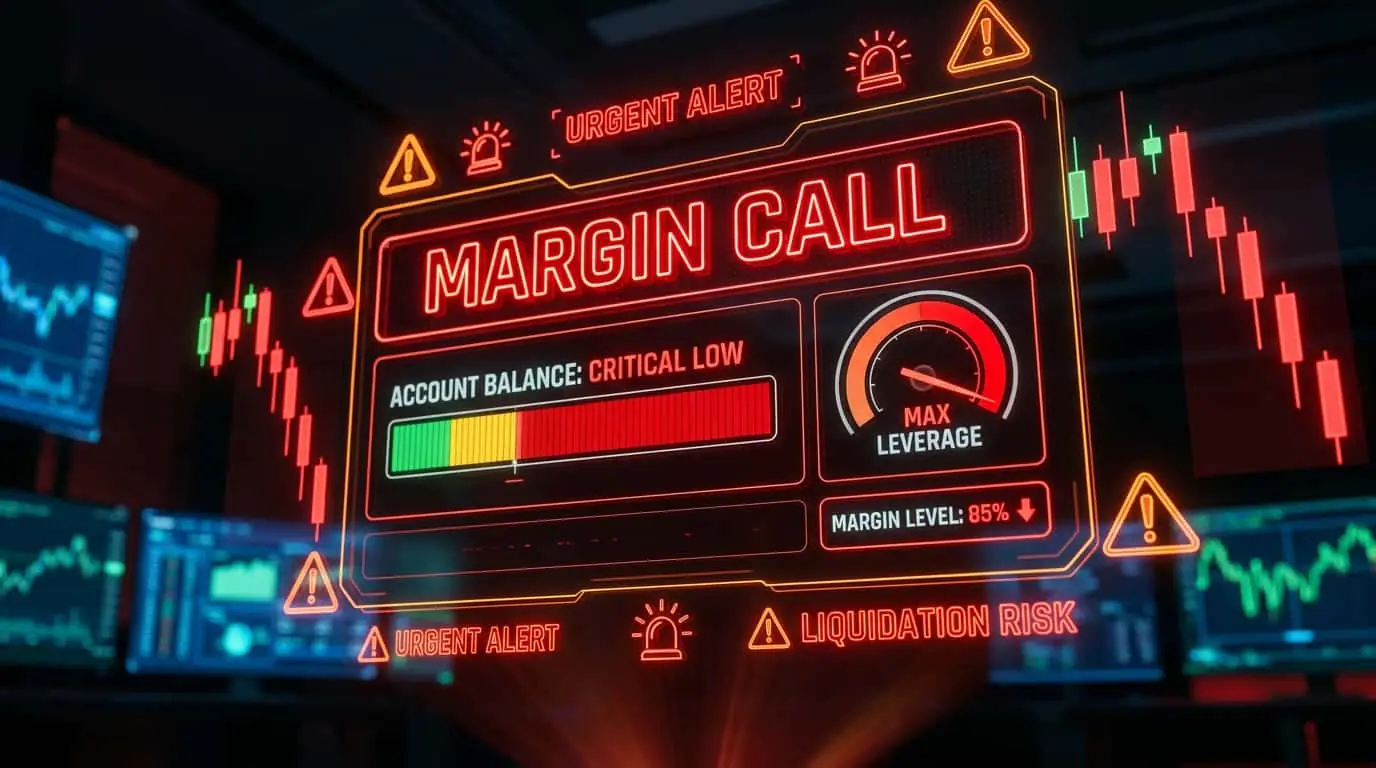
A margin call is a demand from a broker for a trader to deposit additional funds or close positions when the account equity falls below the required maintenance margin level. It occurs when trading losses reduce the account balance to a point where it can no longer support the open positions, and it serves as a warning that the account is at risk of forced liquidation.
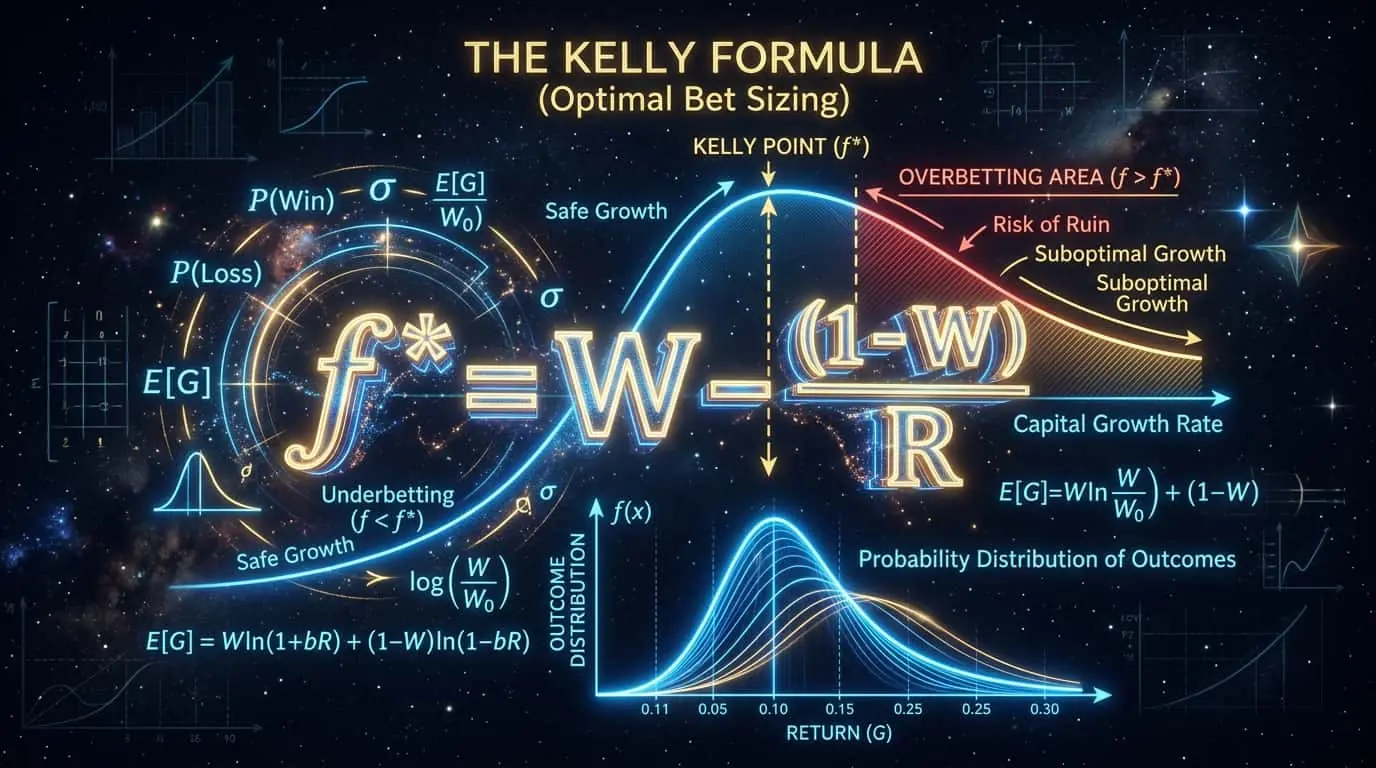
The Kelly Criterion is a mathematical formula that calculates the optimal percentage of capital to risk on each trade to maximize the long-term geometric growth rate of a portfolio. Developed by John L.
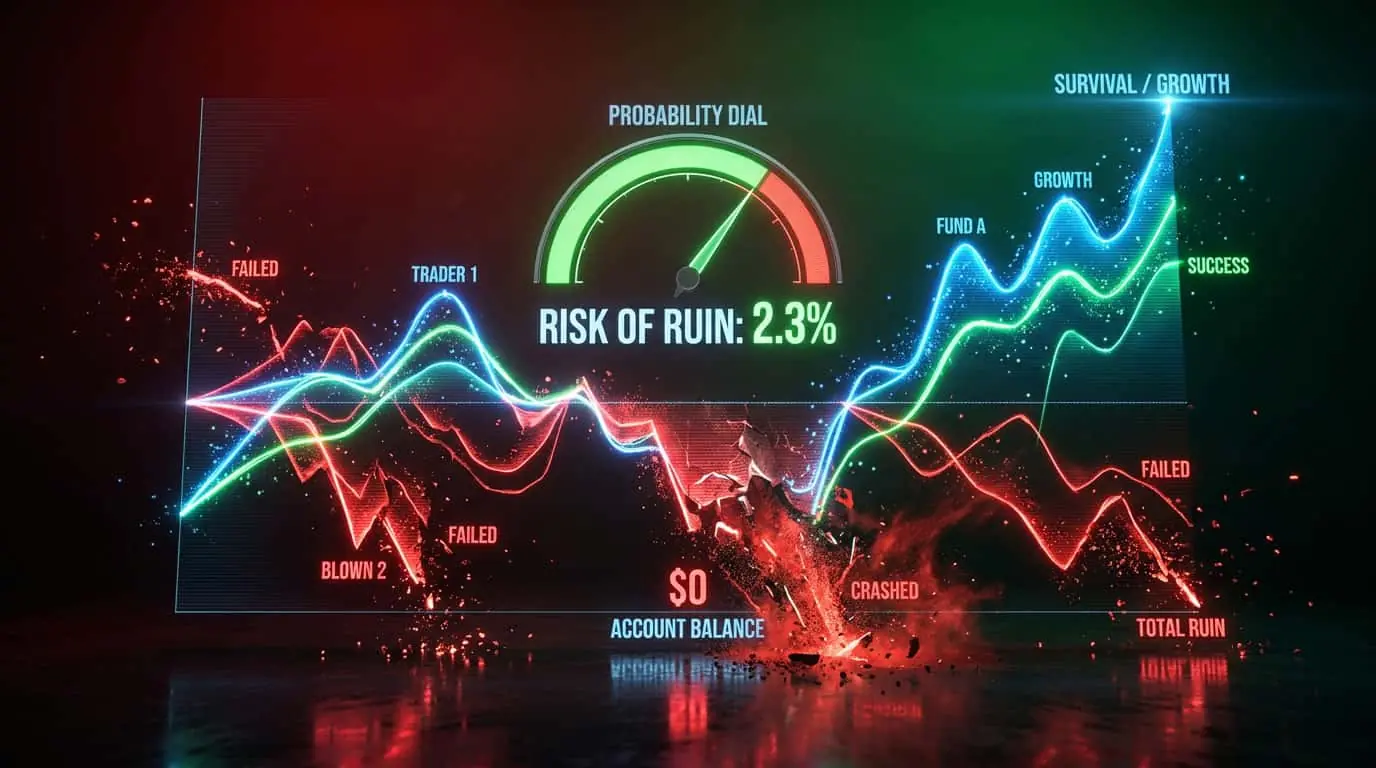
Monte Carlo simulation is a statistical technique that uses random sampling to model the probability of different outcomes in a trading strategy. It takes a set of historical trade results and randomly reorders them thousands of times to generate a distribution of possible equity curves, revealing the range of potential outcomes including worst-case drawdowns and best-case returns.
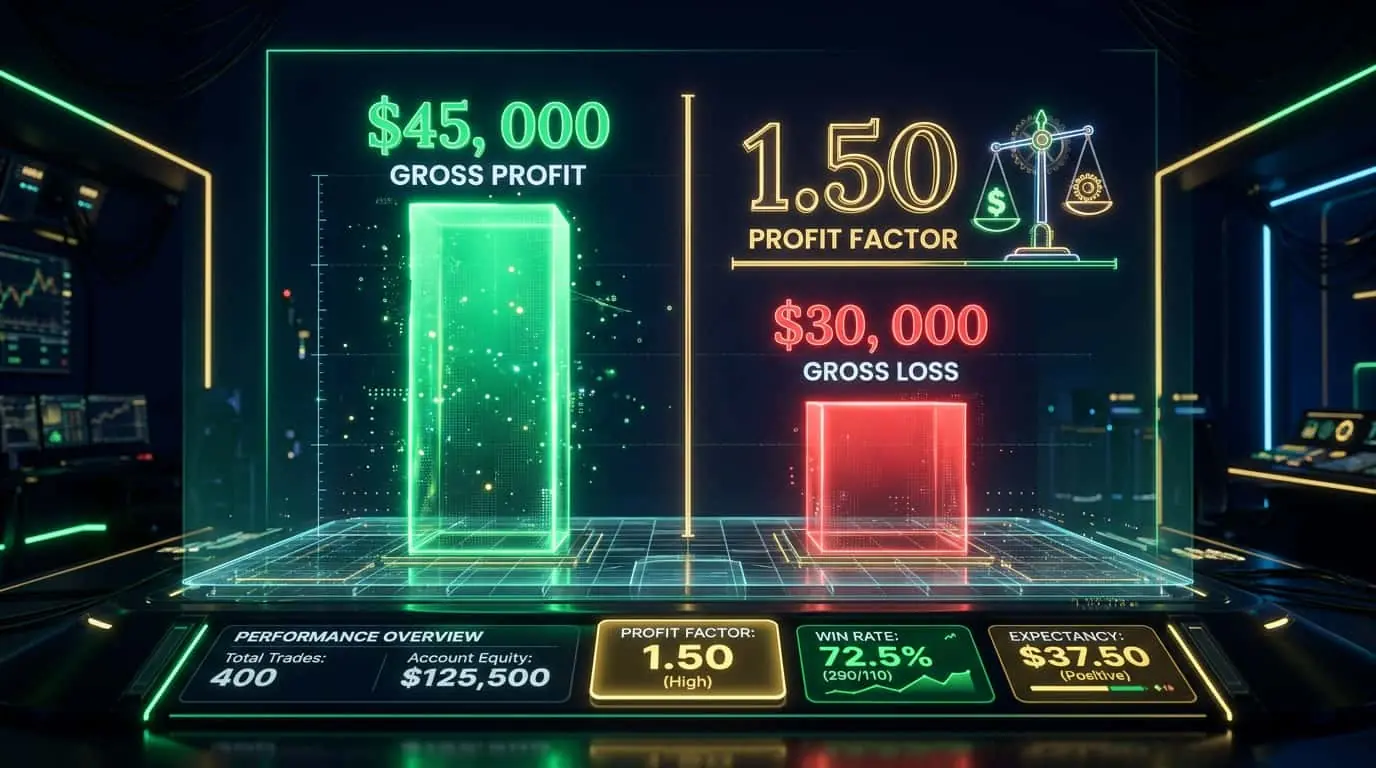
Profit factor is the ratio of gross profits to gross losses over a given period or set of trades. It is calculated by dividing the total money gained on winning trades by the total money lost on losing trades.
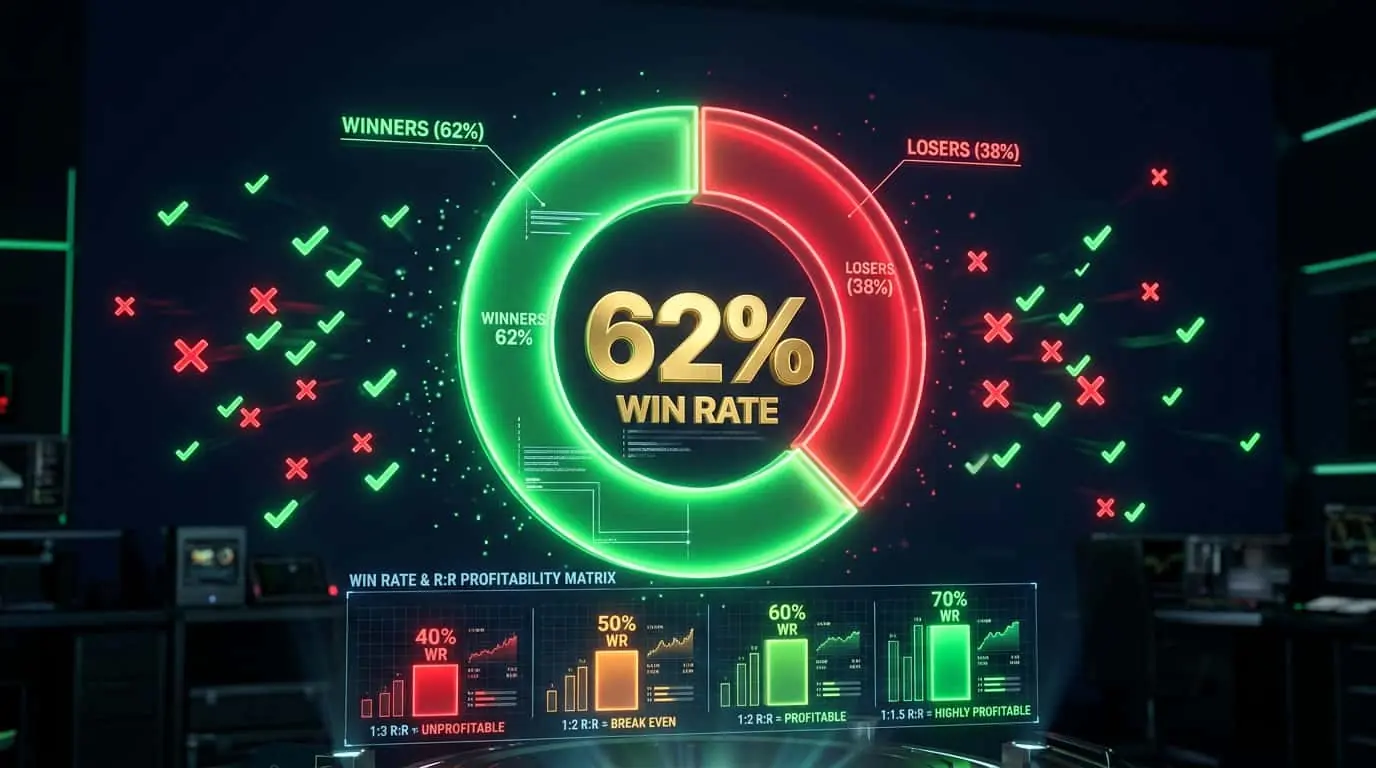
Win rate is the percentage of trades that result in a profit out of the total number of trades taken. It is calculated by dividing the number of winning trades by the total number of trades and multiplying by 100.
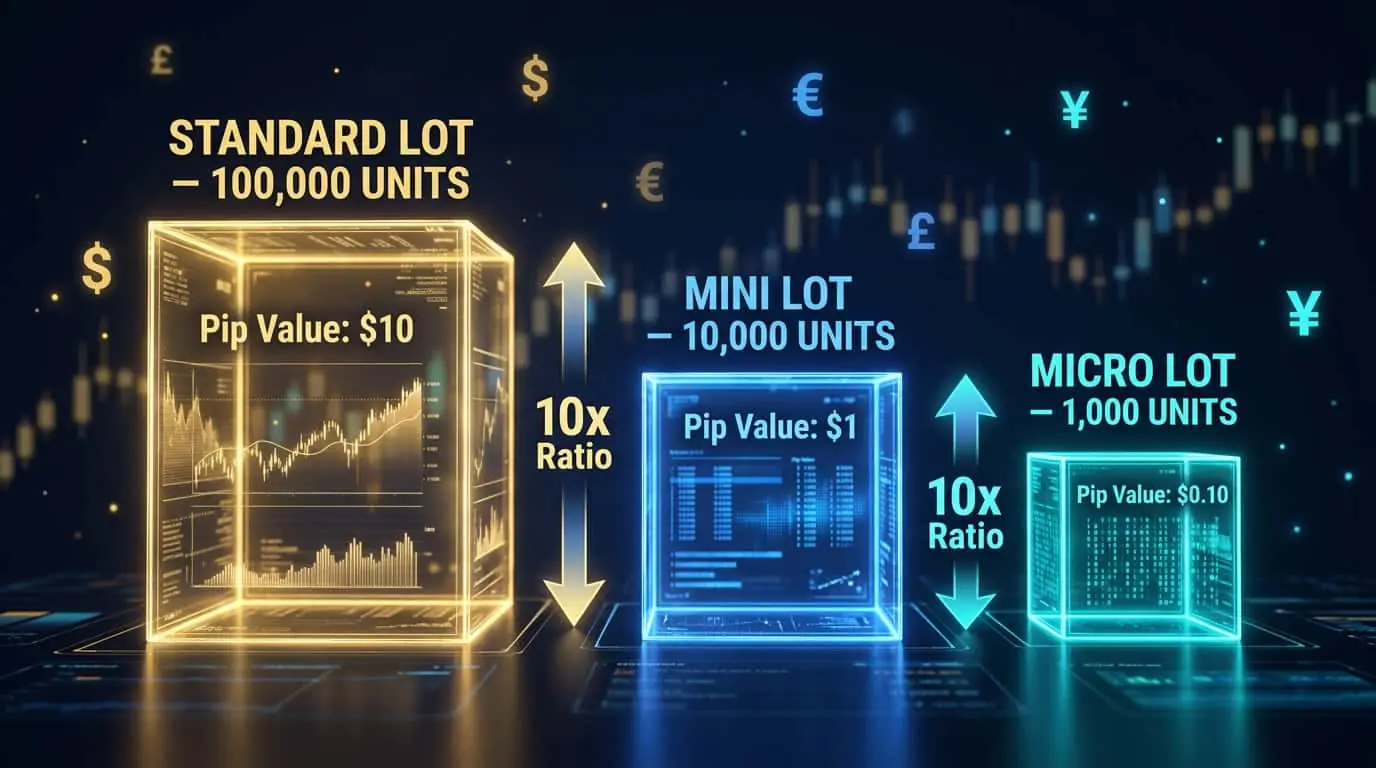
A pip (percentage in point) is the smallest standard unit of price movement in forex trading. For most currency pairs, a pip equals 0.
Leverage is a mechanism that allows traders to control a larger position with a smaller amount of capital by borrowing from their broker. It is expressed as a ratio such as 1:50 or 1:100, meaning a trader can control $50 or $100 worth of assets for every $1 of their own capital.
Backtesting is the process of testing a trading strategy against historical market data to evaluate how it would have performed in the past. It applies the strategy's rules (entries, exits, position sizing) to past price data to generate performance statistics such as profit factor, win rate, maximum drawdown, and total return.
Prop trading (proprietary trading) is a model where a firm provides traders with capital to trade in exchange for a share of the profits. In the modern retail context, prop firms (such as FTMO, Topstep, or Apex Trader Funding) offer funded accounts to traders who pass evaluation challenges, allowing them to trade with the firm's capital while keeping 70-90% of the profits they generate.
NinjaTrader is a professional-grade trading platform primarily used for futures, forex, and stock trading. It offers advanced charting, market analysis, automated strategy development using C# (NinjaScript), and direct market access.
Put your knowledge into practice with our free trading tools.