TL;DR
Drawdown is the peak-to-trough decline in your trading account, expressed as a percentage. It is the primary measure of downside risk. A 20% drawdown requires a 25% gain to recover, and a 50% drawdown requires a 100% gain, making drawdown management critical for survival.
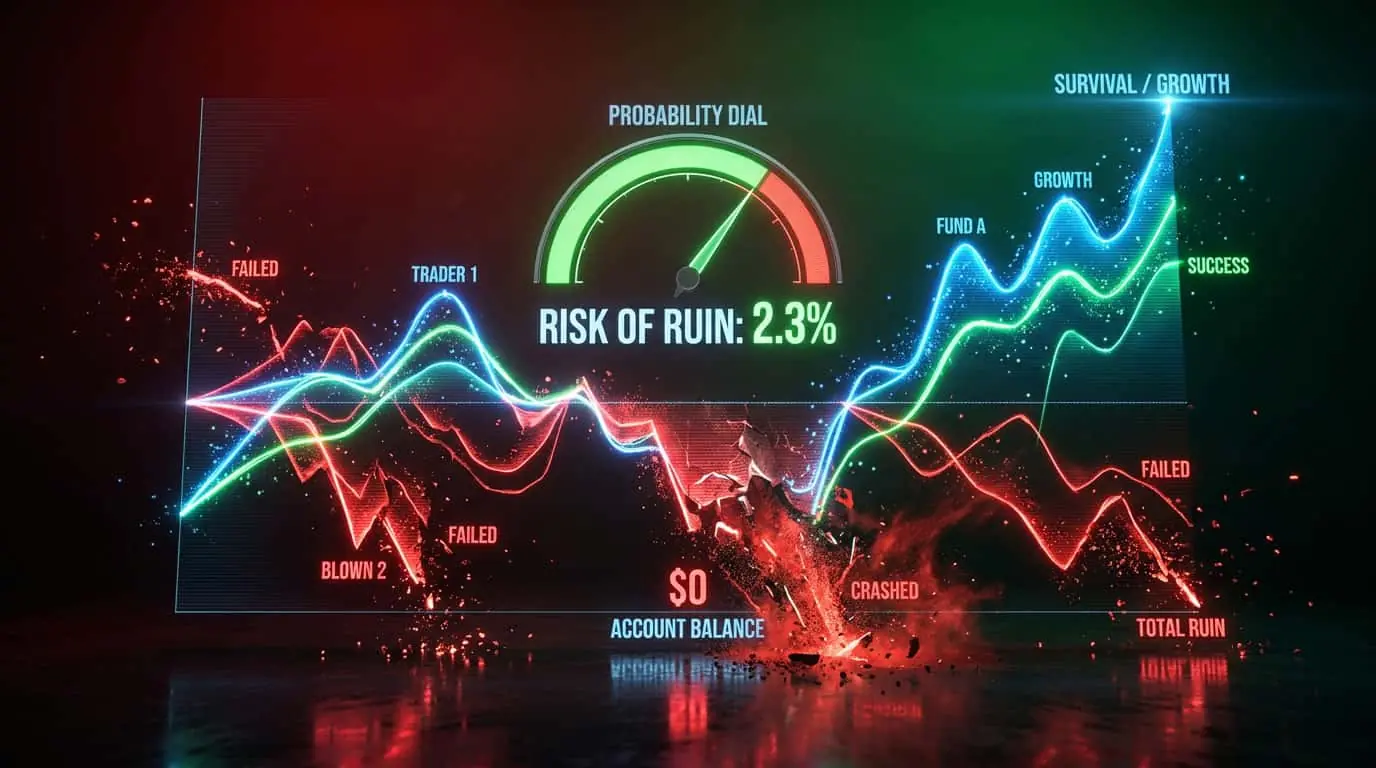
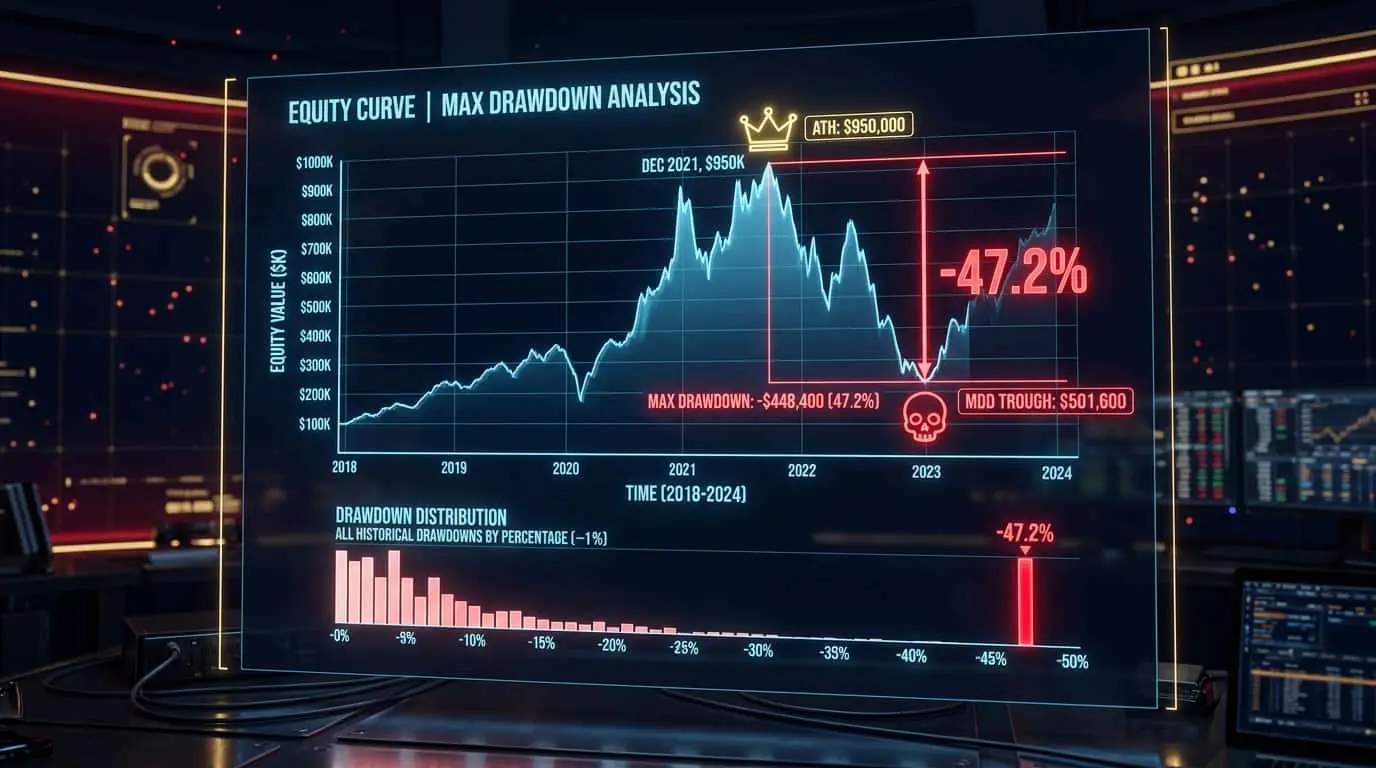
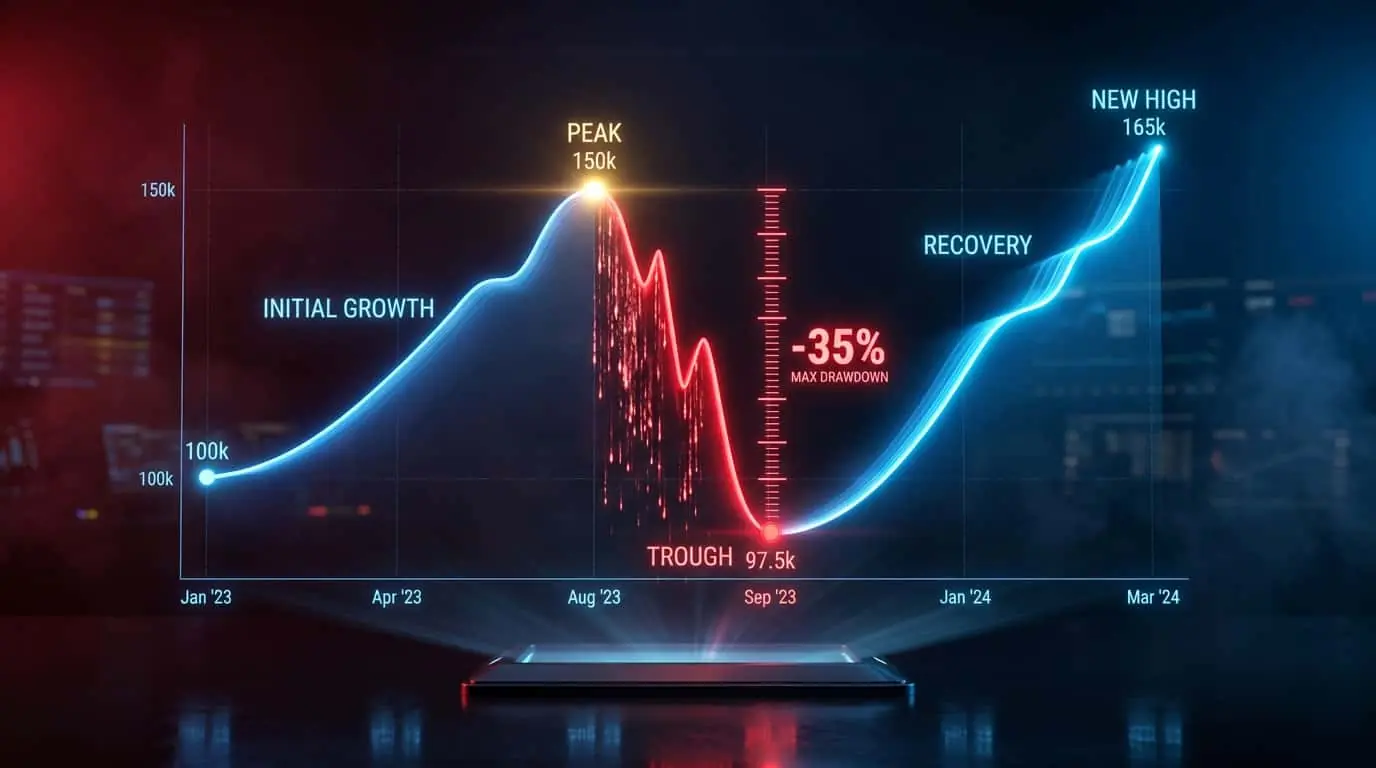
Drawdown is the peak-to-trough decline in the value of a trading account, expressed as a percentage from the highest equity point to the lowest point before a new high is reached. It is the most widely used measure of downside risk and strategy performance in trading. Every trading strategy, no matter how profitable, experiences drawdowns. They are an inevitable part of trading because no strategy wins on every trade. What separates successful traders from failed ones is not the absence of drawdowns but the ability to manage their depth and duration. Drawdown impacts both the mathematical health of an account and the psychological state of the trader. Large drawdowns create a compounding problem: the larger the decline, the exponentially larger the recovery needed. This asymmetry is why experienced traders prioritize drawdown management above almost everything else.
Drawdown is calculated by measuring the percentage decline from a portfolio's peak value to its lowest point. The formula is straightforward, but understanding the difference between current drawdown and maximum drawdown is important. Current drawdown measures the decline from the most recent equity peak to the current equity level. Maximum drawdown (MDD) is the largest peak-to-trough decline observed over the entire history of a strategy or account. Relative drawdown expresses the decline as a percentage, while absolute drawdown measures it in dollar terms. For risk management purposes, relative (percentage) drawdown is more useful because it is comparable across different account sizes.
Drawdown % = (Peak Value - Trough Value) / Peak Value x 100Peak Value — The highest equity point before the decline
Trough Value — The lowest equity point before recovery begins
Pro Tip
Track your drawdown daily. If you do not measure it, you cannot manage it. Use your trading journal or platform reports to monitor both current and maximum drawdown.
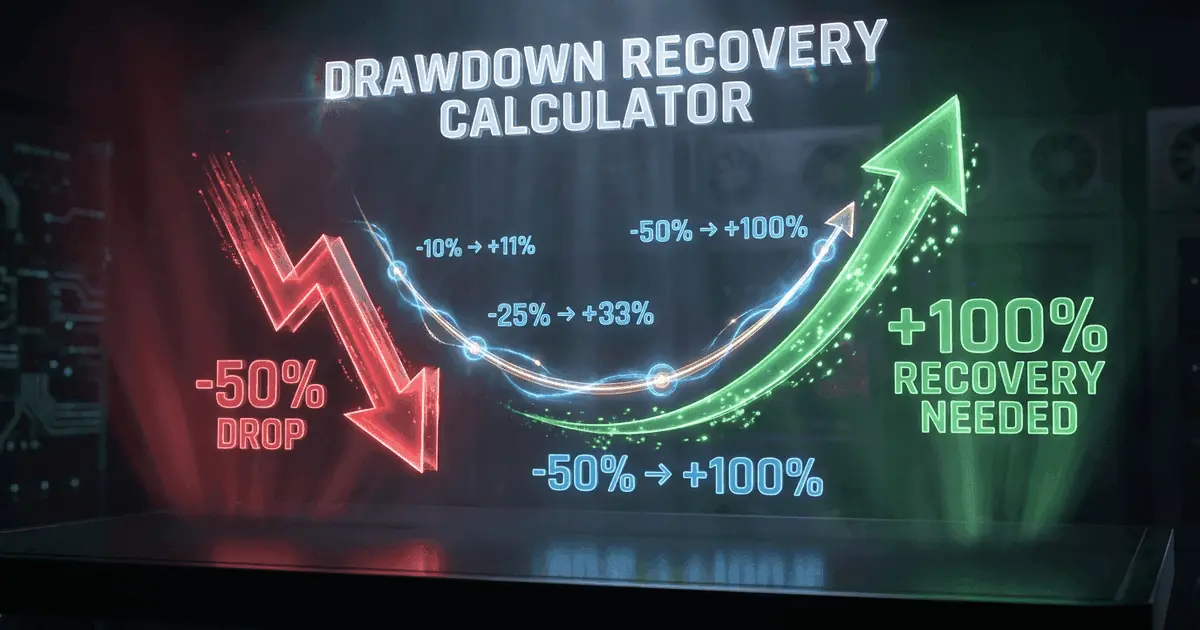
The most critical concept in drawdown management is the asymmetry between losses and the gains required to recover from them. A 10% drawdown requires an 11.1% gain to return to the previous peak. This seems manageable. But as drawdowns grow larger, the recovery requirement grows exponentially. A 25% drawdown requires a 33.3% gain. A 50% drawdown requires a 100% gain, meaning you must double your remaining capital just to get back to where you started. A 75% drawdown requires a 300% gain, which is nearly impossible for most trading strategies. This mathematical reality is why professional traders set hard drawdown limits and why prop firms are so strict about drawdown rules. The damage from a large drawdown is not just financial but temporal: even a strategy with strong expectancy can take months or years to recover from a deep drawdown.
| Drawdown | Required Recovery Gain | Difficulty |
|---|---|---|
| 5% | 5.3% | Easy: normal trading fluctuation |
| 10% | 11.1% | Manageable: a few good trades |
| 20% | 25.0% | Challenging: weeks to months |
| 30% | 42.9% | Difficult: months of consistent trading |
| 40% | 66.7% | Very difficult: significant time and discipline |
| 50% | 100.0% | Extremely difficult: must double remaining capital |
| 75% | 300.0% | Nearly impossible: strategy likely needs to be abandoned |
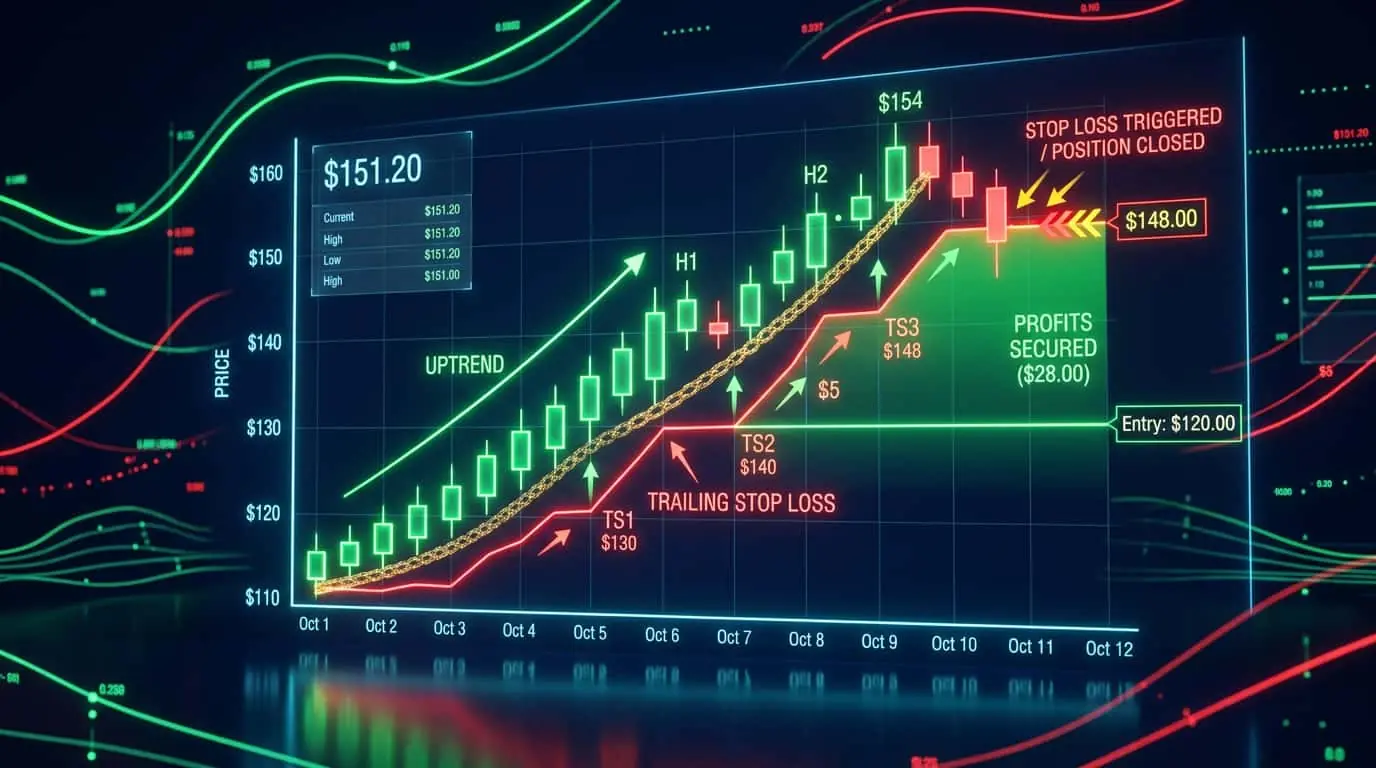
There are several types of drawdown that traders should understand. Equity drawdown measures the decline in total account equity, including unrealized (open) profits and losses. Balance drawdown only considers closed trades and ignores floating positions. Trailing drawdown, commonly used by prop firms, is a drawdown that trails up with your equity high-water mark but does not trail back down. For example, if a prop firm gives you a $50,000 account with a $2,500 trailing drawdown, your initial stop-out level is $47,500. If you grow the account to $52,000, the stop-out level trails up to $49,500. This trailing mechanism means you must lock in profits to maintain your cushion. Static drawdown, in contrast, is measured from the starting balance and does not trail upward. A $50,000 account with a $2,500 static drawdown always has a stop-out at $47,500, regardless of profits made.
Pro Tip
When evaluating prop firms, pay close attention to whether the drawdown is trailing or static, and whether it is based on equity (including open trades) or balance (closed trades only). These differences dramatically affect your risk management approach.
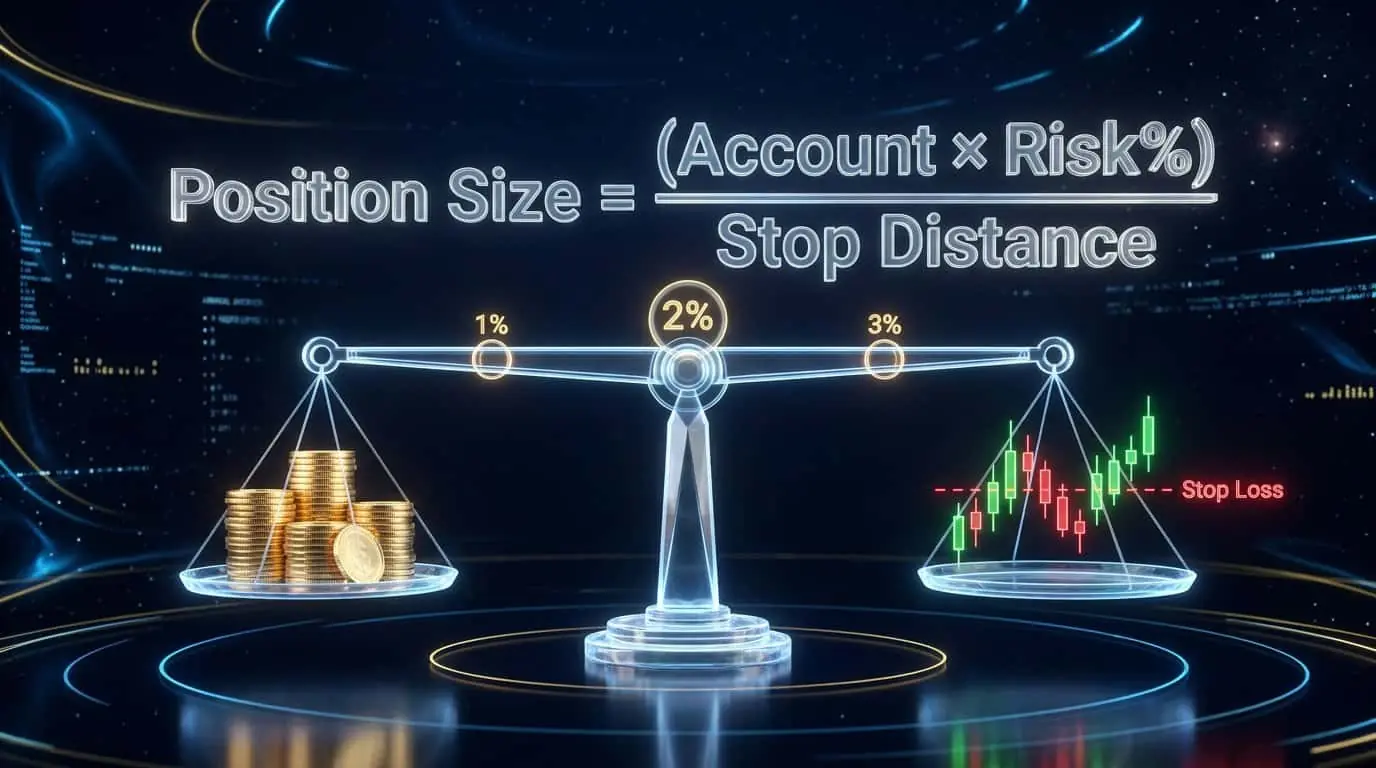
Effective drawdown management starts with proper position sizing: risking 1-2% per trade limits drawdown depth during losing streaks. Beyond position sizing, traders can use several strategies to manage drawdown. Reducing position size during drawdowns (scaling down) limits further damage while allowing the strategy to continue operating. Some traders implement a circuit breaker: if drawdown exceeds a threshold (e.g., 10%), they stop trading for a cooling-off period to prevent emotional decisions. Diversifying across uncorrelated strategies or instruments can reduce portfolio-level drawdown because not all positions will decline simultaneously. Setting a maximum drawdown limit (e.g., 15-20% for personal accounts, 5-10% for prop firm accounts) and having a clear plan for what happens when that limit is reached prevents catastrophic losses.
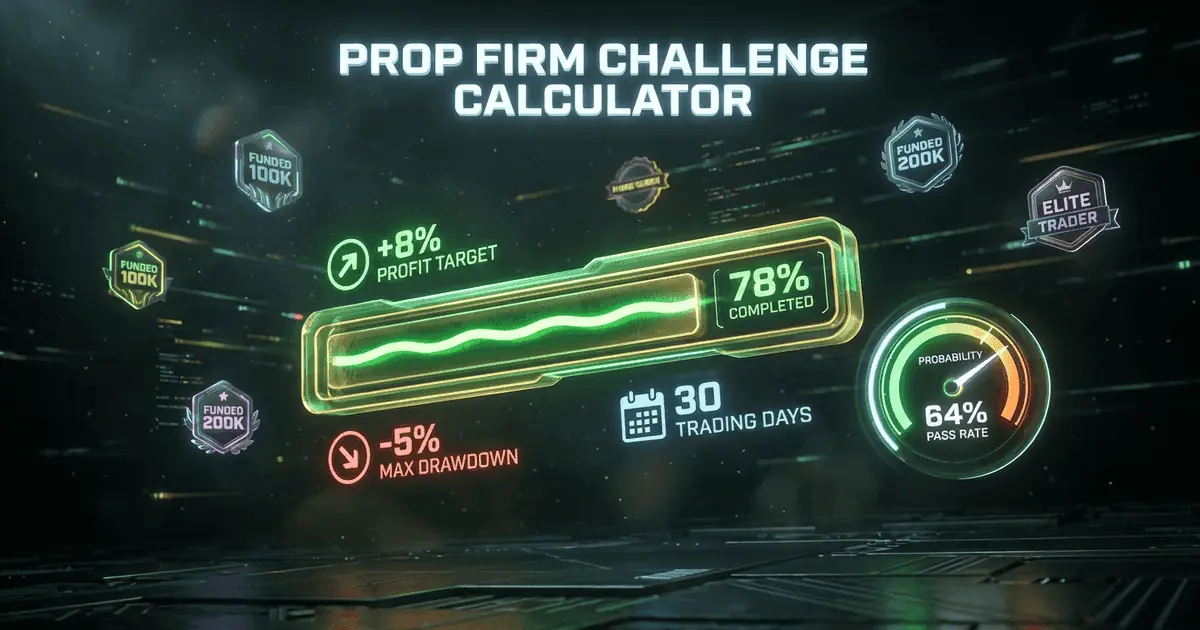
Prop firms use drawdown as their primary risk control mechanism. Most evaluation programs impose strict drawdown limits, typically 5-10% maximum drawdown and 2-5% daily loss limits. Understanding and managing these limits is the difference between keeping a funded account and losing it. The two most common prop firm drawdown types are end-of-day (EOD) trailing drawdown, which only updates at the close of each trading day, and real-time trailing drawdown, which updates with every tick. Real-time trailing drawdown is significantly harder to manage because intraday equity spikes immediately raise the floor. For example, if your account briefly touches +$1,000 in profit during the day before settling at +$200, real-time trailing drawdown has already moved the floor up by $1,000. EOD trailing only moves at market close, giving you more room during the day.
| Prop Firm Rule | Typical Limit | Impact on Trading |
|---|---|---|
| Maximum drawdown | 5-10% | Total loss limit from peak equity |
| Daily loss limit | 2-5% | Maximum loss allowed in a single day |
| Trailing drawdown | Varies | Floor rises with equity, never falls |
| Static drawdown | Varies | Floor stays at initial balance |
| Consistency rules | Varies | No single day can exceed 30-40% of total profit |
Pro Tip
When trading a prop firm account with trailing drawdown, consider taking partial profits at key levels to lock in gains and maintain your drawdown cushion. The trailing mechanism means unrealized profits increase your floor.
Mistake
Increasing risk during a drawdown to recover faster
Correction
Increasing risk during a drawdown accelerates losses if the losing streak continues. Instead, maintain or reduce position size during drawdowns and let your edge work over time.
Mistake
Ignoring drawdown because individual trades seem small
Correction
Individual trades may risk only 1-2%, but 10 consecutive losses at 2% creates an 18% drawdown. Track cumulative drawdown from your equity peak, not just individual trade losses.
Mistake
Not understanding trailing drawdown in prop firm accounts
Correction
Trailing drawdown raises the floor as your equity grows, meaning unrealized profits count against you. Understand whether your prop firm uses real-time or end-of-day trailing before trading.