TL;DR
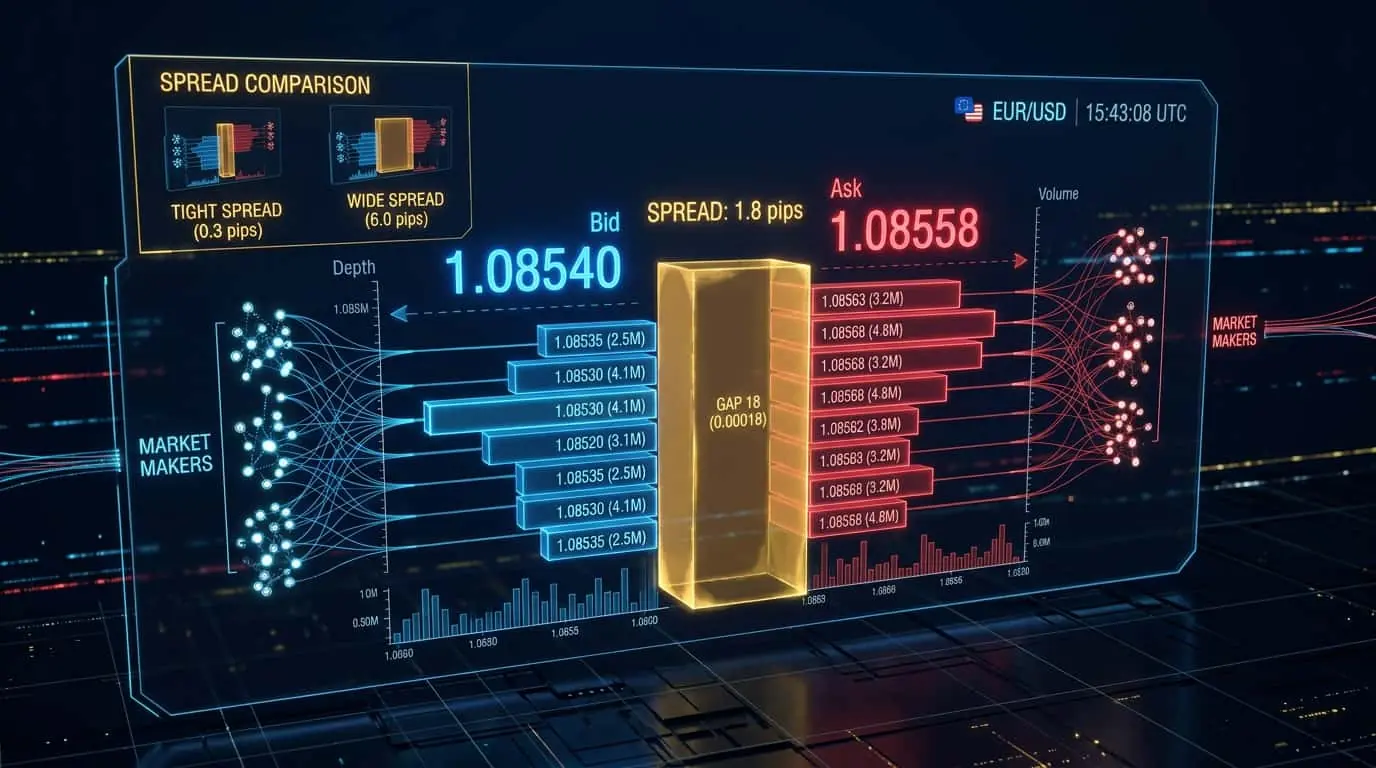
Spread is the difference between the bid (sell) and ask (buy) price of an instrument. It represents the broker's primary source of revenue and is a cost paid on every trade. Tighter spreads reduce trading costs, especially for high-frequency strategies.
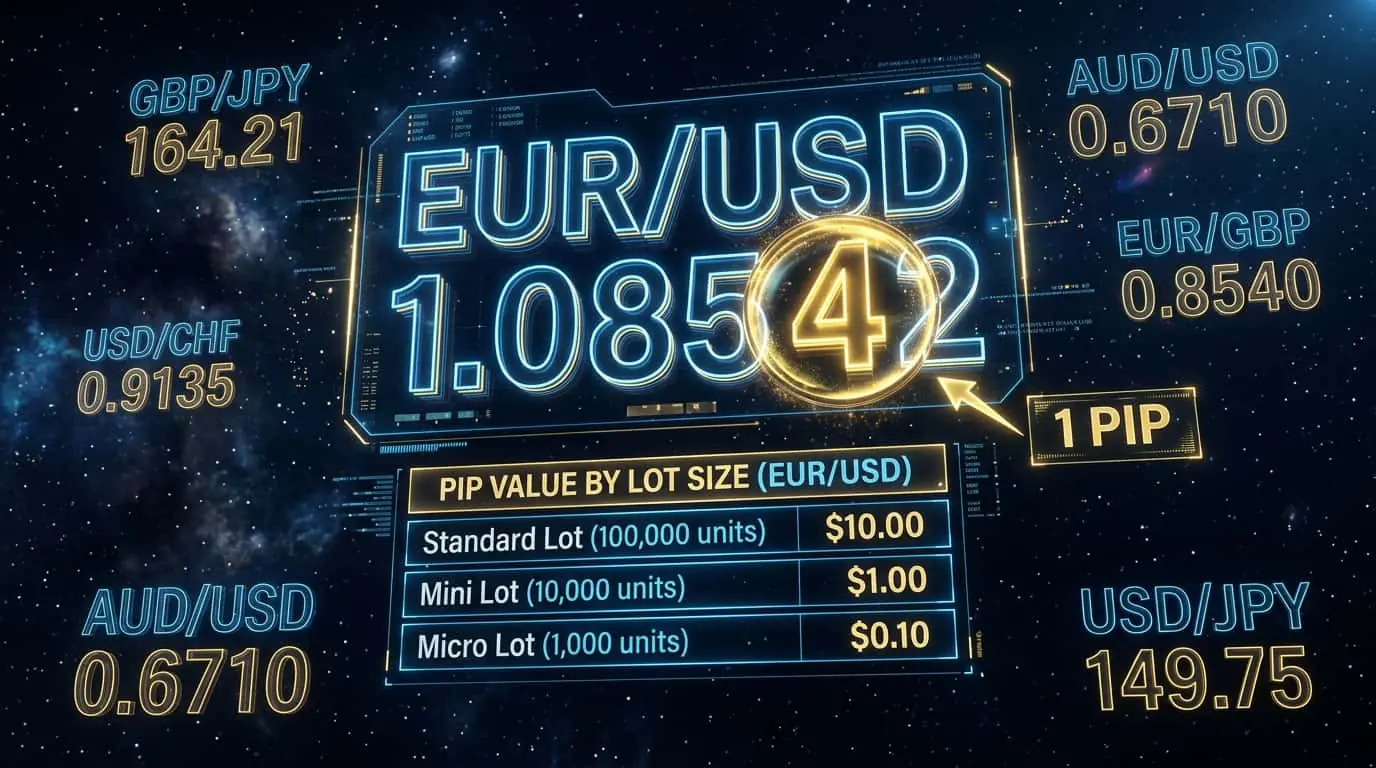
Spread is the difference between the bid price (the highest price a buyer will pay) and the ask price (the lowest price a seller will accept) for a financial instrument. In forex, the spread is measured in pips. For example, if EUR/USD has a bid of 1.10500 and an ask of 1.10512, the spread is 1.2 pips. The spread represents a cost to the trader because every trade starts at a loss equal to the spread. When you buy at the ask price, the market must move the entire spread in your favor before you reach breakeven. The spread is the primary way brokers and market makers earn revenue, either as the sole compensation (in zero-commission models) or in addition to commissions (in ECN/raw spread models). Understanding spread costs is essential for evaluating strategy profitability, especially for strategies that take many trades or target small price moves.
Brokers offer two types of spreads: fixed and variable. Fixed spreads remain constant regardless of market conditions (e.g., always 2 pips on EUR/USD). They provide predictability in cost calculations but are typically wider than the average variable spread and may not be available during extreme volatility. Variable (floating) spreads fluctuate based on market liquidity and volatility. During high-liquidity sessions (London/New York overlap), variable spreads can be as tight as 0.1-0.3 pips for major pairs. During low-liquidity periods (late Asian session) or high-impact news events, variable spreads can widen dramatically to 5-20+ pips. The choice between fixed and variable depends on your trading style: scalpers and high-frequency traders benefit from tight variable spreads during liquid sessions, while news traders or those who trade during off-hours may prefer the predictability of fixed spreads.
| Spread Type | EUR/USD Typical | During News | Best For |
|---|---|---|---|
| Fixed | 1.5-2.0 pips | 1.5-2.0 pips (unchanged) | News trading, off-hours trading |
| Variable (standard) | 1.0-1.5 pips | 3-10+ pips | Day trading, swing trading |
| Variable (raw/ECN) | 0.0-0.3 pips + commission | 1-5+ pips | Scalping, high-frequency trading |
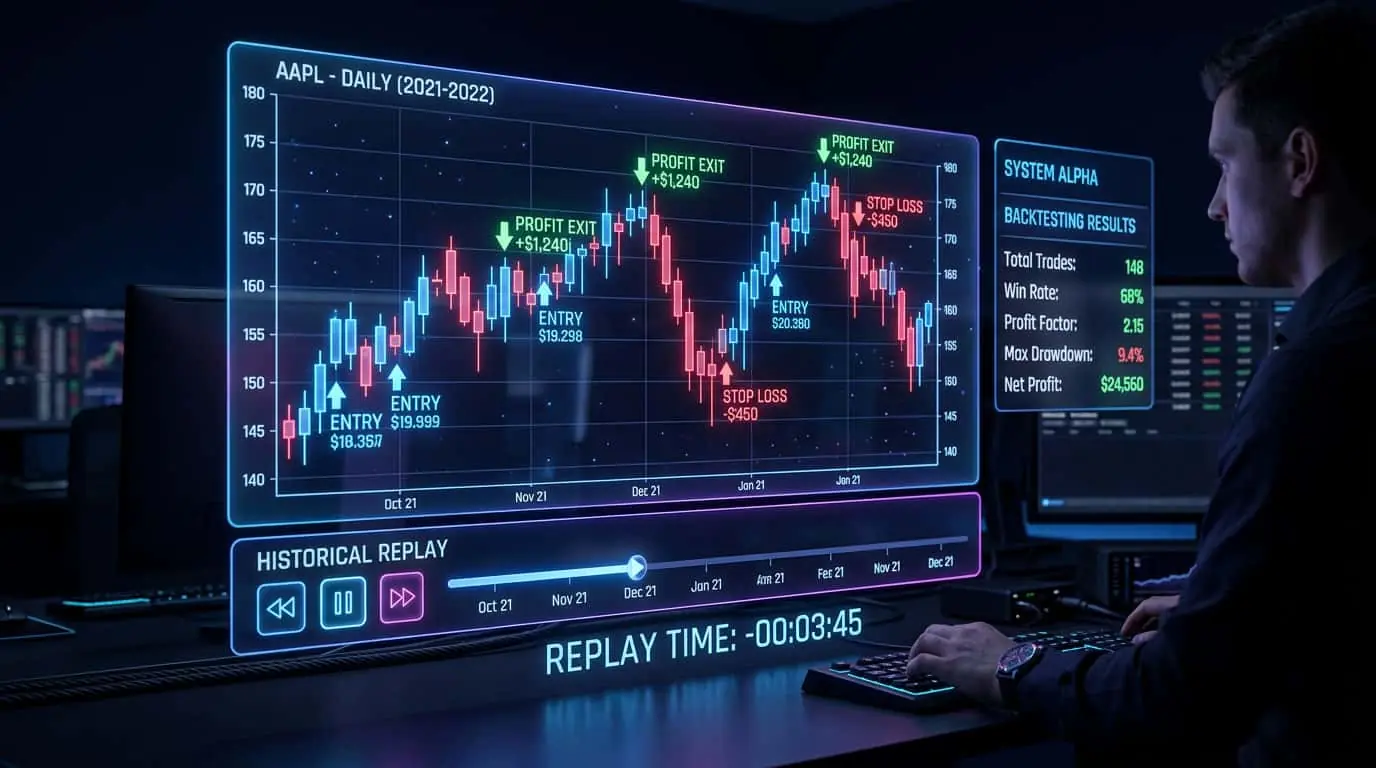
Spreads are a hidden cost that many traders underestimate. Every trade pays the spread twice: once on entry and the effective cost is baked into the fill price. For a trader making 200 trades per month with 1 mini lot and a 1.5-pip average spread, the monthly spread cost is 200 x 1.5 x $1 = $300. Over a year, that is $3,600 in spread costs alone. For a $10,000 account, that represents 36% of the account consumed by spreads. This is why spread costs are most critical for high-frequency traders and scalpers. A scalper targeting 5-pip moves with a 1.5-pip spread loses 30% of each potential win to the spread before the trade even begins. The same strategy with a 0.3-pip spread (on an ECN account with commissions) might lose only 6% to costs, dramatically improving profitability. When evaluating a strategy's backtest, always include spread costs to get a realistic assessment.
Pro Tip
Calculate your annual spread cost: (Average Spread in Pips) x (Pip Value) x (Average Trades per Month) x 12. If this number exceeds 10% of your account, consider reducing trade frequency, switching to a lower-spread broker, or targeting larger price moves.
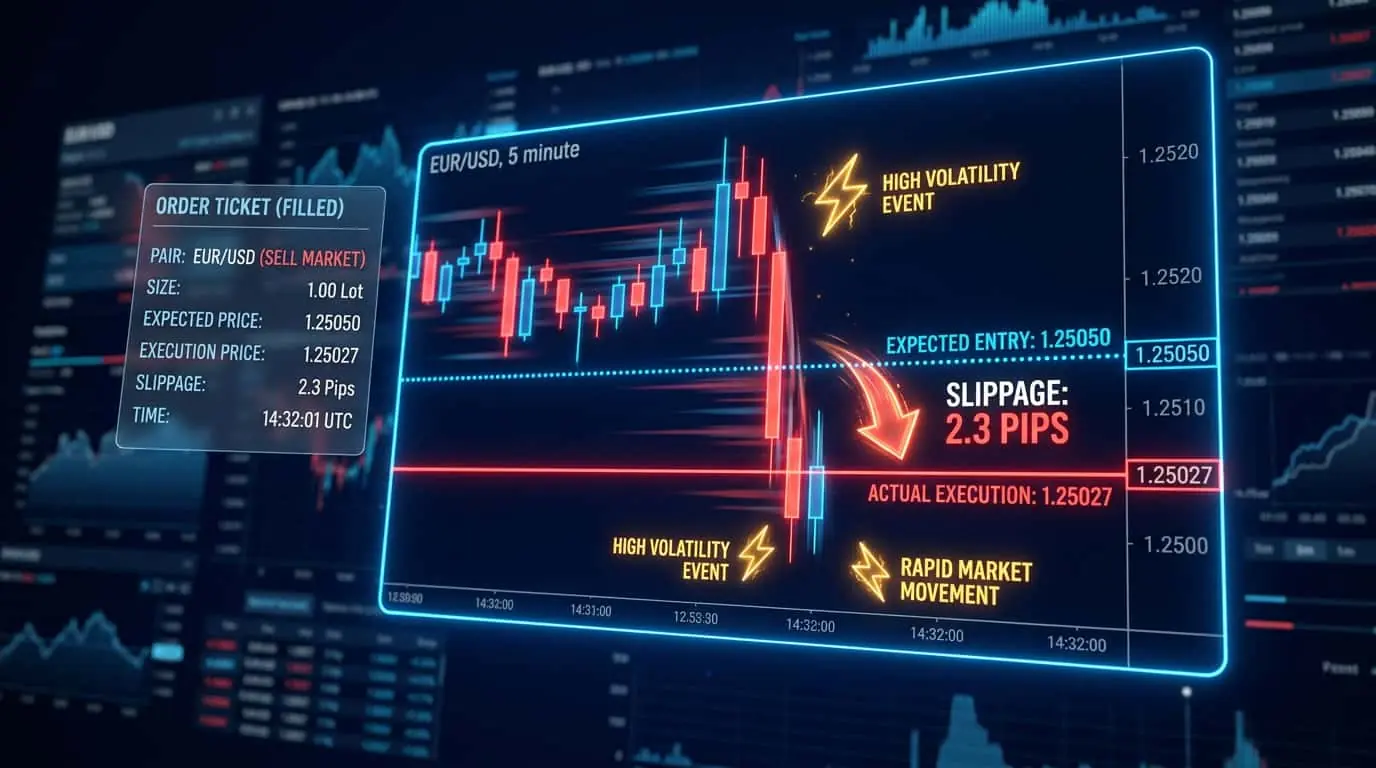
Several factors influence how wide or tight a spread will be at any given moment. Liquidity is the primary driver: highly liquid instruments like EUR/USD have the tightest spreads (often under 1 pip), while exotic pairs like USD/ZAR can have spreads of 50+ pips. Time of day matters because liquidity varies throughout the trading day. The London/New York session overlap (8:00-12:00 ET) typically offers the tightest spreads for forex. Market volatility widens spreads because market makers increase the gap to protect themselves from rapid price changes. During major news releases (NFP, FOMC decisions, ECB meetings), spreads can widen 3-10x their normal level. The broker type also matters: ECN brokers route orders to liquidity providers and offer tighter spreads with a separate commission, while market-maker brokers set their own spreads which include their markup.
Understanding typical spreads across different financial instruments helps traders choose markets that are compatible with their strategy's cost requirements. EUR/USD is the most liquid currency pair in the world, with average spreads of 0.1-0.3 pips on ECN accounts during peak sessions. Other major pairs (USD/JPY, GBP/USD, AUD/USD) typically trade with spreads of 0.3-1.0 pips. Minor pairs (EUR/GBP, EUR/AUD, GBP/CHF) have wider spreads of 1.0-3.0 pips. Exotic pairs (USD/TRY, USD/ZAR, USD/MXN) can have spreads of 10-100+ pips, making them unsuitable for short-term strategies. In futures markets, the effective spread is determined by the bid-ask gap in the order book. The E-mini S&P 500 (ES) typically has a 1-tick spread ($12.50) during regular trading hours, which is extremely tight relative to the contract value. Micro E-mini contracts (MES) often have wider effective spreads of 1-2 ticks because they attract less institutional liquidity. Crude Oil (CL) maintains tight 1-tick spreads during active hours but can widen significantly after the pit session close. In stock markets, highly liquid large-cap stocks (AAPL, MSFT, AMZN) trade with spreads of $0.01 (one cent) during market hours. Small-cap and penny stocks can have spreads of $0.05-$0.50 or more, consuming a significant portion of any potential profit. Cryptocurrency markets vary widely: Bitcoin/USDT on major exchanges has spreads of 0.01-0.05%, while smaller altcoins can have spreads of 0.5-2.0% or more. The general rule is: the more liquid and popular the instrument, the tighter the spread.
| Instrument | Typical Spread (Peak) | Typical Spread (Off-Peak) | Spread as % of Daily Range |
|---|---|---|---|
| EUR/USD | 0.1-0.3 pips | 0.5-1.5 pips | 0.3-0.5% |
| GBP/USD | 0.3-0.8 pips | 1.0-3.0 pips | 0.3-0.6% |
| USD/JPY | 0.2-0.5 pips | 0.8-2.0 pips | 0.3-0.5% |
| USD/TRY (exotic) | 15-50 pips | 50-150 pips | 2-5% |
| ES (futures) | 1 tick ($12.50) | 1-2 ticks | 0.03% |
| MES (micro futures) | 1-2 ticks ($1.25-$2.50) | 2-3 ticks | 0.06% |
| AAPL (stock) | $0.01 | $0.01-$0.03 | 0.005% |
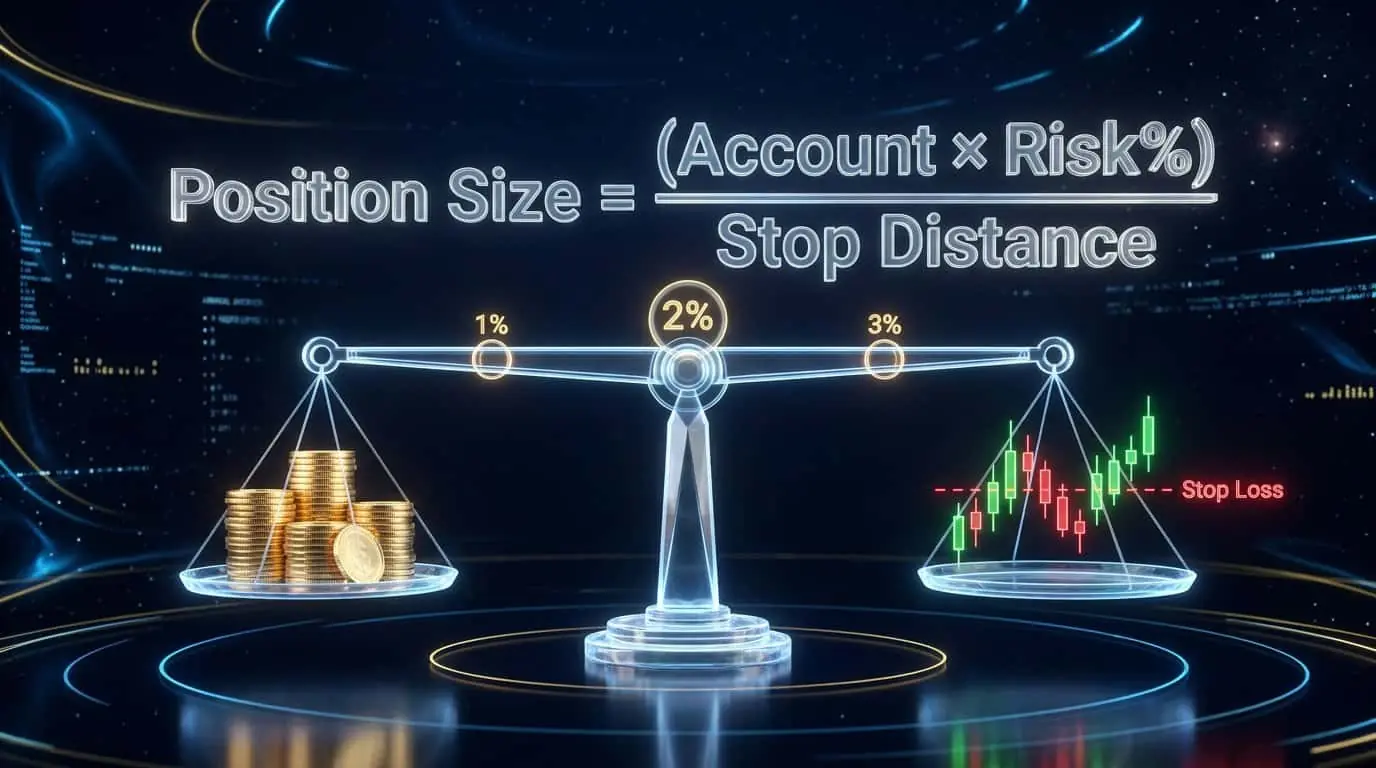
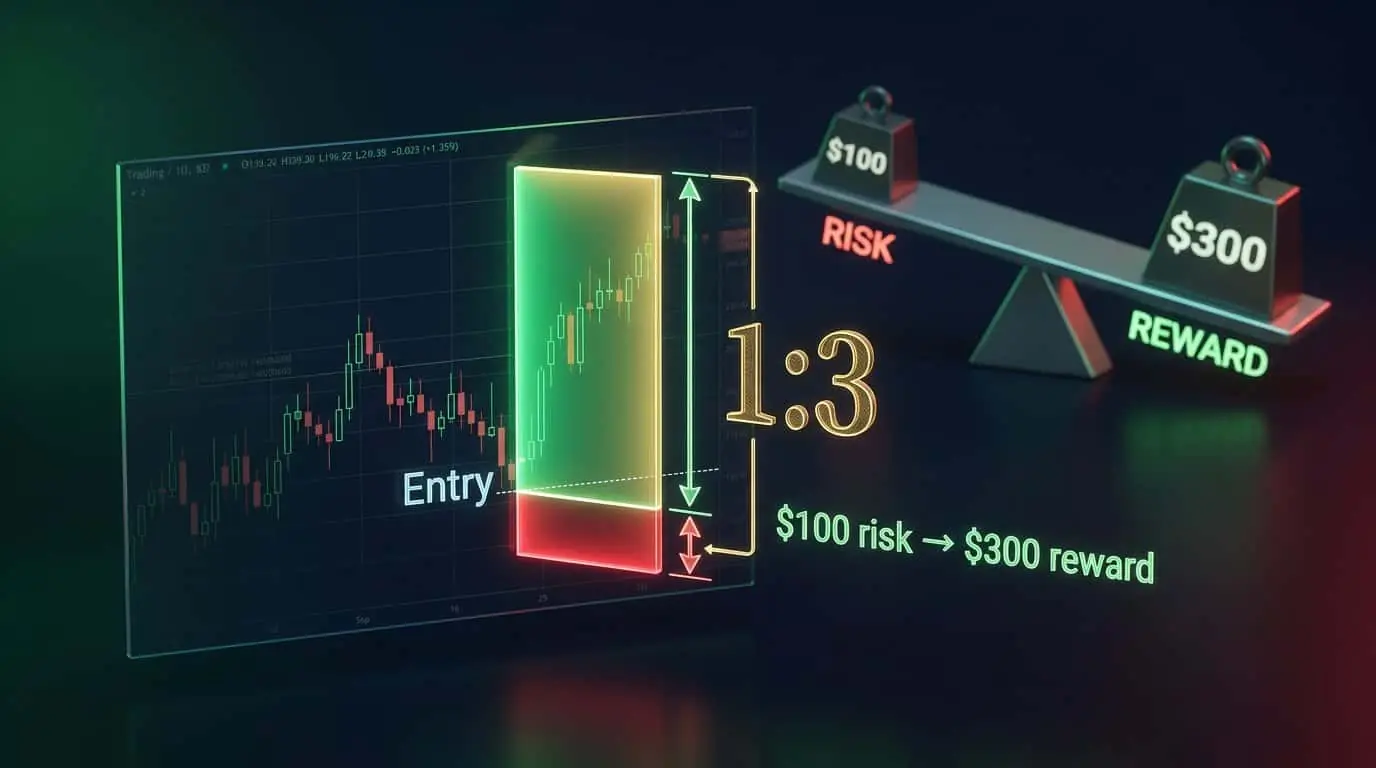
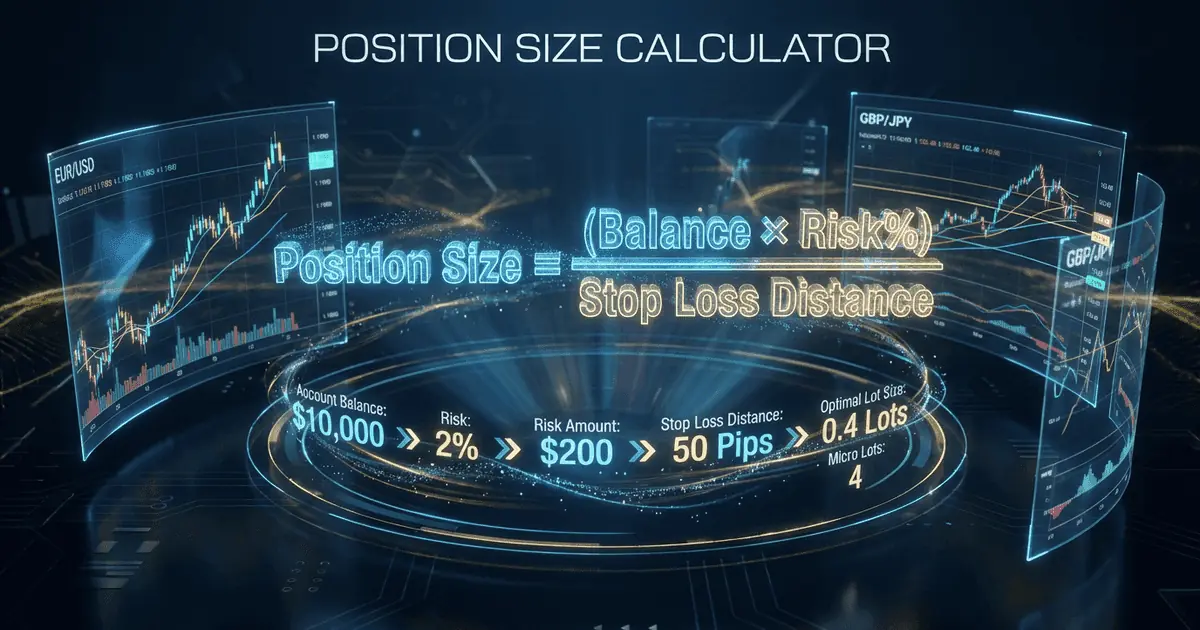
Most traders calculate their position size based on the distance from entry to stop loss, but they forget that the spread effectively moves the entry price against them, reducing the actual risk-reward ratio. When you buy EUR/USD at the ask price (1.10512) with a stop at 1.10400 (11.2 pips below the bid entry), your actual stop distance from your fill price is 11.2 pips, not the 10-pip distance you may have measured on the chart (which shows the bid price). The spread adds 1.2 pips to your effective stop, increasing your risk by approximately 11%. For accurate position sizing, add the spread to your planned stop loss distance. If your chart-based stop is 25 pips and the spread is 1.0 pip, use 26 pips in your position sizing formula. For a $10,000 account risking 2% ($200) with a 25-pip stop plus 1-pip spread (26 pips total) on mini lots: $200 / (26 x $1) = 7.69 mini lots, rounded down to 7. Without the spread adjustment, the calculation would yield $200 / (25 x $1) = 8 mini lots, putting slightly more than 2% at risk. This adjustment is especially important for scalpers with tight stops. A scalper using a 5-pip stop with a 1.5-pip spread has an effective stop of 6.5 pips — the spread adds 30% to the risk. Without adjusting position size, the actual risk is 30% higher than planned. Over hundreds of trades, this unaccounted-for risk accumulates and can produce drawdowns significantly worse than expected. The same logic applies to take profit targets: the spread reduces the effective distance to your target by the spread amount. A 10-pip target with a 1.5-pip spread only yields 8.5 pips of profit, reducing the risk-reward ratio from the intended 2:1 to 1.7:1 (with a 5-pip stop).
Adjusted Stop = Chart Stop Distance + SpreadChart Stop Distance — Measured distance from entry to stop on the chart (bid price)
Spread — Current bid-ask spread in pips
Pro Tip
Always add the spread to your stop loss distance and subtract it from your take profit distance before calculating position size and risk-reward ratio. This gives you the true risk-reward ratio after accounting for entry costs.
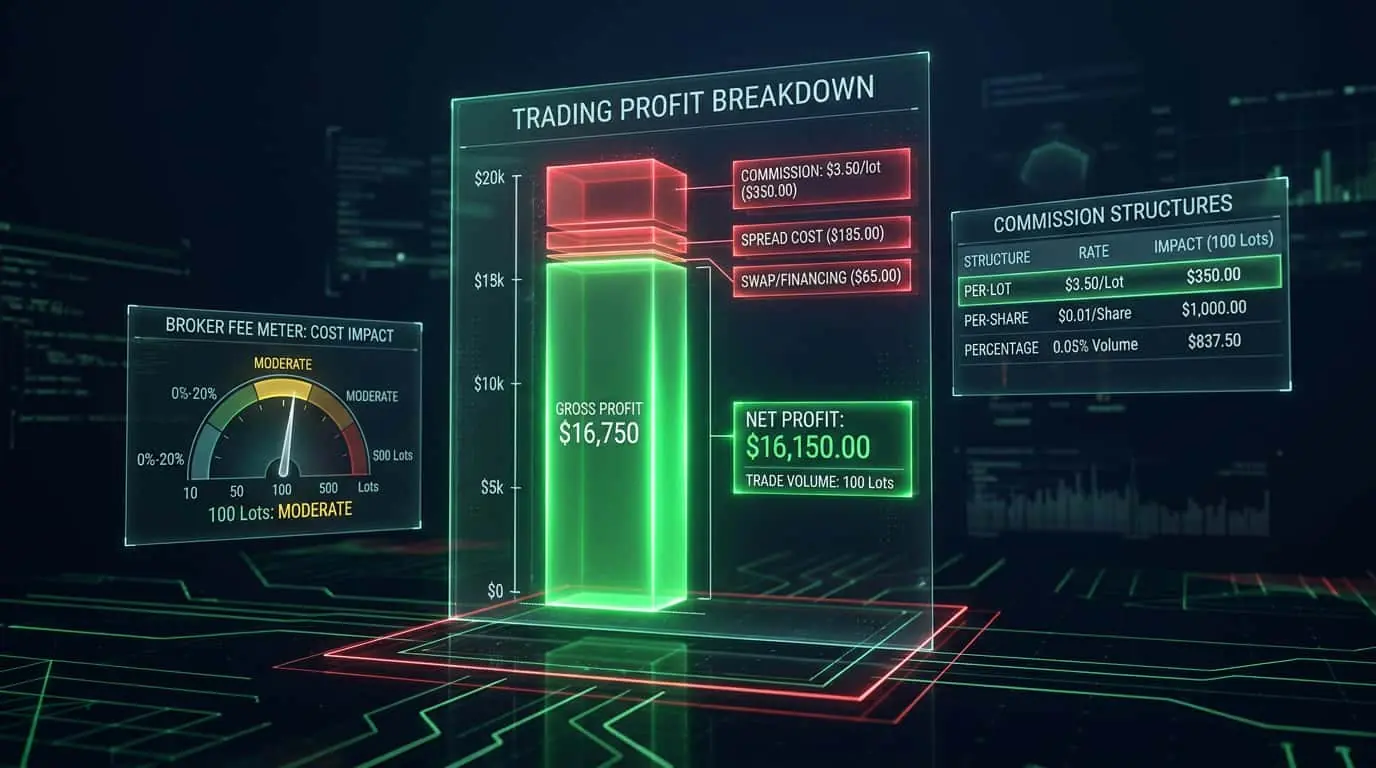
Serious traders track their spread costs as meticulously as they track wins and losses, because spreads are a constant drain on profitability that can be optimized. The first step is to record the actual spread at the time of each trade in your trading journal. Most platforms display the current spread, and some allow you to export spread data alongside trade records. Over 100+ trades, you will build a dataset that reveals patterns: which sessions have the tightest spreads, which pairs cost the most, and whether your broker's advertised spreads match reality. Many traders discover that their actual spread costs are 20-50% higher than the broker's advertised 'average' spread because they take trades during slightly less liquid periods or around minor news events. Once you have this data, use it to calculate your annual spread expenditure. A trader making 150 trades per month on EUR/USD with mini lots and an average actual spread of 0.8 pips spends: 150 x 0.8 x $1 = $120 per month, or $1,440 per year. On a $10,000 account, that is 14.4% of the account consumed by spreads alone. If the same trader switches to an ECN account with 0.2-pip raw spreads and a $3.50 commission per side per standard lot (equivalent to 0.35 pips per mini lot per side, or 0.70 pips round trip), the total cost becomes 150 x (0.2 + 0.70) x $1 = $135 per month — only slightly more, but with much more transparent pricing. The discipline of tracking spread costs often reveals that small adjustments — trading during tighter-spread sessions, choosing a more competitive broker, or reducing trade frequency on wide-spread instruments — can save hundreds or thousands of dollars annually.
Mistake
Ignoring spread costs when backtesting or calculating profitability
Correction
Include the average spread in every backtest and strategy evaluation. A strategy targeting 5-pip moves with a 2-pip spread is giving up 40% of each potential win to costs.
Mistake
Trading during high-spread conditions without adjusting strategy
Correction
Avoid trading during major news events, market open/close, and low-liquidity sessions if your strategy targets small price moves. The widened spreads during these times can turn winning strategies into losing ones.