TL;DR
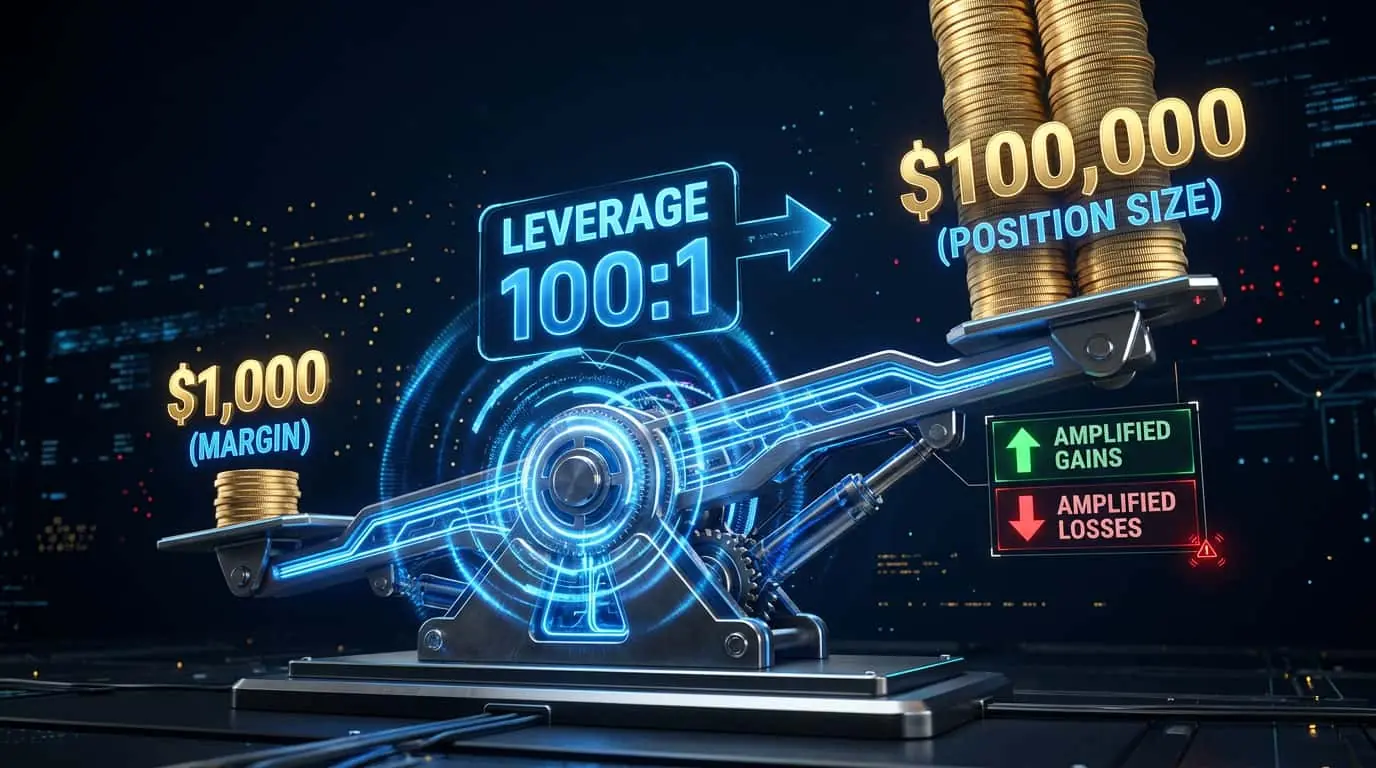
Leverage allows you to control a larger position with less capital by borrowing from your broker. A 1:100 ratio means $1,000 controls a $100,000 position. Leverage amplifies both profits and losses equally, making it the primary reason most retail traders blow their accounts.
Table of Contents
Leverage is a mechanism that allows traders to control a larger position with a smaller amount of capital by borrowing from their broker. It is expressed as a ratio such as 1:50 or 1:100, meaning a trader can control $50 or $100 worth of assets for every $1 of their own capital. Leverage amplifies both profits and losses equally, making it one of the most powerful and dangerous tools in trading. When a trader uses 1:100 leverage, they deposit $1,000 as margin and control a $100,000 position. If that position gains 1%, the trader makes $1,000, a 100% return on their deposited capital. However, if the position loses 1%, the trader loses $1,000, which is their entire margin. This symmetrical amplification is why leverage is often called a double-edged sword. Understanding how leverage works is essential for anyone trading forex, futures, CFDs, or any margined product.
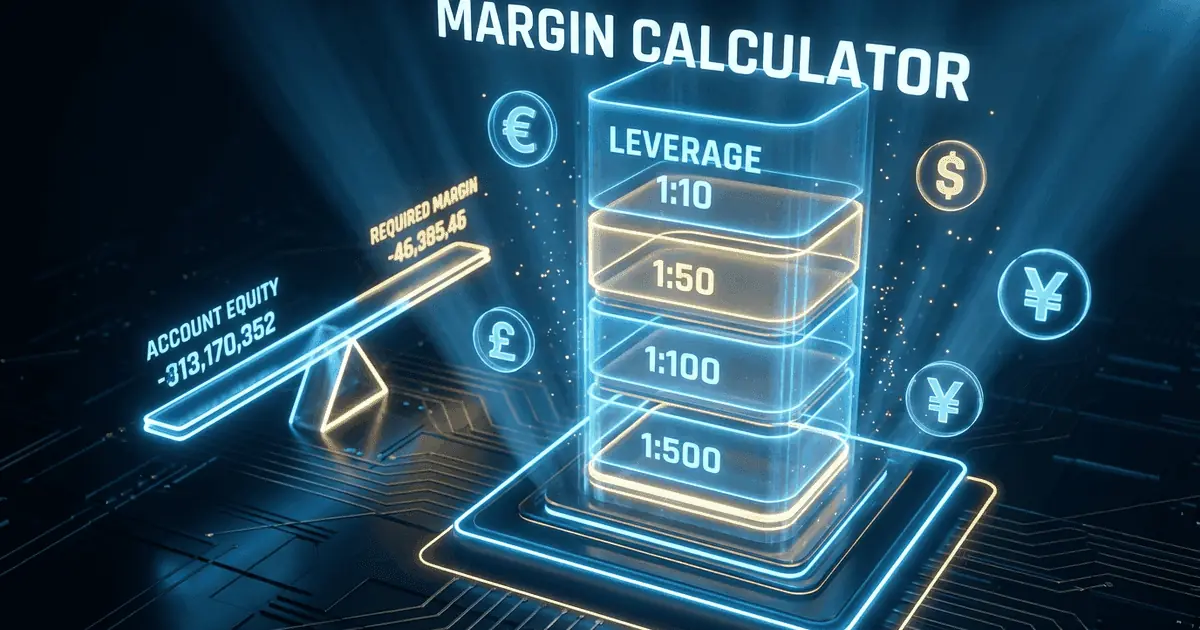
The mathematics of leverage are straightforward but their implications are often underestimated. Leverage determines the margin requirement: with 1:100 leverage, the margin requirement is 1% of the position value. With 1:50, it is 2%. With 1:20, it is 5%. The key formula relates leverage, margin, and position size. Your effective leverage (the ratio of total position value to account equity) is what matters most, not the maximum leverage your broker offers. A trader with a $10,000 account who opens a $50,000 position is using 5:1 effective leverage, regardless of whether the broker offers 1:500. Professional traders focus on effective leverage rather than available leverage, typically keeping it below 1:10 even when much higher leverage is available.
Effective Leverage = Total Position Value / Account EquityTotal Position Value — The full notional value of all open positions
Account Equity — Your account balance including unrealized P&L
| Leverage Ratio | Margin Required | Position per $1,000 | 1% Move Impact |
|---|---|---|---|
| 1:1 (no leverage) | 100% | $1,000 | $10 (1%) |
| 1:10 | 10% | $10,000 | $100 (10%) |
| 1:50 | 2% | $50,000 | $500 (50%) |
| 1:100 | 1% | $100,000 | $1,000 (100%) |
| 1:500 | 0.2% | $500,000 | $5,000 (500%) |
Maximum available leverage varies significantly by market type, broker, and regulatory jurisdiction. Forex brokers in the US (regulated by CFTC/NFA) are limited to 1:50 for major pairs and 1:20 for minors. European brokers (ESMA rules) are limited to 1:30 for major forex pairs, 1:20 for minor pairs, 1:10 for commodities, 1:5 for stocks, and 1:2 for crypto. Australian brokers (ASIC) follow similar rules to Europe. Offshore brokers may offer up to 1:500 or even 1:1000, but these come with less regulatory protection. Futures markets operate differently: leverage is determined by the exchange's margin requirements. A single ES contract worth approximately $250,000 might require only $12,650 in margin, giving effective leverage of roughly 1:20. Crypto exchanges have offered leverage up to 1:125, though regulations are tightening globally.
| Market / Region | Typical Max Leverage | Regulatory Body |
|---|---|---|
| US Forex (majors) | 1:50 | CFTC / NFA |
| EU Forex (majors) | 1:30 | ESMA |
| EU Forex (minors) | 1:20 | ESMA |
| EU Stocks CFDs | 1:5 | ESMA |
| Offshore Forex | 1:500+ | Various (limited protection) |
| US Futures (ES) | ~1:20 | CME / CFTC |
| Crypto (regulated) | 1:2 to 1:5 | Varies by jurisdiction |
The distinction between available leverage and effective leverage is critical. Available leverage is the maximum your broker allows. Effective leverage is how much you actually use, determined by your total position size relative to your account equity. A trader with $20,000 and access to 1:100 leverage could theoretically open a $2,000,000 position. But a professional trader with the same account would likely maintain effective leverage of 1:5 to 1:10, controlling $100,000-$200,000 in total positions. This conservative approach ensures that normal market fluctuations do not threaten the account. Professional futures traders often use effective leverage of 1:3 to 1:5. Professional forex traders typically use 1:5 to 1:10. The maximum available leverage should be viewed as a ceiling for exceptional circumstances, not a target for normal trading.
Pro Tip
Calculate your effective leverage before every trade. If opening a new position would push your effective leverage above 1:10, the position is too large. Reduce the size until your effective leverage is within your predetermined limit.
Excessive leverage is the single biggest reason retail traders fail. A trader using 1:100 effective leverage will be wiped out by a 1% adverse price move. Even seemingly small moves in the market become catastrophic at high leverage. Consider a forex trader with $5,000 using 1:100 leverage to control a $500,000 position (5 standard lots). A 20-pip move against them (which happens routinely in forex) costs 20 x $10 x 5 = $1,000, which is 20% of their account. A 100-pip move (common during news events) costs $5,000, wiping out the entire account. The same trader using 1:10 leverage would control $50,000 (0.5 standard lots). A 100-pip adverse move costs only $500 (10% of the account), which is painful but survivable. The lesson is clear: leverage does not create profits; it amplifies whatever your strategy produces. If your strategy is profitable, moderate leverage accelerates growth. If your strategy is unprofitable (or going through a drawdown), high leverage accelerates destruction.
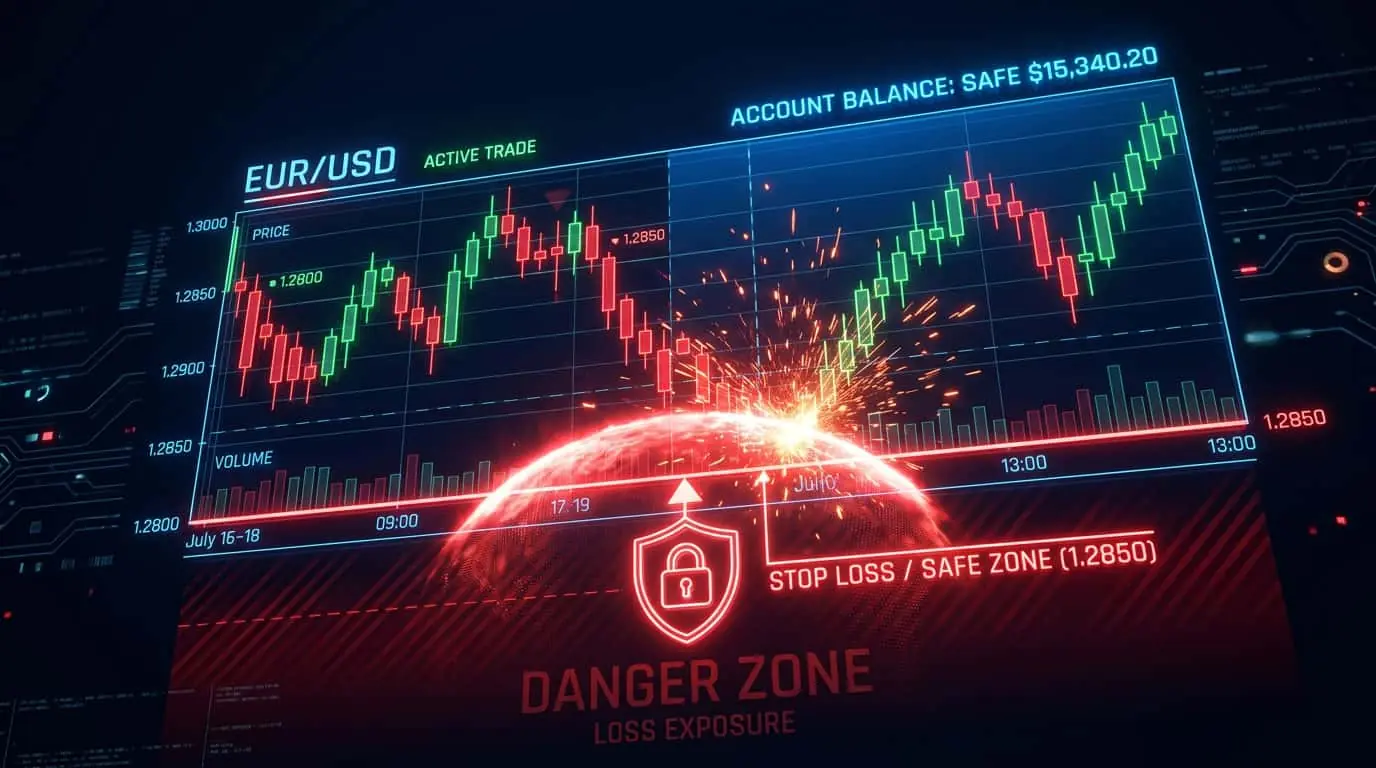
A margin call occurs when your account equity falls below the broker's maintenance margin requirement, and understanding this mechanism is essential for anyone using leverage. When you open a leveraged position, the broker requires a minimum amount of equity (the margin) to keep the position open. If unrealized losses reduce your equity below the maintenance margin threshold (typically 50-100% of the initial margin, depending on the broker), you receive a margin call. At this point, you must either deposit additional funds or close positions to restore the required margin level. If you fail to act, the broker will automatically liquidate your positions — often at the worst possible price during a fast-moving market. The liquidation price can be calculated in advance. For a $10,000 account using 1:50 leverage to hold a $500,000 position with a 50% maintenance margin requirement ($5,000), the account can absorb a 1% adverse move ($5,000 loss) before triggering liquidation. That 1% move is just 50 pips on EUR/USD — well within a single day's range. By contrast, the same account using 1:5 leverage holds a $50,000 position. A 50% drawdown in equity ($5,000 loss) would require a 10% adverse move on the position, equivalent to 1,000 pips — an extreme scenario that provides a massive safety buffer. Consider the real-world impact during the Swiss National Bank event of January 15, 2015, when EUR/CHF dropped 2,800 pips in minutes. Traders using 1:100 leverage were not merely margin called — many ended up owing their brokers money because the liquidation happened far below their margin levels. Brokers like FXCM required emergency bailouts, and several smaller brokers went bankrupt. This event demonstrated that leverage risk is not theoretical: it can produce losses exceeding your entire account balance in extreme scenarios, even with stop losses in place.
| Leverage Used | Account Size | Position Size | Pips to Margin Call | Dollar Move to Margin Call |
|---|---|---|---|---|
| 1:100 | $5,000 | $500,000 | 50 pips | $5,000 (100% of account) |
| 1:50 | $5,000 | $250,000 | 100 pips | $2,500 (50% of account) |
| 1:20 | $5,000 | $100,000 | 250 pips | $2,500 (50% of account) |
| 1:10 | $5,000 | $50,000 | 500 pips | $2,500 (50% of account) |
| 1:5 | $5,000 | $25,000 | 1,000 pips | $2,500 (50% of account) |
Pro Tip
Calculate your margin call level before every trade. Know exactly how many pips or ticks the market must move against you to trigger liquidation. If that number is within the instrument's daily range, your leverage is dangerously high.
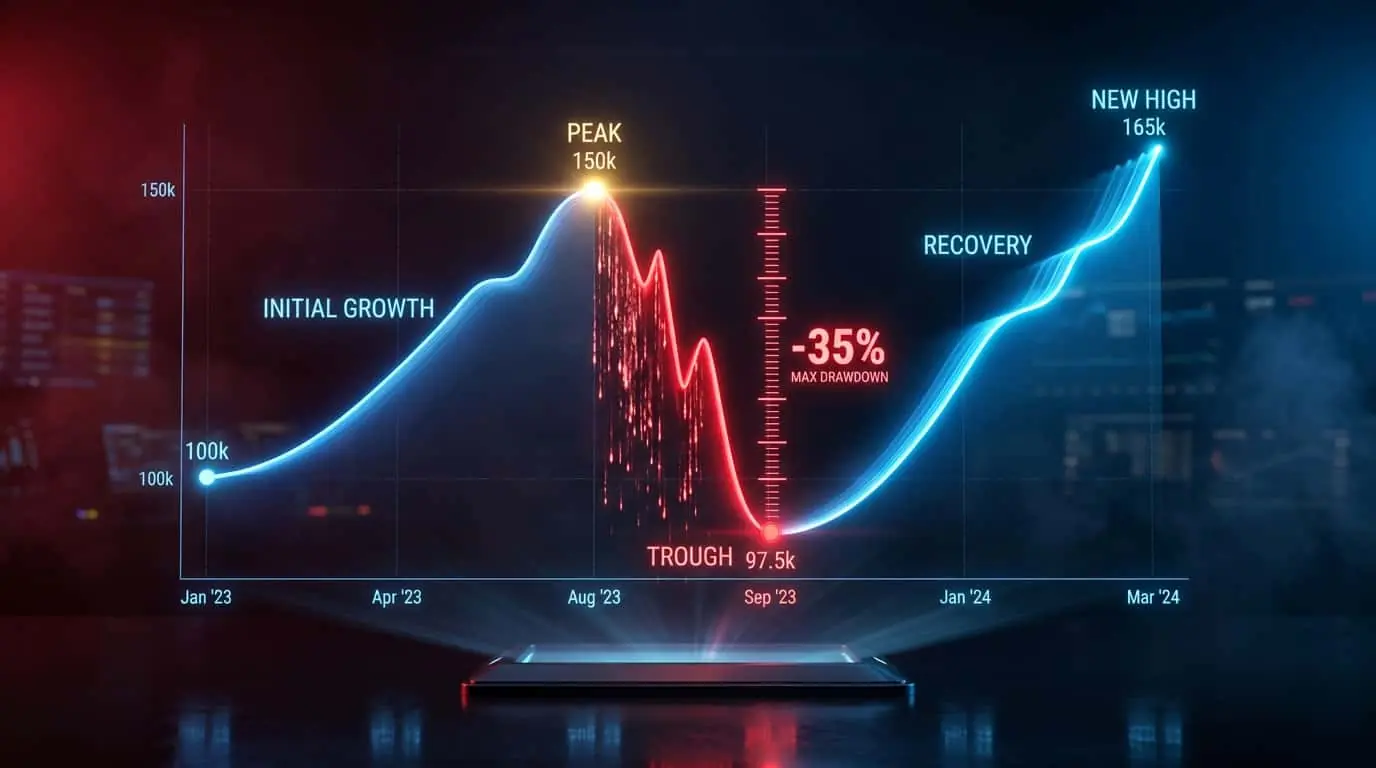
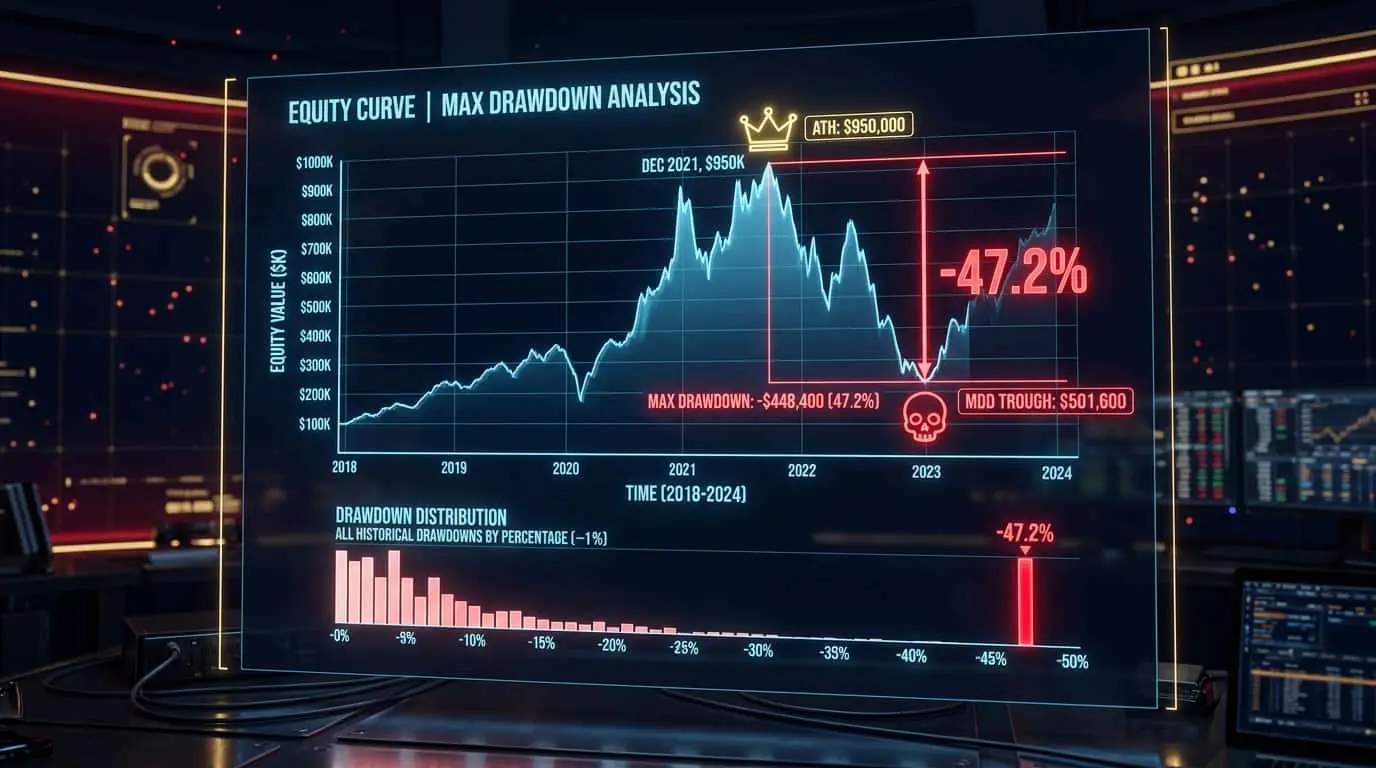
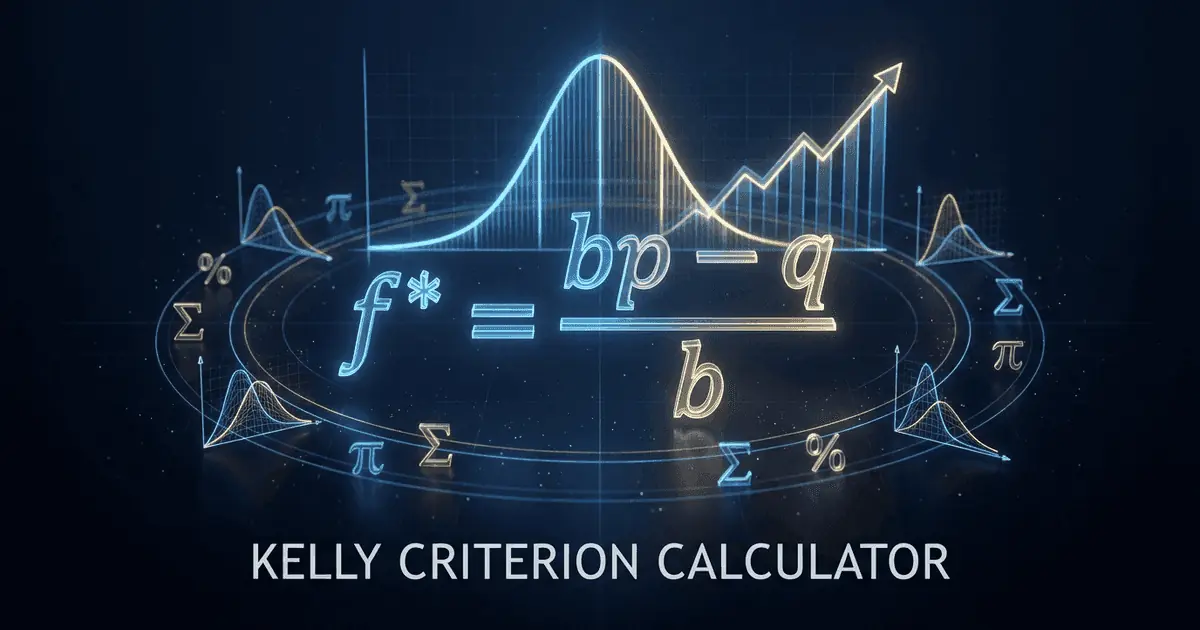
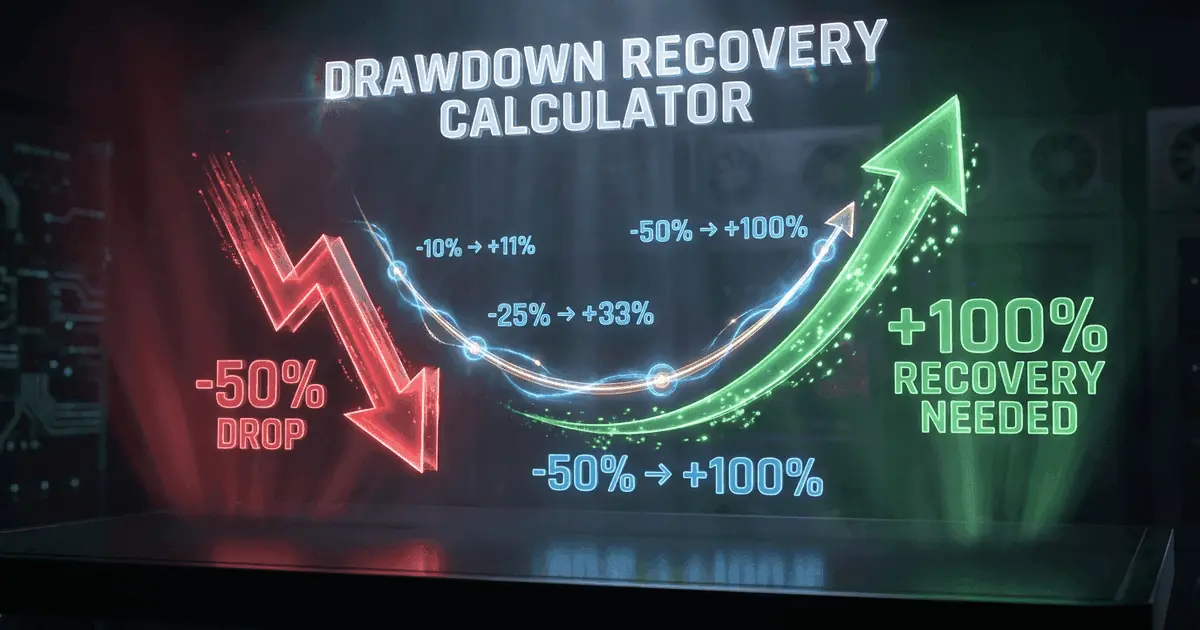
Many traders are attracted to high leverage because they believe it is necessary for rapid account growth. In reality, the mathematical relationship between leverage and long-term growth is counterintuitive: moderate leverage produces faster account growth than high leverage because it avoids the devastating drawdowns that require disproportionately large gains to recover from. This concept is formalized in the Kelly Criterion, which calculates the optimal fraction of capital to risk on each bet given your edge and odds. For most trading strategies, the Kelly-optimal leverage is far lower than the maximum available leverage. Consider a strategy with a 55% win rate and 1:1 risk-reward ratio. The Kelly-optimal fraction is (0.55 x 1 - 0.45 x 1) / 1 = 10% of capital per trade, which translates to roughly 1:5 effective leverage with a typical stop loss distance. Using 1:50 leverage (10x the Kelly-optimal) would result in ruin within a few dozen trades despite having a genuine edge. The relationship between drawdown and recovery further illustrates this point. A 10% drawdown requires an 11% gain to recover. A 20% drawdown requires 25%. A 50% drawdown requires 100%. A 75% drawdown requires 300%. High leverage produces deep drawdowns quickly, and those deep drawdowns require exponentially larger percentage gains to recover from, creating a mathematical trap. A $10,000 account that suffers a 50% drawdown to $5,000 needs to double its remaining capital just to get back to breakeven. At moderate leverage, this is achievable over months. At high leverage, the same drawdown risk exists on the recovery trades, making full recovery improbable. The optimal approach is to use leverage conservatively (1:3 to 1:10 effective) and let compound growth work in your favor. A strategy returning 3% per month with moderate leverage grows a $10,000 account to $42,576 in three years. The same 3% monthly return is achievable with low leverage and is sustainable because drawdowns remain manageable.
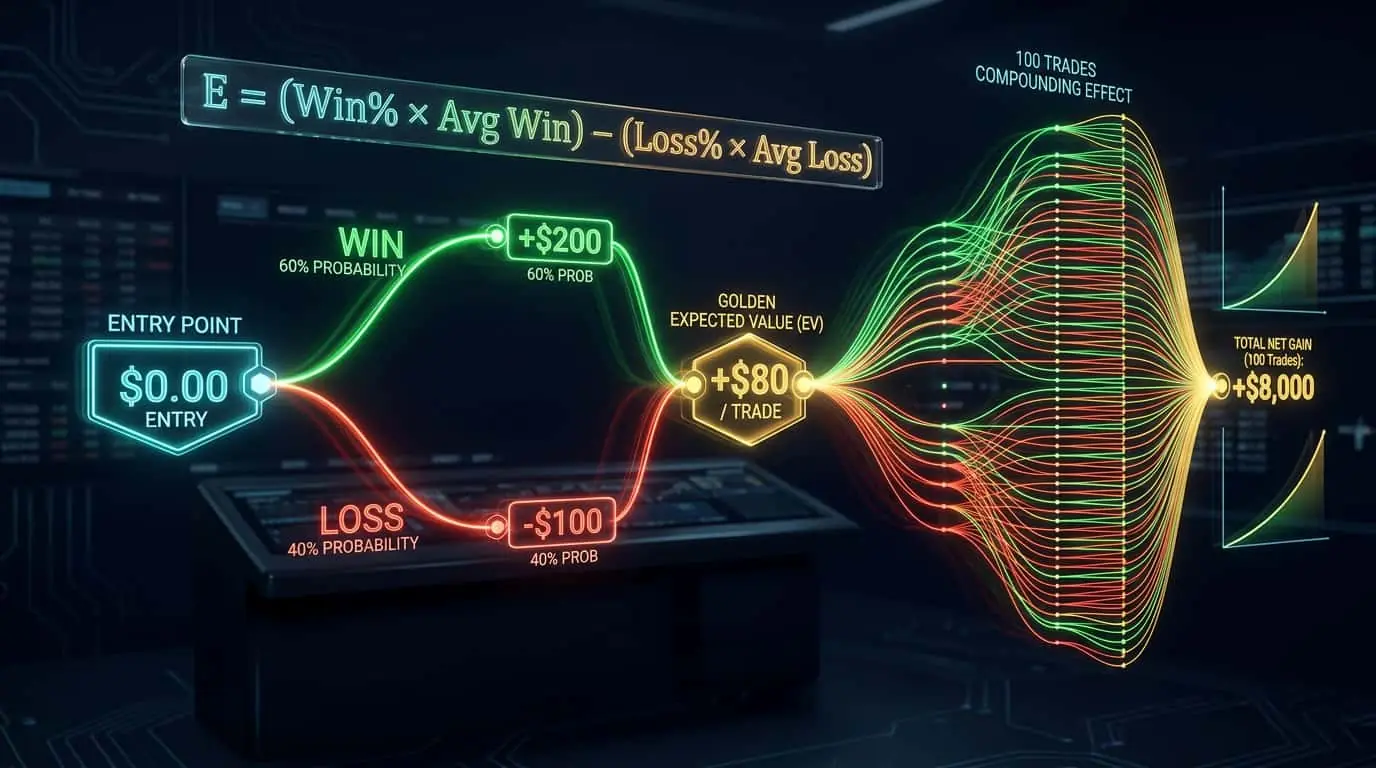
Kelly Fraction = (Win Rate x Avg Win - Loss Rate x Avg Loss) / Avg WinWin Rate — Probability of winning (as a decimal)
Avg Win — Average profit on winning trades
Loss Rate — 1 - Win Rate
Avg Loss — Average loss on losing trades
Mistake
Using the maximum leverage available because the broker allows it
Correction
Maximum leverage is a ceiling, not a recommendation. Professional traders use 1:5 to 1:10 effective leverage regardless of what is available. Size positions based on risk management rules, not available margin.
Mistake
Confusing leverage with position sizing
Correction
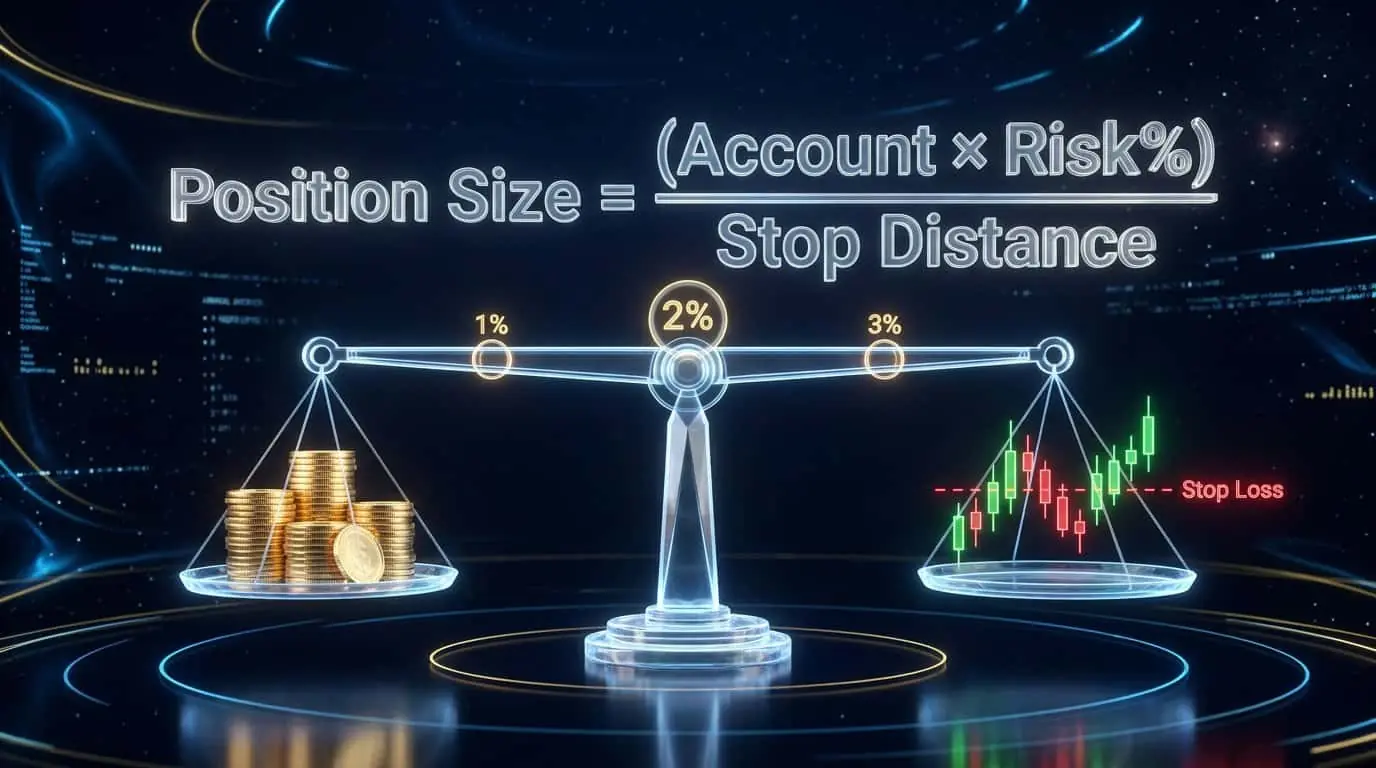
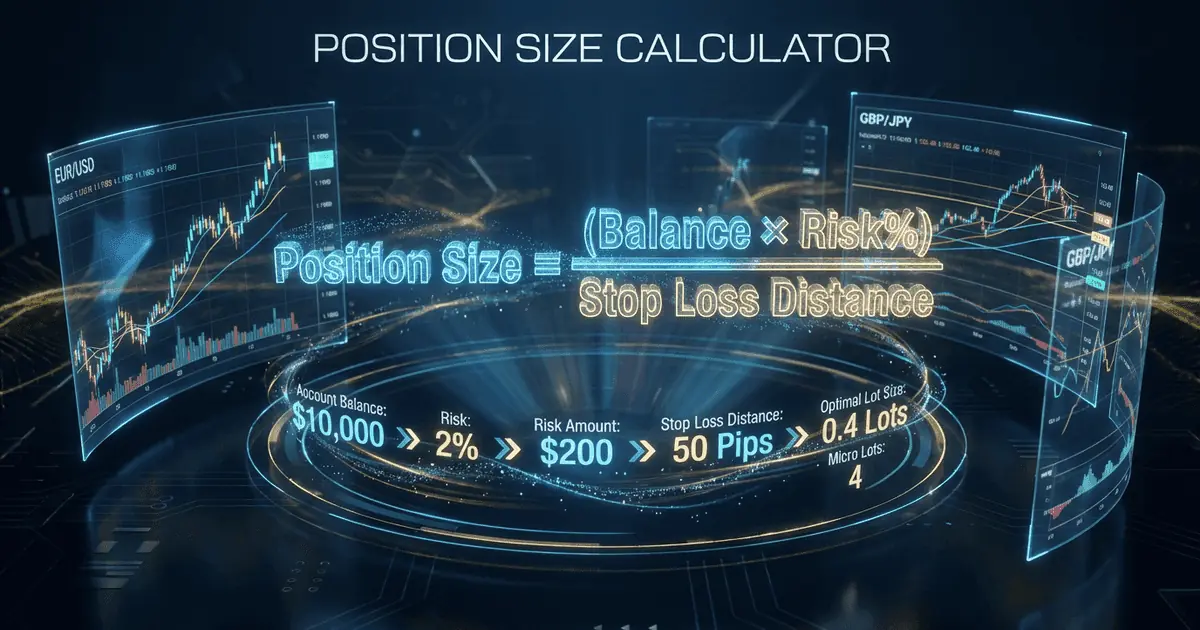
Leverage determines how much buying power you have; position sizing determines how much you should use. Having 1:100 leverage does not mean you should open positions 100x your equity. Use the position sizing formula based on risk percentage and stop loss distance.