TL;DR
FOMO (Fear of Missing Out) in trading is the anxiety-driven impulse to enter a trade because the market is moving without you. It leads traders to chase entries at poor prices, abandon their setup criteria, and take excessive risk -- resulting in consistently negative outcomes.
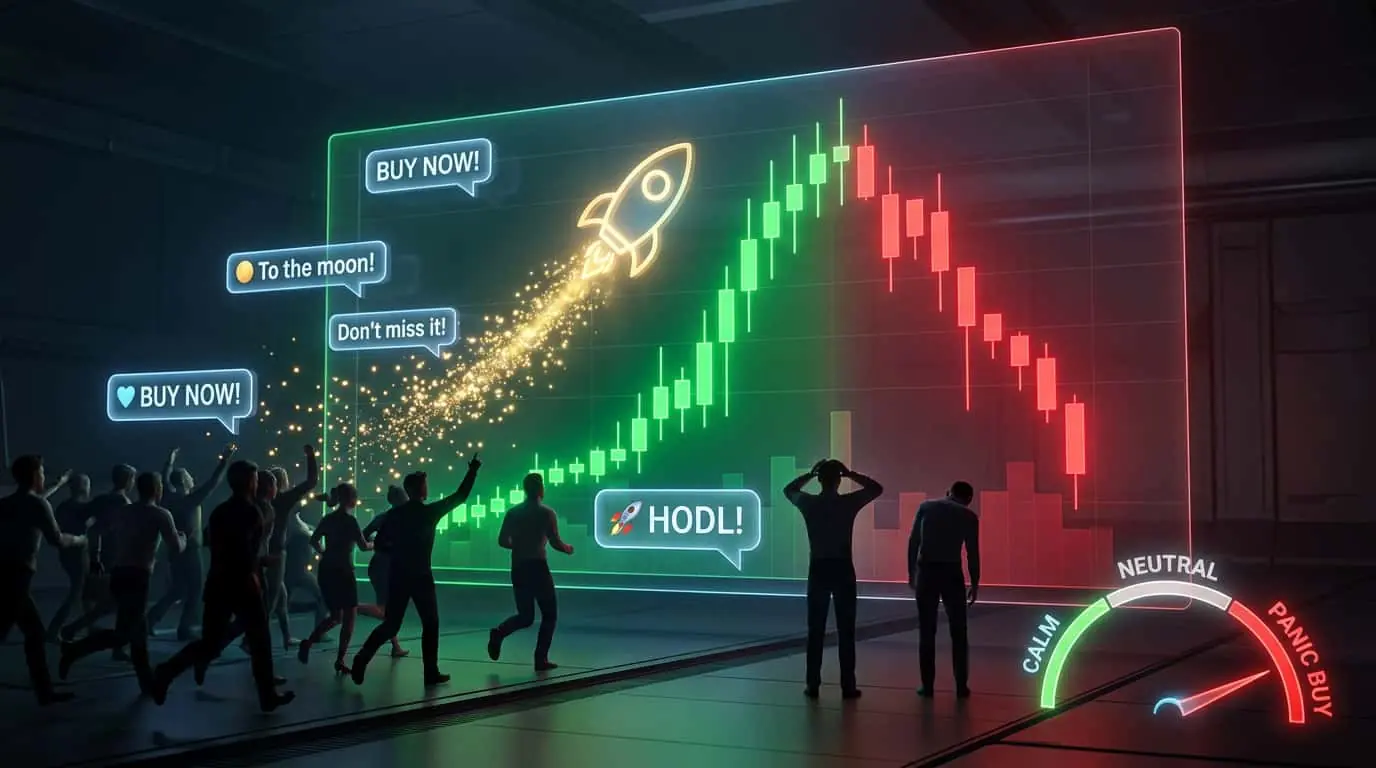
FOMO, or Fear of Missing Out, is a powerful emotional response that occurs when a trader sees a market move and feels compelled to participate, regardless of whether their trading plan supports the entry. The feeling is characterized by anxiety, urgency, and a conviction that the move will continue and that not being in the trade will mean a lost opportunity that will not return. In everyday life, FOMO manifests as the anxiety of seeing friends at an event you did not attend. In trading, it manifests as watching a market rally 200 ticks while you are on the sideline and feeling a physical compulsion to buy -- not because your analysis supports it, but because the emotional pain of watching others profit while you do nothing becomes unbearable. FOMO is one of the most pervasive and destructive emotions in trading because it attacks at precisely the wrong moment. Markets that have already made large moves have typically already priced in whatever catalyst drove the move. Entering late means buying near the top of a rally or selling near the bottom of a decline, which is the exact opposite of what profitable trading requires. Research by behavioral economist Hersh Shefrin has shown that FOMO-driven trades have significantly lower expected returns than planned trades, because they systematically enter at the worst possible prices and with the worst possible risk-reward ratios.
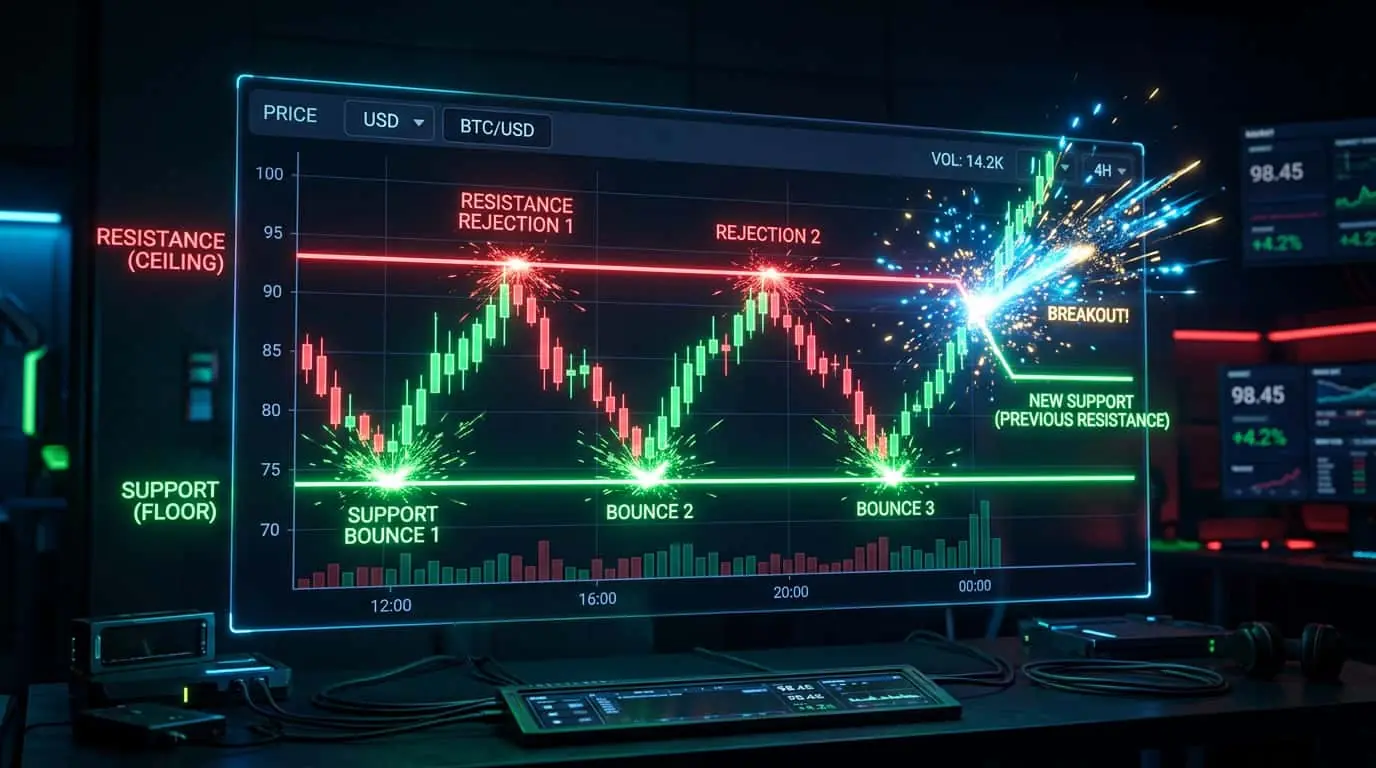
FOMO appears in several distinct patterns, each with its own triggers and consequences. Recognizing which pattern you are most susceptible to is essential for developing effective countermeasures. Chasing entries is the most common FOMO pattern. A trader sees a sharp move, realizes they missed the ideal entry, and enters at a significantly worse price. On the ES futures, this might mean buying after a 30-point rally instead of at the planned pullback level. The entry price is worse, the stop loss is further away (or worse, omitted), and the reward-to-risk ratio is inverted. Breakout FOMO occurs when a trader enters a breakout without waiting for confirmation, afraid that waiting will mean missing the move entirely. While some breakouts continue, many are false breakouts that reverse sharply. Disciplined traders wait for confirmation (a close above the breakout level, a retest and hold), accepting that they will miss some moves in exchange for higher probability on the ones they take. Social media FOMO is increasingly prevalent. Seeing other traders post screenshots of winning trades creates the impression that everyone is profiting except you. This manufactured urgency drives entries based on what others are doing rather than on your own analysis and plan. The reality is that social media presents a heavily curated highlight reel -- the losses and flat periods are never posted.
| FOMO Pattern | Trigger | Typical Outcome |
|---|---|---|
| Chasing entries | Watching a market move without you | Entering at poor price with bad risk-reward |
| Breakout FOMO | Price breaks a key level | Caught in false breakout reversal |
| Social media FOMO | Seeing others post winning trades | Taking trades outside your plan |
| News event FOMO | Market spikes on news release | Entering into maximum volatility and spread |
| Sector rotation FOMO | New market/sector suddenly popular | Trading unfamiliar instruments without edge |
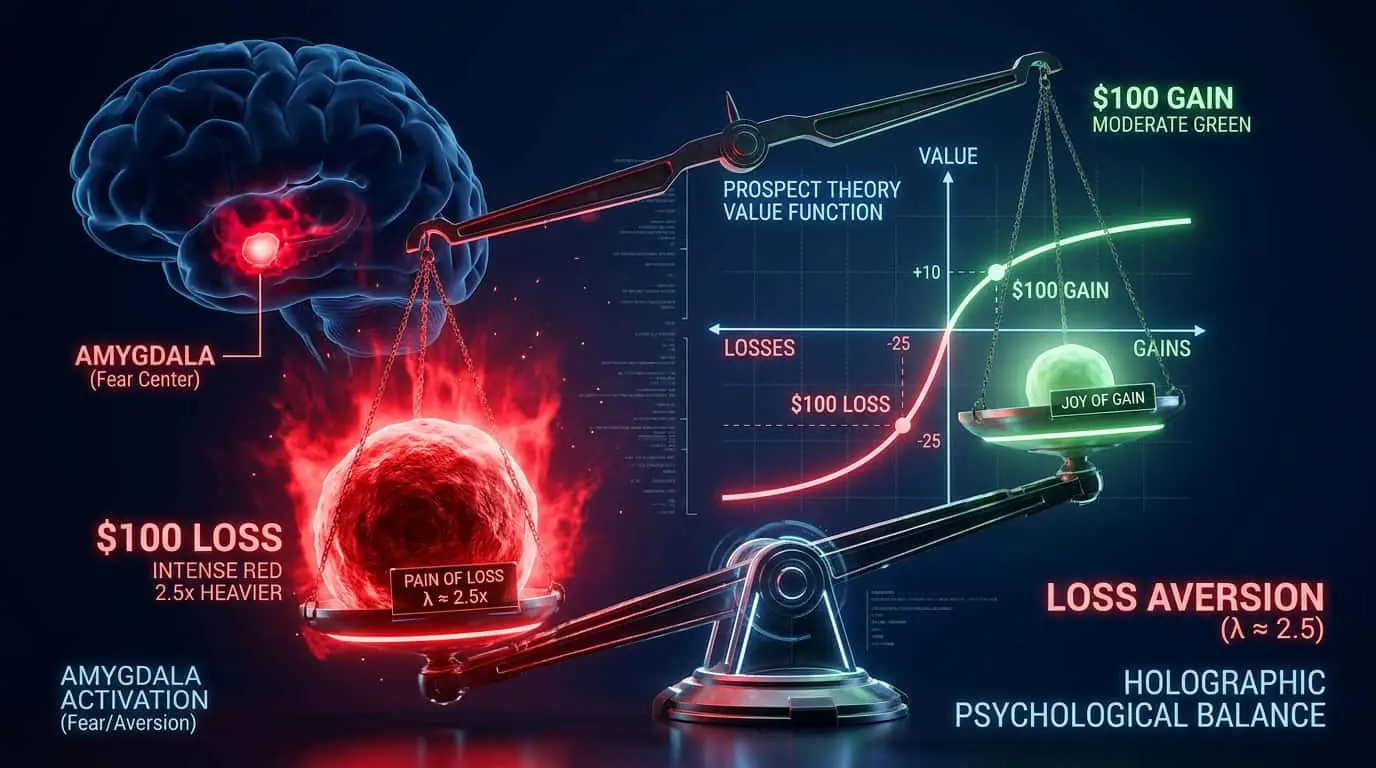
FOMO is not a character flaw -- it is a hardwired neurological response with deep evolutionary roots. In ancestral environments, missing out on a food source, a mating opportunity, or group migration could be life-threatening. The brain evolved powerful anxiety mechanisms to prevent exclusion from beneficial group activities. In modern trading, these same mechanisms fire when we observe others profiting from a market move we are not participating in. Neuroimaging studies have shown that FOMO activates the anterior insula and the amygdala -- the same brain regions involved in physical pain and threat detection. Watching a market move without you literally activates the brain's pain circuits. Simultaneously, the dopaminergic reward system -- the same system involved in gambling and substance addiction -- creates anticipation of the profits you could make if you just enter now. This combination of pain avoidance (not wanting to miss out) and reward seeking (anticipating profits) creates an almost irresistible urge to act. The urgency is amplified by the brain's well-documented present bias, described by behavioral economists as hyperbolic discounting. We overweight immediate possibilities and underweight future consequences. The potential profit from entering right now feels enormous and urgent, while the statistical reality that chasing trades has negative expected value feels abstract and distant.
Pro Tip
When you feel FOMO, say out loud: 'The market will be open tomorrow.' This simple statement interrupts the scarcity mindset that FOMO creates. There are thousands of trading opportunities every month. Missing one trade is genuinely meaningless to your long-term results.
FOMO trades are mathematically toxic to a trading account for several interconnected reasons. First, the entry price is suboptimal by definition. If your planned entry was at a support pullback and you instead chase the market 20 points higher, you have given away 20 points of potential profit while adding 20 points to your risk. On one ES contract, that is $1,000 of deterioration in your risk-reward ratio from a single FOMO decision. Second, FOMO trades bypass your normal filtering process. Your trading plan exists to filter out low-probability setups and focus your capital on high-probability ones. When you FOMO into a trade, you skip this filter entirely, meaning the trade has no demonstrated edge. Third, FOMO trades tend to use inappropriate position sizes because the urgency prevents proper risk calculation. Traders who carefully calculate position sizes for planned trades will often FOMO in with a round number of contracts based on nothing but gut feeling. Fourth, exits on FOMO trades are problematic. Without a planned entry level, there is no logical stop-loss placement. Many traders either use no stop (catastrophic risk) or a mental stop (which they will move). Profit targets are equally arbitrary, leading to either premature exits at small profits or holding through a reversal because there was no plan for when to exit.
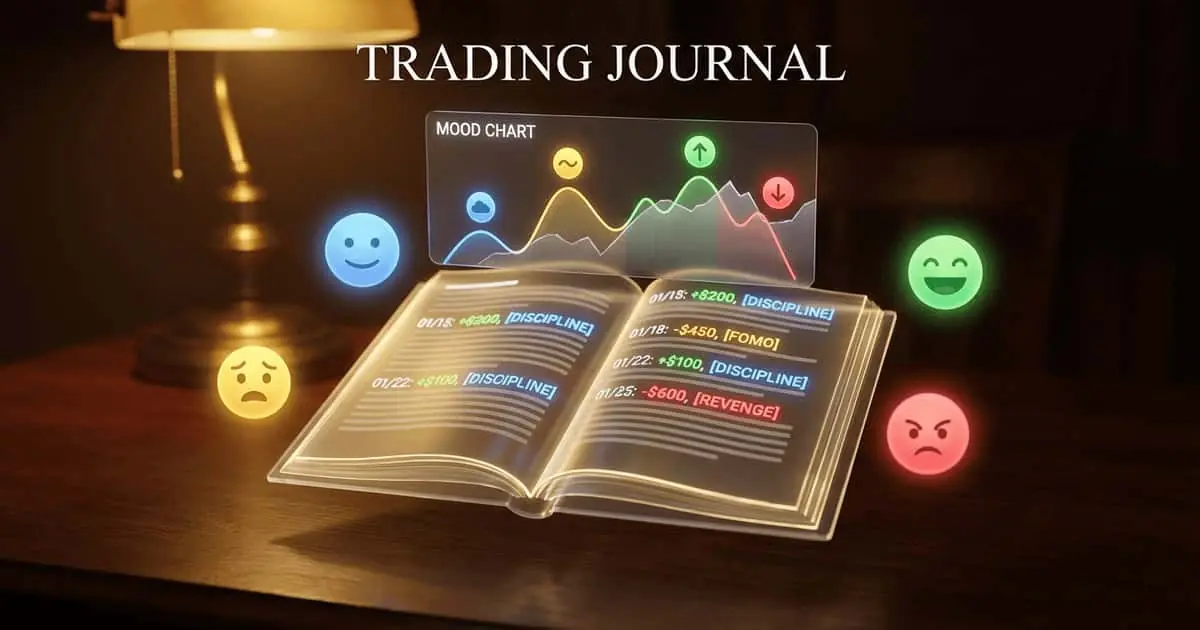
Overcoming FOMO requires both cognitive reframing and practical structural changes to your trading process. The cognitive foundation is understanding that missing a trade costs you exactly zero dollars. Your account balance is the same before and after a move you did not participate in. The only thing that costs money is taking bad trades -- and FOMO trades are consistently bad trades. Implement a 'missed trade log' in your journal. When you see a move you missed, write it down: the instrument, the setup you should have taken, why you missed it, and the outcome. Over time, this log will reveal two things: first, that many 'missed' moves would not have been profitable with your actual entry and exit rules; second, that similar opportunities recur regularly, removing the scarcity mentality that fuels FOMO. Create specific rules for late entries. Instead of a binary choice between chasing and doing nothing, define conditions under which a late entry is acceptable. For example: 'If I miss the initial breakout, I can enter on the first pullback to the breakout level if it holds, using the pullback low as my stop.' This gives you a disciplined way to participate in moves you initially missed without chasing. Use alerts instead of watching charts. Set price alerts at your planned entry levels and walk away. When the alert fires, evaluate the setup. If the alert never fires, the setup did not trigger, and you protected yourself from the temptation to chase. This single practice eliminates 90% of FOMO triggers.
Pro Tip
Calculate how many valid setups your strategy generates per month. If the answer is 40-60, then missing 5 of them reduces your sample by only 8-12%. The impact on your monthly P&L is negligible, but taking 5 FOMO trades could easily wipe out a month of profits.
Mistake
Watching charts continuously during market hours
Correction
Set price alerts at your planned entry levels and step away. Constant chart-watching is the primary FOMO trigger. You do not need to see every tick to execute your plan.
Mistake
Following social media traders during live sessions
Correction
Social media creates manufactured urgency through curated highlight reels. Block or mute trading accounts during market hours and review educational content only after the session.
Mistake
Treating every missed move as a failure
Correction
Your plan is designed to capture a subset of market moves, not all of them. Missing a move that was outside your plan is the system working correctly. Judge yourself on plan adherence, not on whether you caught every trend.