TL;DR
Loss aversion is a cognitive bias where the pain of losing is psychologically about twice as powerful as the pleasure of an equivalent gain. In trading, this causes traders to hold losers too long, cut winners too short, avoid taking necessary risks, and make irrational decisions that systematically destroy their edge.
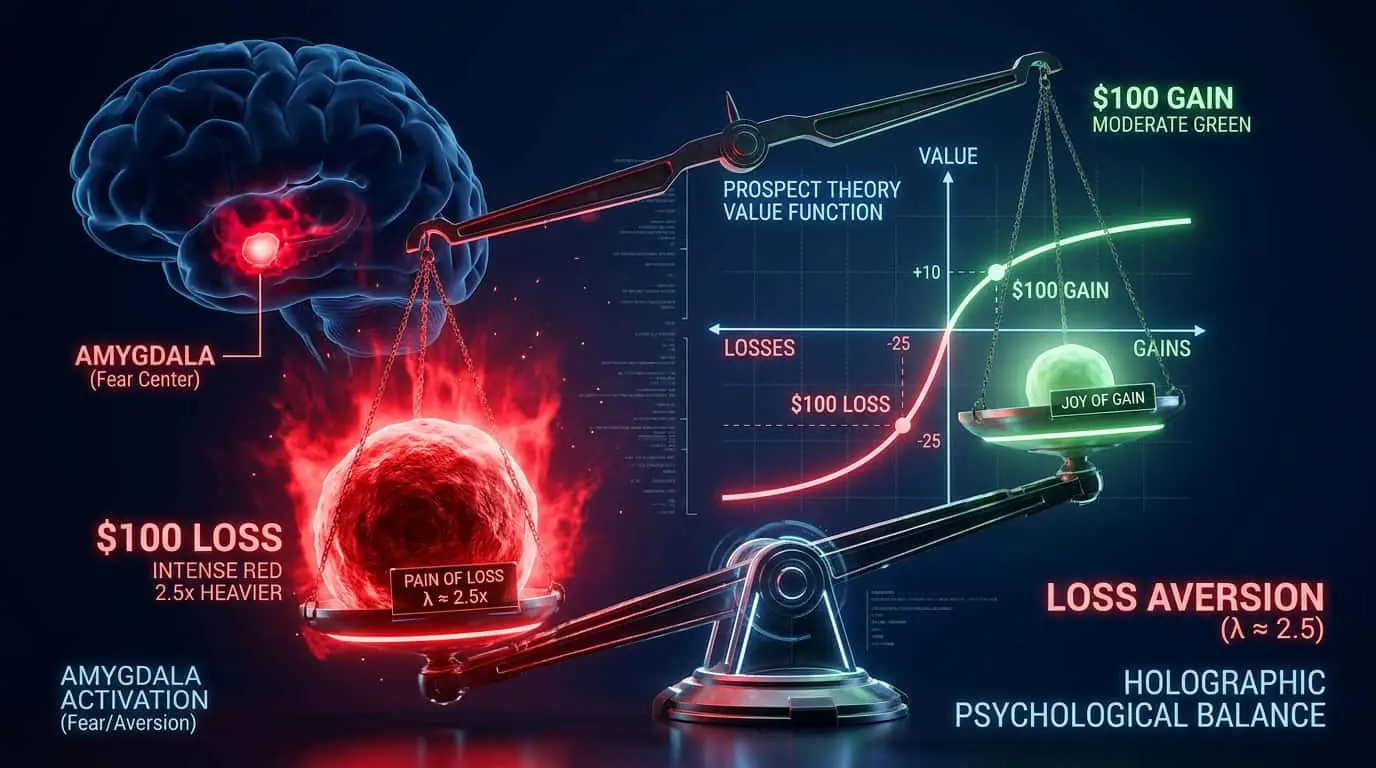
Loss aversion is a fundamental principle of behavioral economics describing the human tendency to prefer avoiding losses over acquiring equivalent gains. The concept was formalized by psychologists Daniel Kahneman and Amos Tversky in their groundbreaking prospect theory, published in 1979, which later earned Kahneman the Nobel Prize in Economics. Their research demonstrated that for most people, losing $100 feels approximately twice as painful as gaining $100 feels pleasurable. This asymmetry is not a personal weakness or a sign of poor mental fortitude -- it is a deeply embedded feature of human cognition that likely evolved because, in survival contexts, avoiding threats (losses) was more important than pursuing opportunities (gains). An ancestor who failed to avoid a predator died; one who missed a food opportunity survived to try again tomorrow. In trading, loss aversion is arguably the most destructive cognitive bias because its effects compound across every aspect of the trading process. It affects how traders enter trades (hesitation when risk is involved), how they manage positions (holding losers, cutting winners), how they set risk parameters (under-sizing to avoid pain), and how they evaluate strategies (abandoning good strategies after normal drawdowns). Understanding loss aversion is essential for any trader because you cannot manage a bias you do not recognize.
Prospect theory describes how people actually make decisions involving risk, as opposed to how rational agents would make them according to classical economic theory. The centerpiece of prospect theory is the value function, which maps gains and losses to perceived psychological value. The value function has three critical properties that directly impact trading behavior. First, it is reference-point dependent. People evaluate outcomes relative to a reference point (usually their entry price or current account balance) rather than in terms of final wealth. This means a trader who bought at $100 and watches the price hit $95 feels a loss, even if the stock was at $80 a month ago and they are in a great position overall. The reference point creates a psychological anchor that distorts objective assessment. Second, the function is steeper for losses than for gains. This is the mathematical expression of loss aversion: the curve drops more sharply below the reference point than it rises above it. Kahneman and Tversky estimated a loss aversion coefficient of approximately 2.25, meaning losses loom 2.25 times larger than equivalent gains. Third, the function is concave for gains and convex for losses, meaning people are risk-averse in the domain of gains (preferring a sure $500 over a 50/50 chance at $1,000) but risk-seeking in the domain of losses (preferring a 50/50 chance at losing $1,000 over a sure loss of $500). This asymmetry explains the most common trading error: cutting winners short while letting losers run.
v(x) = x^alpha for gains; v(x) = -lambda * (-x)^beta for lossesx — Outcome relative to reference point (positive = gain, negative = loss)
alpha — Diminishing sensitivity for gains (typically ~0.88)
beta — Diminishing sensitivity for losses (typically ~0.88)
lambda — Loss aversion coefficient (typically ~2.25)
Pro Tip
Mentally reframe every trade in terms of risk units rather than dollar amounts. Thinking 'I risked 1R and made 2R' is psychologically neutral, while 'I risked $500 and made $1,000' triggers loss aversion on the $500 risk component.
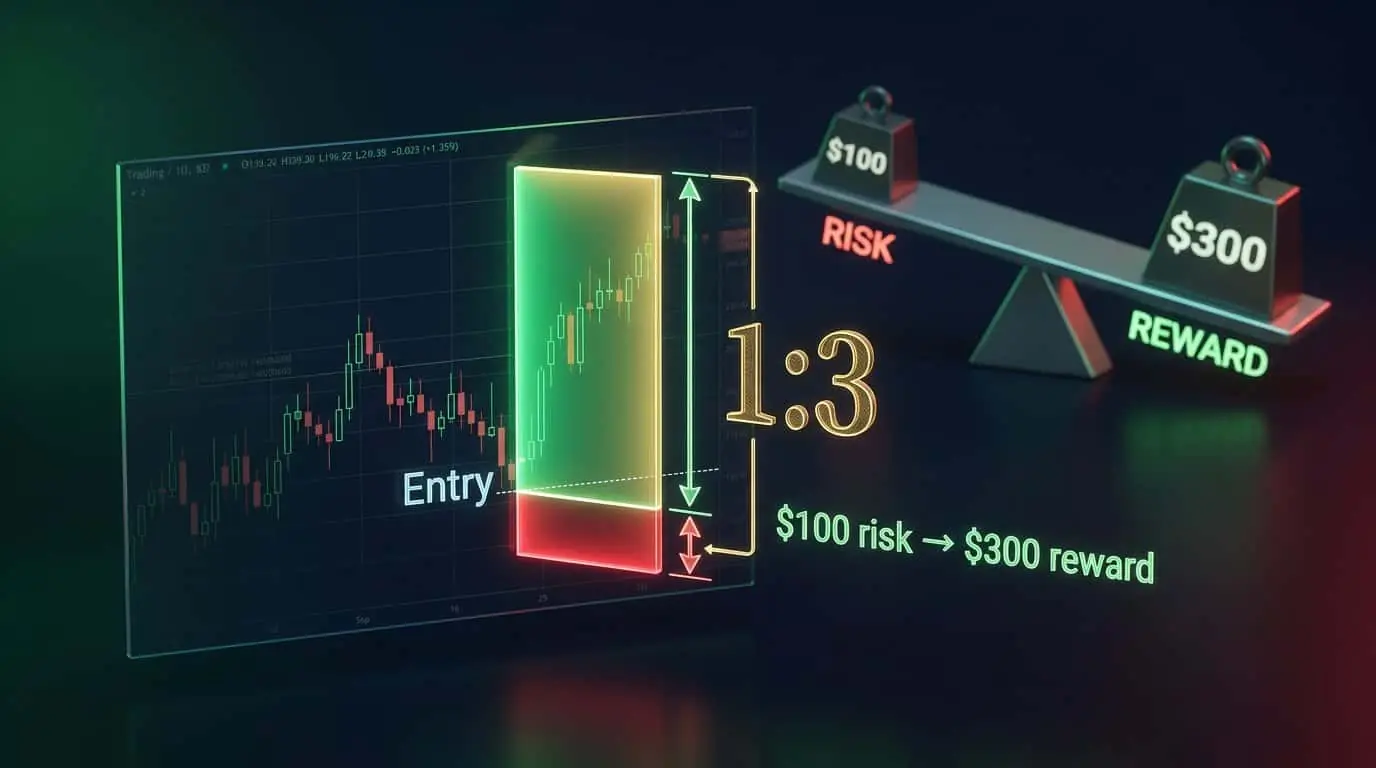
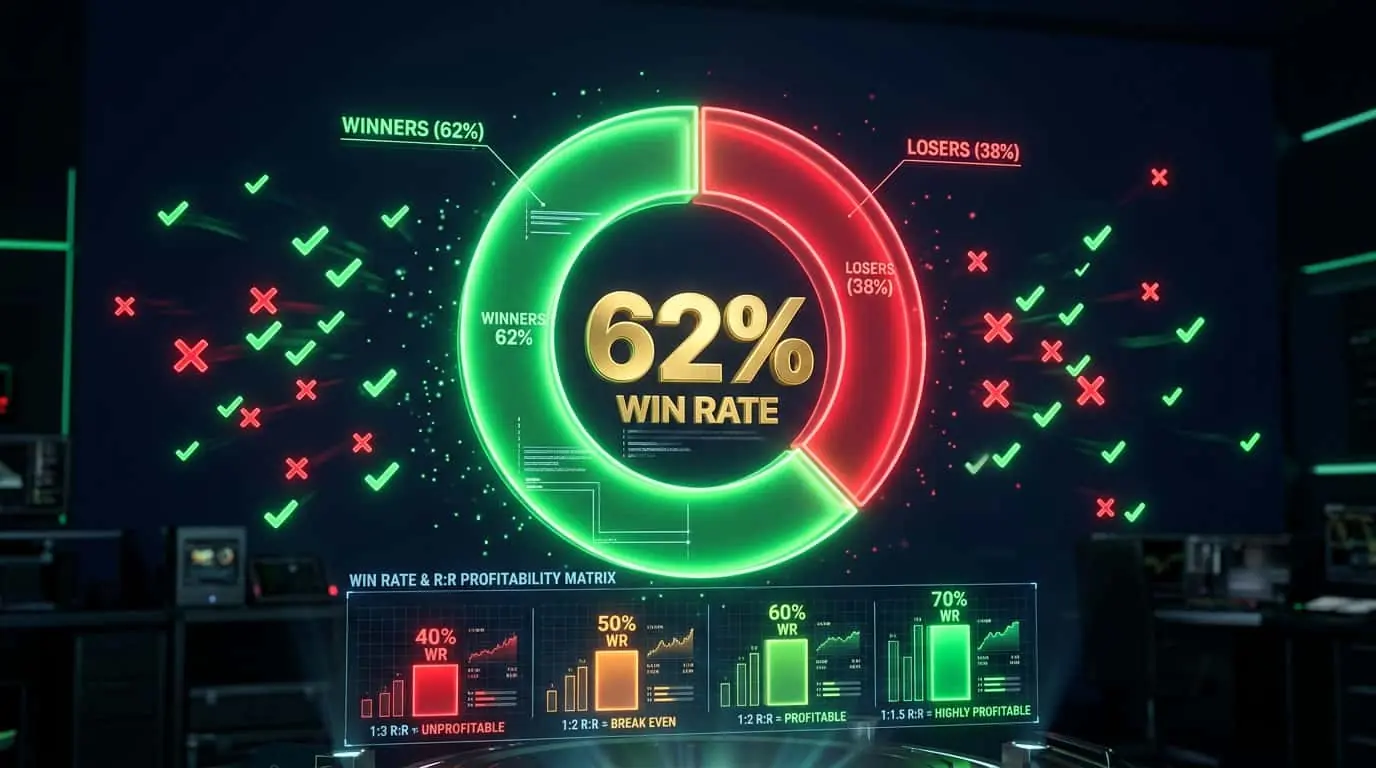
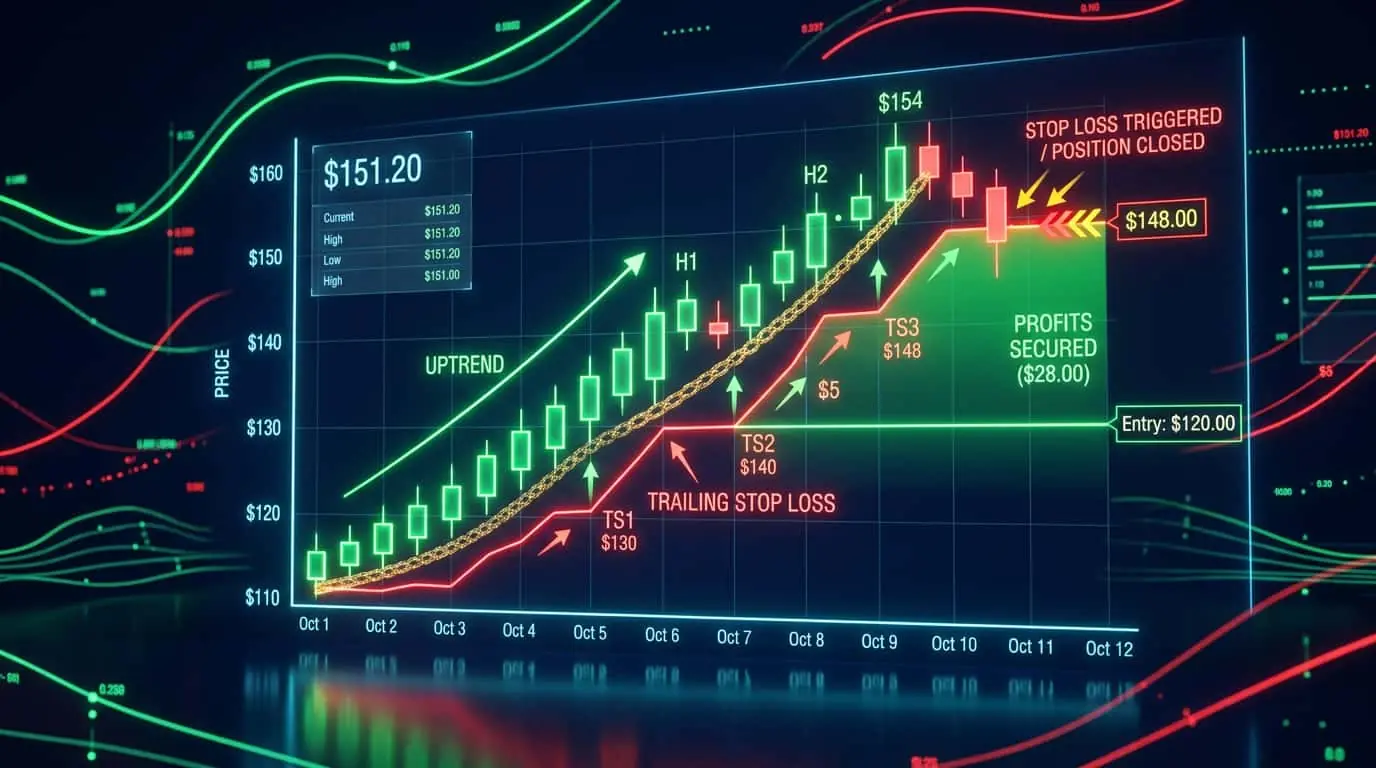
Loss aversion manifests in several specific, measurable behaviors that systematically erode trading edge. The most damaging is the disposition effect, first documented by Hersh Shefrin and Meir Statman in 1985. The disposition effect is the tendency to sell winning positions too early and hold losing positions too long. When a trade moves into profit, loss aversion shifts the reference point: the trader now has a gain to protect, and the prospect of losing that gain triggers risk aversion. They lock in the small profit before the market can 'take it back.' When a trade moves into a loss, the same bias creates the opposite behavior: taking the loss feels so painful that the trader holds on, hoping the position will recover. They become risk-seeking in the loss domain, exactly as prospect theory predicts. The disposition effect is devastating because it inverts the reward-to-risk ratio. A strategy designed to capture 2:1 reward-to-risk trades becomes a strategy that takes 0.5:1 trades when the trader cuts winners at 0.5R and lets losers run to 1R or beyond. Even a 60% win rate cannot overcome a 0.5:1 reward-to-risk ratio. Loss aversion also causes traders to reduce position size after losses (when the edge is still present) and avoid taking trades that meet all criteria simply because recent losses have made the prospect of another loss feel unbearable. This selective trade avoidance can reduce the sample size enough to destroy a strategy's statistical validity.
| Loss Aversion Behavior | Effect on Trading | P&L Impact |
|---|---|---|
| Cutting winners short | Locks in small profits, misses large winning moves | Reduces average win size by 40-60% |
| Holding losers too long | Small losses become large losses before exit | Increases average loss size by 50-100% |
| Skipping valid setups after losses | Reduces trade sample size | Misses winning trades that offset prior losses |
| Reducing size after a loss | Smaller positions during potential recovery | Winning trades recover less of the prior loss |
| Moving stop losses further away | Refuses to accept the loss, increases risk | One large loss can equal 5-10 planned losses |
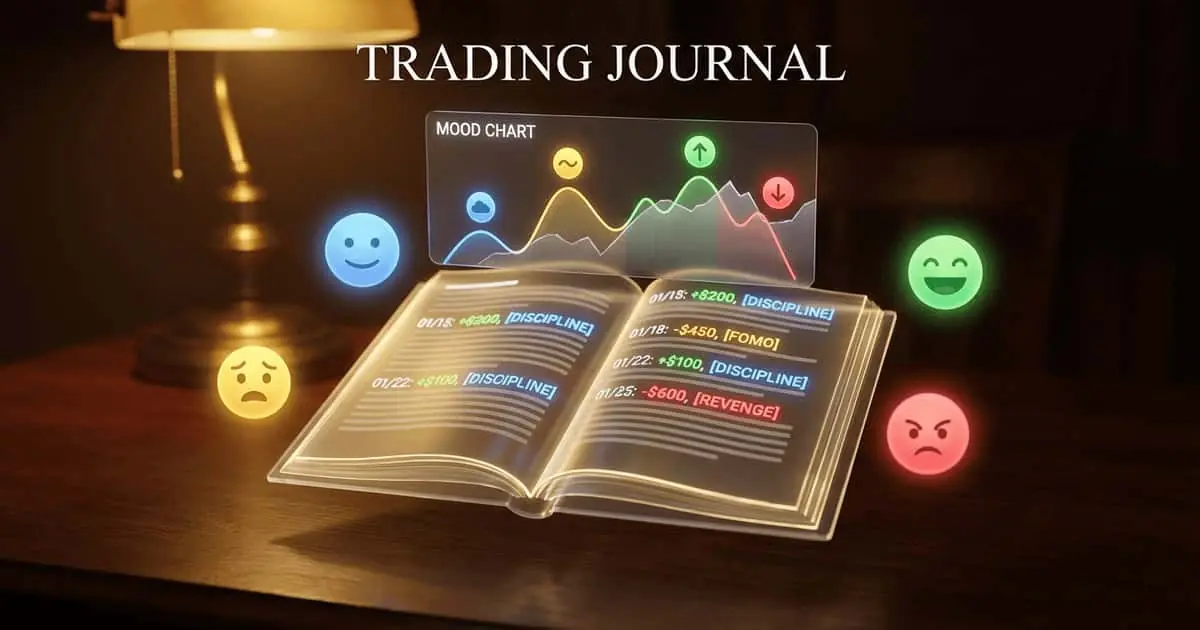
Before you can manage loss aversion, you need to quantify how it affects your specific trading. Your trading journal is the primary measurement tool. Analyze your last 100 trades and calculate two key metrics: your average winning trade duration versus your average losing trade duration, and your average winning trade size (in R-multiples) versus your average losing trade size. In a disciplined trader without loss aversion bias, these metrics should reflect the strategy's design. If your strategy targets 2R winners with 1R stops, your average winner should be close to 2R and your average loser close to 1R. If your data shows average winners of 0.8R with average losers of 1.3R, loss aversion is actively destroying your edge. Another revealing metric is your 'exit efficiency.' For each winning trade, compare your actual exit price to the maximum favorable excursion (the best price the trade reached before you exited). If you are consistently exiting at 30-50% of the maximum favorable excursion, you are cutting winners dramatically short. Similarly, for losing trades, compare your actual exit to your planned stop level. If you are consistently exiting well below your planned stop, you are holding losers far longer than your plan dictates. Track the percentage of valid setups you skip after 1, 2, and 3 consecutive losses. If you skip significantly more setups after losses, loss aversion is causing selective avoidance that reduces your trade sample.
Pro Tip
Calculate your 'disposition ratio': (percentage of winning trades you exit early) / (percentage of losing trades you hold past your stop). A ratio above 1.0 indicates that loss aversion is actively hurting your results. The goal is to get this ratio as close to zero as possible.
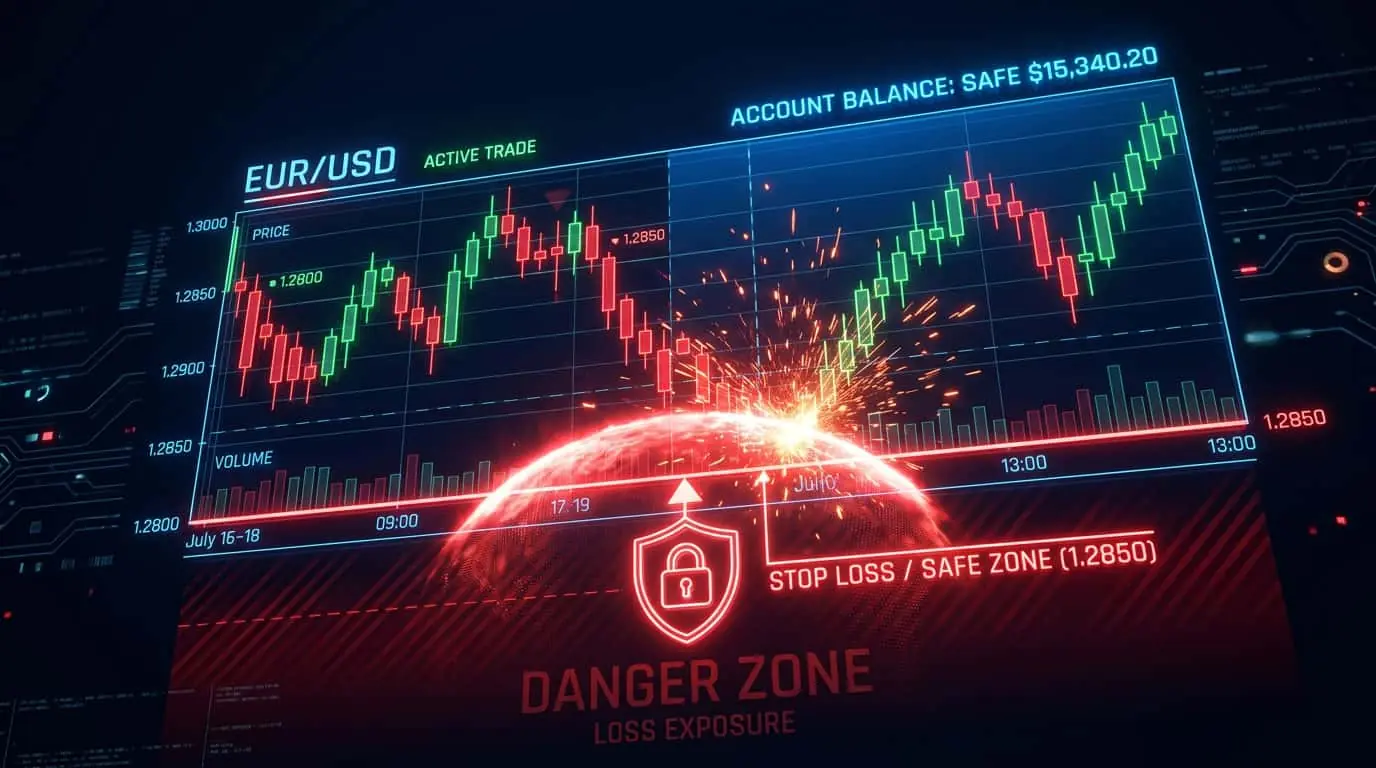
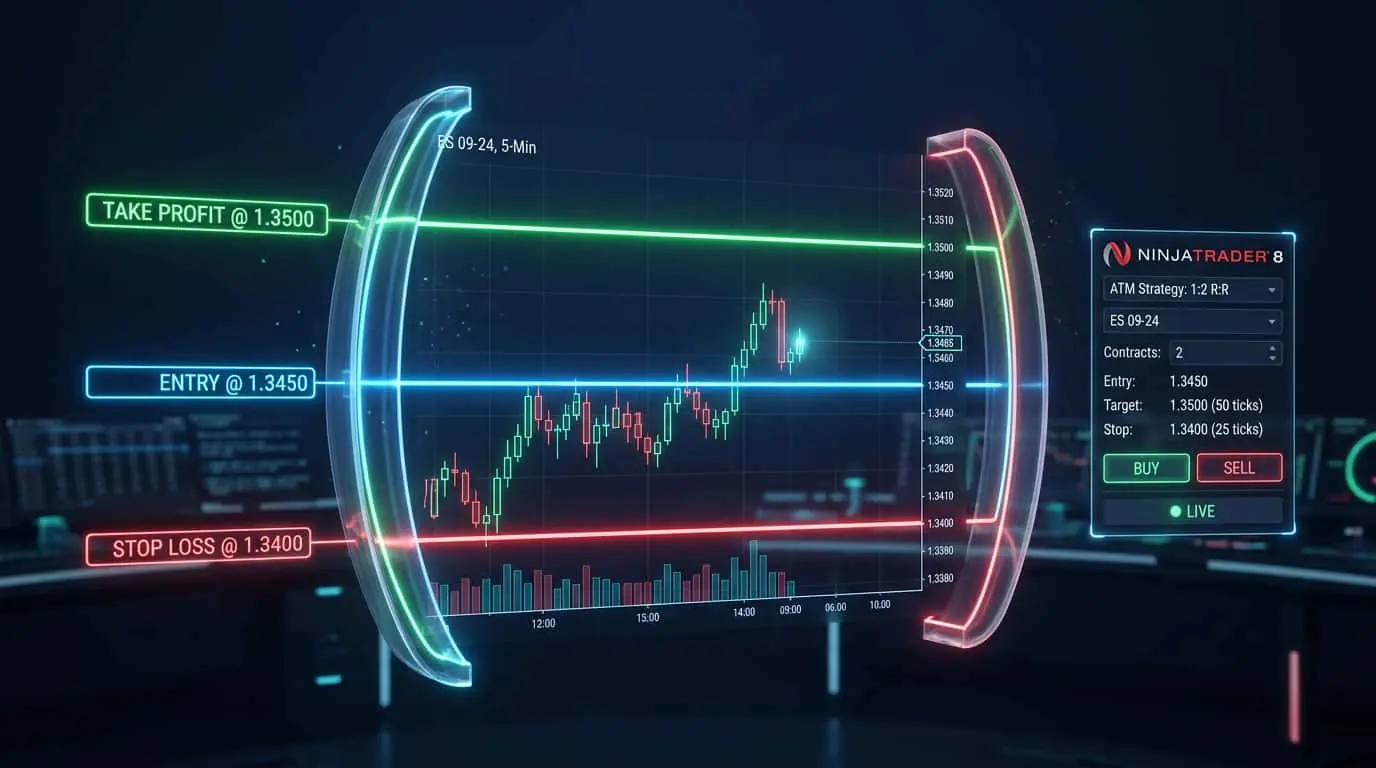
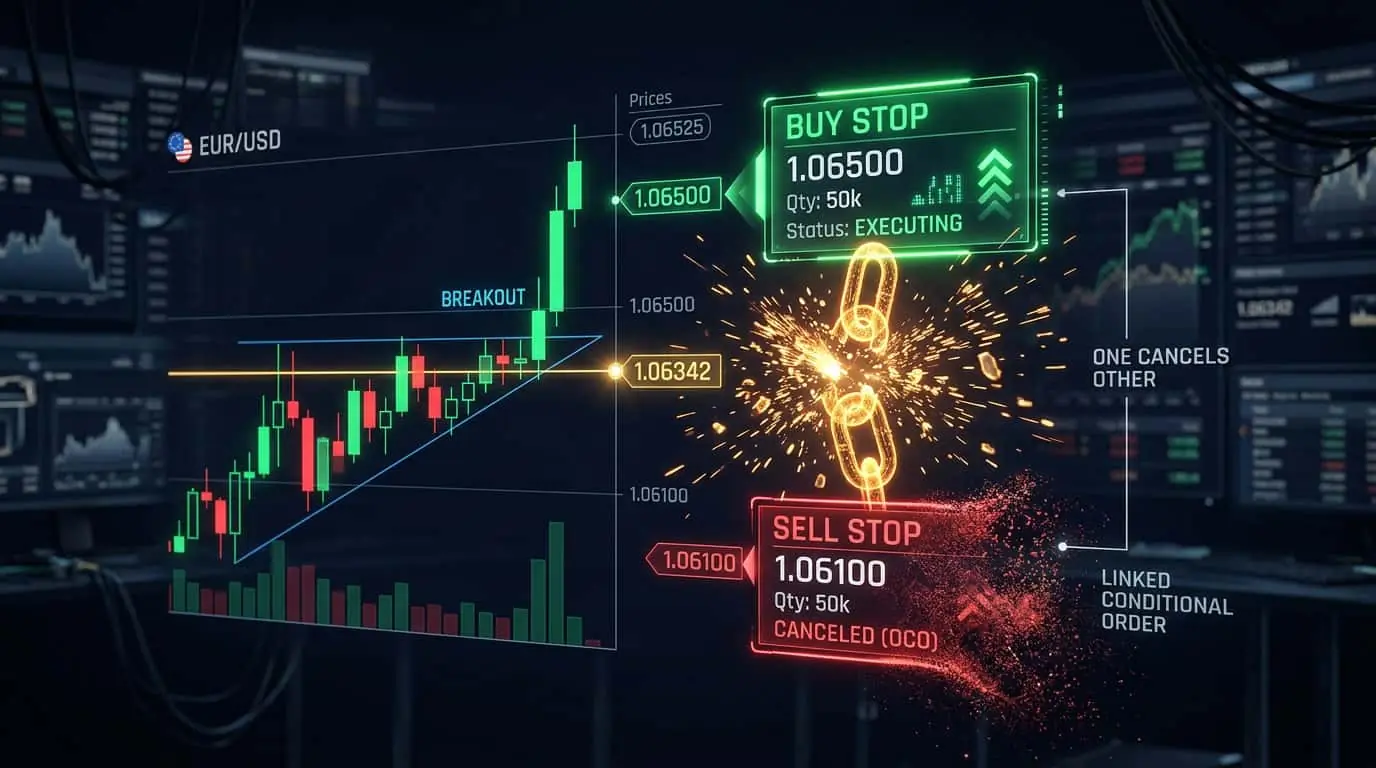
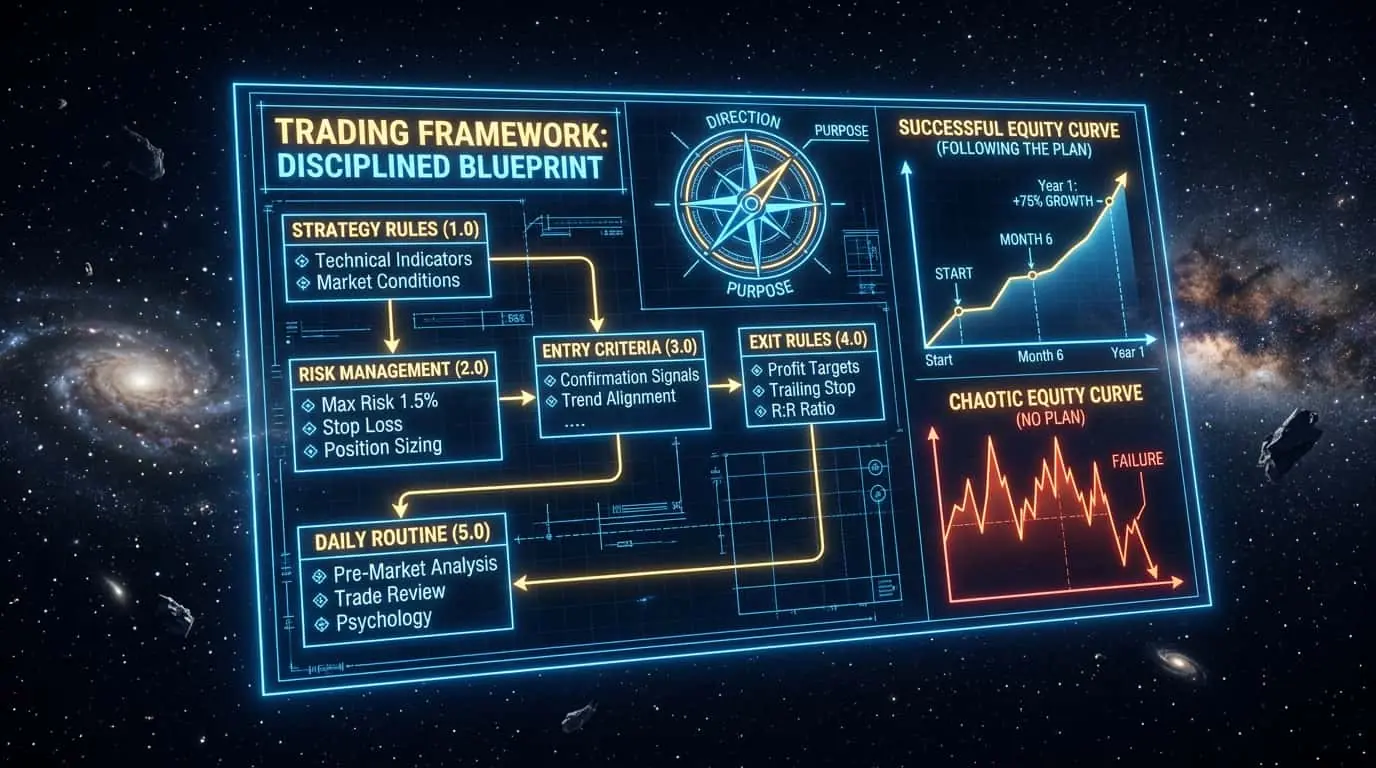
You cannot eliminate loss aversion -- it is hardwired into human neurology. But you can implement strategies that prevent it from influencing your trading decisions. The most effective approach is automation. Use hard stop losses and take-profit orders that execute without your involvement. In NinjaTrader, ATM strategies can be configured to automatically place your stop loss and one or more profit targets when you enter a trade. Once these orders are placed, step away and let the trade work. The elimination of real-time decision-making removes the opportunity for loss aversion to intervene. Adopt an 'R-multiple' framework for thinking about trades. Instead of tracking dollar P&L, track everything in terms of your risk unit. A $500 risk trade that makes $1,200 is a '+2.4R trade,' not a '$1,200 winner.' This reframing reduces the emotional impact of both gains and losses because the numbers are smaller and more abstract. Pre-commitment is a powerful technique borrowed from behavioral economics. Before the market opens, write down your entries, stops, and targets. Commit to executing exactly as planned regardless of what happens. Research by economist Thomas Schelling showed that pre-commitment strategies dramatically improve decision-making in situations where present bias and loss aversion would otherwise cause deviation. Process-based rather than outcome-based self-evaluation is essential. After each trade, score yourself on whether you followed your plan, not on whether the trade made or lost money. A perfect-execution losing trade gets a 10/10; a plan-violating winning trade gets a 3/10. This retrains your brain to associate positive feelings with process adherence rather than with gains alone.
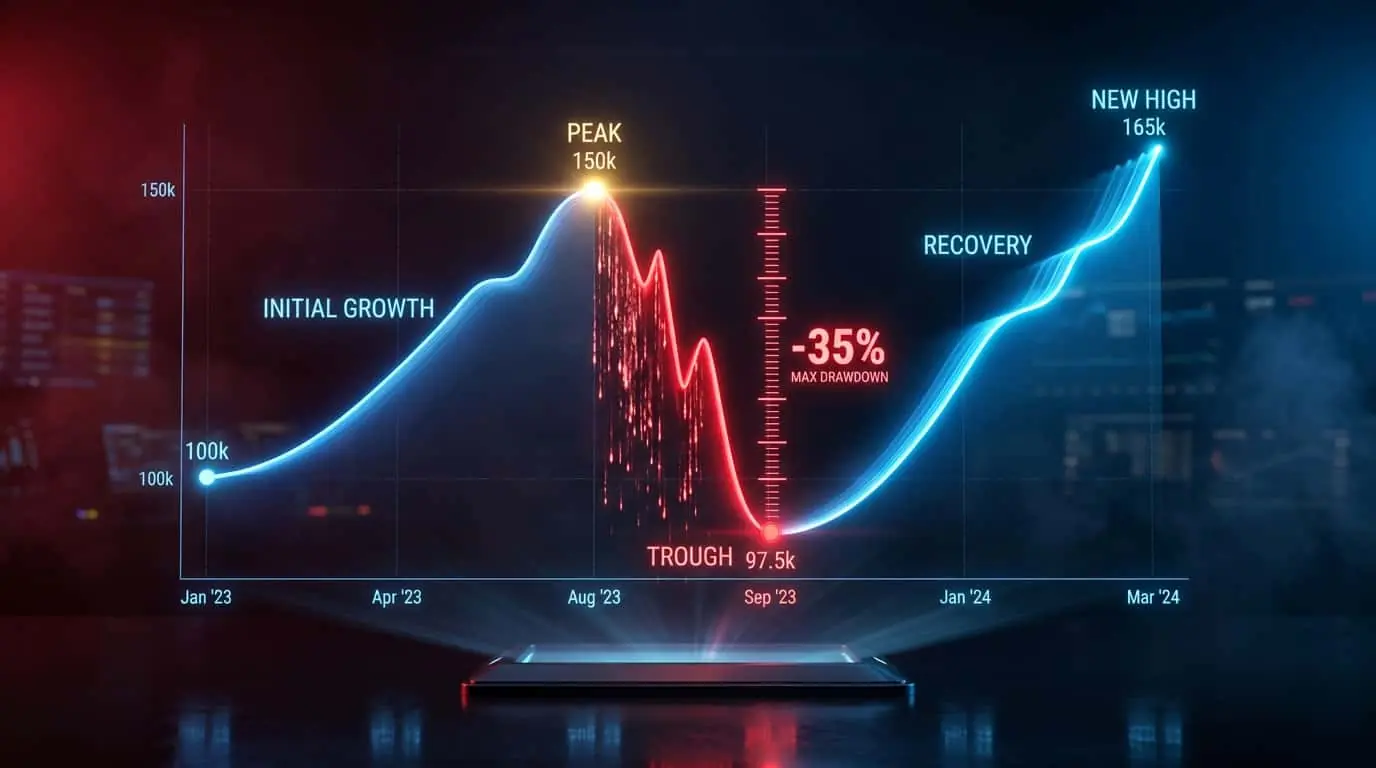
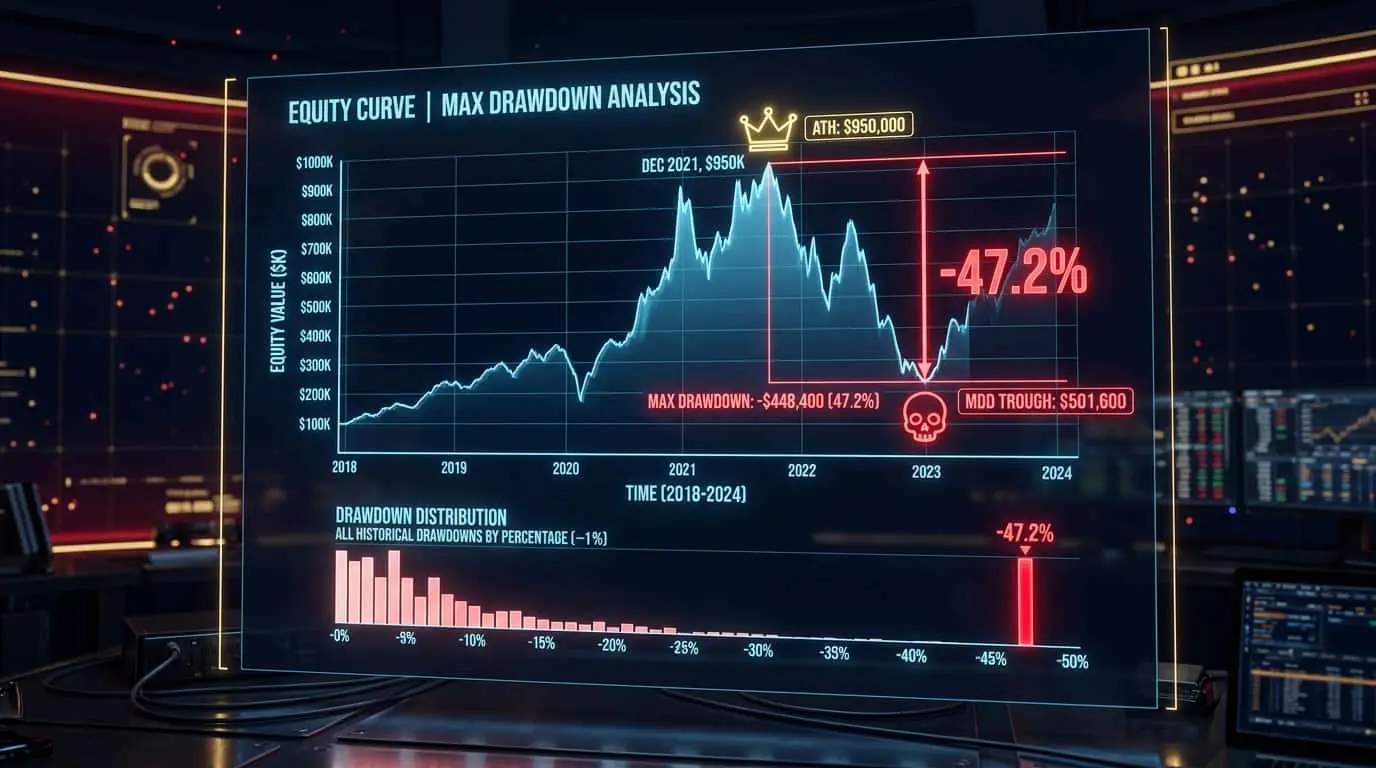
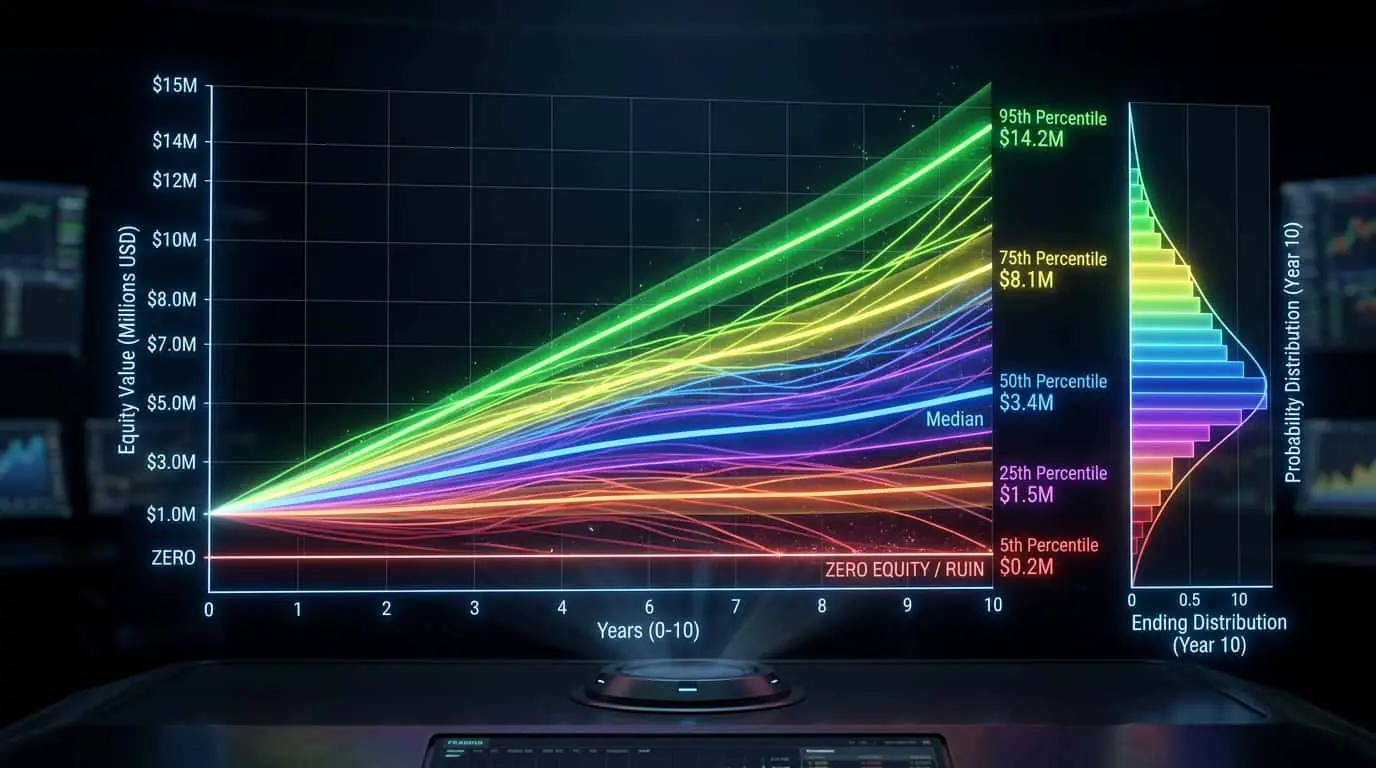
Paradoxically, the bias that makes traders fear losses actually increases their probability of catastrophic loss. Loss aversion causes traders to avoid small, planned losses by holding losing positions, widening stops, or averaging down. Each of these behaviors converts a small, manageable loss into a potentially account-threatening loss. A trader who routinely lets $300 planned losses become $1,500 actual losses is not reducing their losses -- they are converting frequent small losses into infrequent catastrophic losses. The mathematics of risk of ruin show that the variance of your losses matters as much as the average. A strategy with consistent $300 losses has a very different risk-of-ruin profile than one with occasional $1,500 losses, even if the average loss is similar. Large, unpredictable losses increase the probability of hitting a drawdown from which the account cannot recover. The solution requires accepting an uncomfortable truth: planned losses are a cost of doing business, not a failure to be avoided. In the same way that a retailer accepts inventory costs or a restaurant accepts food waste, a trader must accept that a certain percentage of trades will lose money. The goal is to keep those losses small, consistent, and well within the parameters that your risk of ruin calculations show are sustainable. When you frame losses as a predictable business expense rather than a personal setback, loss aversion loses much of its power over your decision-making.
Mistake
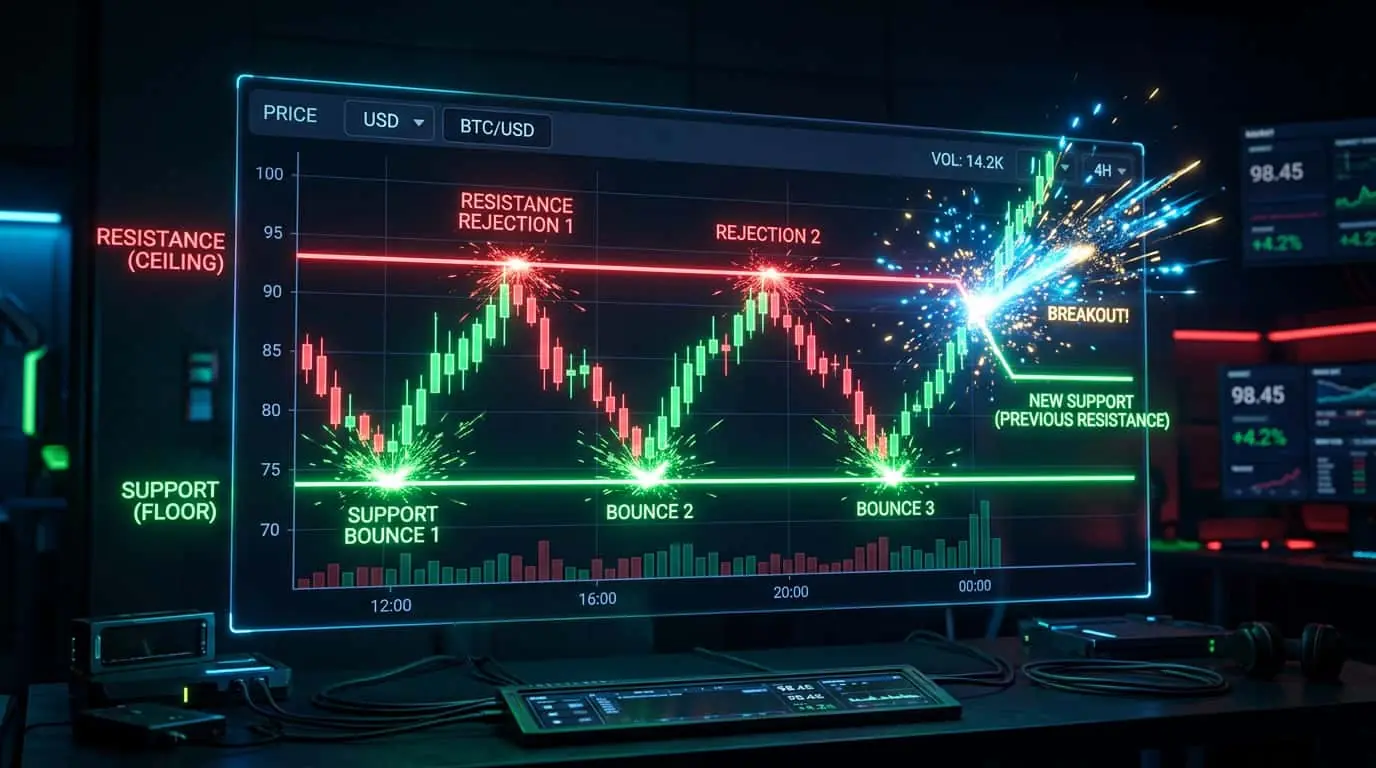
Moving stop losses further away to avoid taking a loss
Correction
This converts small planned losses into large unplanned losses and dramatically increases risk of ruin. Place your stop at the level where your trade thesis is invalidated, not at a level where the loss feels 'acceptable.'
Mistake
Taking profits too quickly on winning trades
Correction
Use automated take-profit orders at your planned target and do not interfere. If your strategy targets 2R, let the trade reach 2R. Train yourself by reviewing closed trades and noting how much additional profit you left on the table.
Mistake
Averaging down on losing positions
Correction
Averaging down is adding risk to a trade that is already proving your thesis wrong. Unless your plan specifically includes scaled entries at predefined levels, adding to a loser is loss aversion disguised as strategy.