TL;DR
A gap is a price discontinuity where an asset opens significantly higher or lower than its previous close, creating a 'gap' on the chart with no trading activity in between. Gaps occur due to overnight news, earnings, economic data, or shifts in sentiment, and they have important implications for support, resistance, and trade direction.
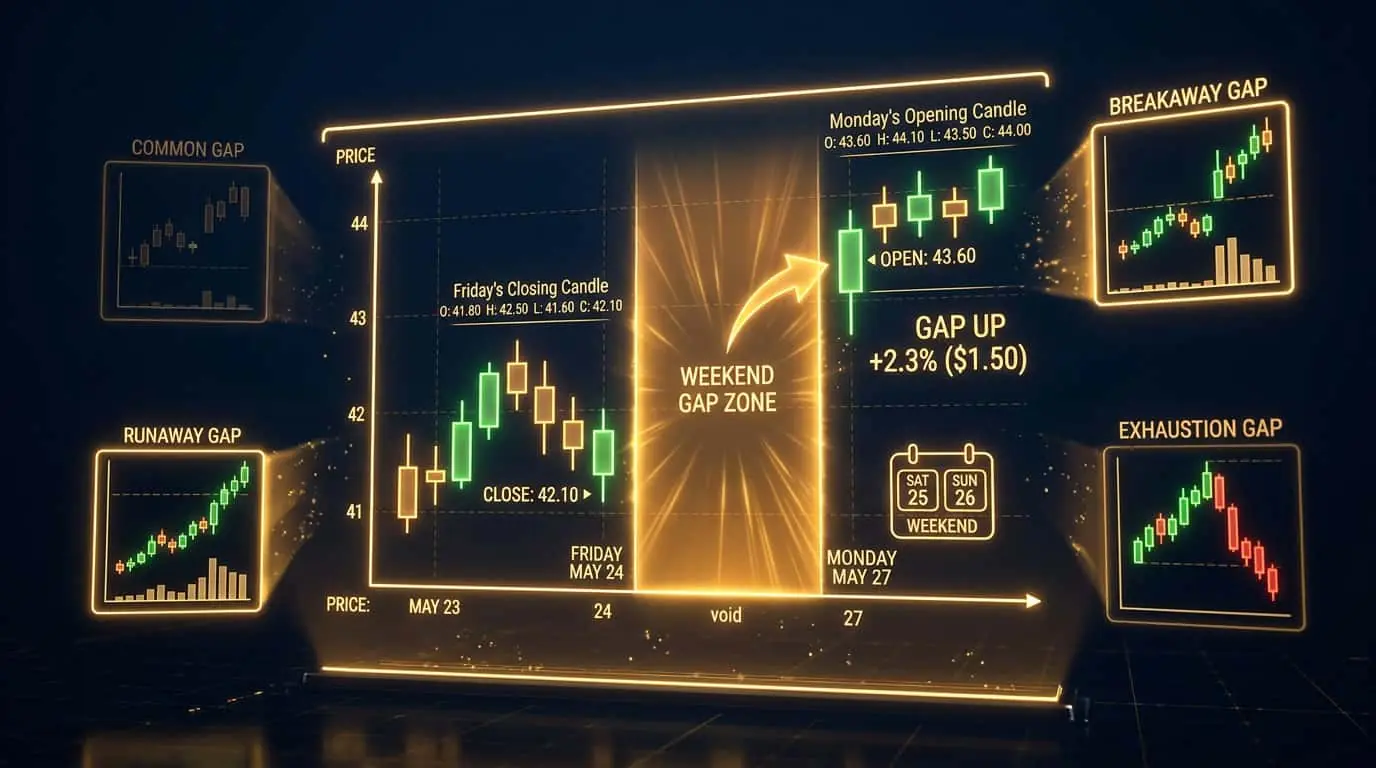
A gap occurs when the price of a security opens at a level significantly different from its previous closing price, creating a visible empty space on the price chart where no trading took place. On a candlestick or bar chart, a gap up appears as an empty space between the previous candle's high and the current candle's low. A gap down appears as an empty space between the previous candle's low and the current candle's high. Gaps happen because the price at which buyers and sellers agree to transact has changed while the market was closed (or between sessions). During this closed period, new information arrives -- earnings reports, economic data, geopolitical events, analyst upgrades/downgrades, pre-market trading activity -- that shifts the equilibrium between supply and demand. When the market reopens, the first trade occurs at a price that reflects this new information, which may be significantly different from where the last trade of the previous session occurred. For futures traders, gaps manifest differently than for stock traders because futures trade nearly 24 hours. The primary gap on futures occurs between Friday's close and Sunday's open (the weekend gap). During the trading week, gaps are visible when comparing the Regular Trading Hours (RTH) close at 4:00 PM EST to the next day's RTH open at 9:30 AM EST, even though the Globex electronic session was trading overnight. These 'RTH gaps' are the most commonly traded gap patterns in futures.
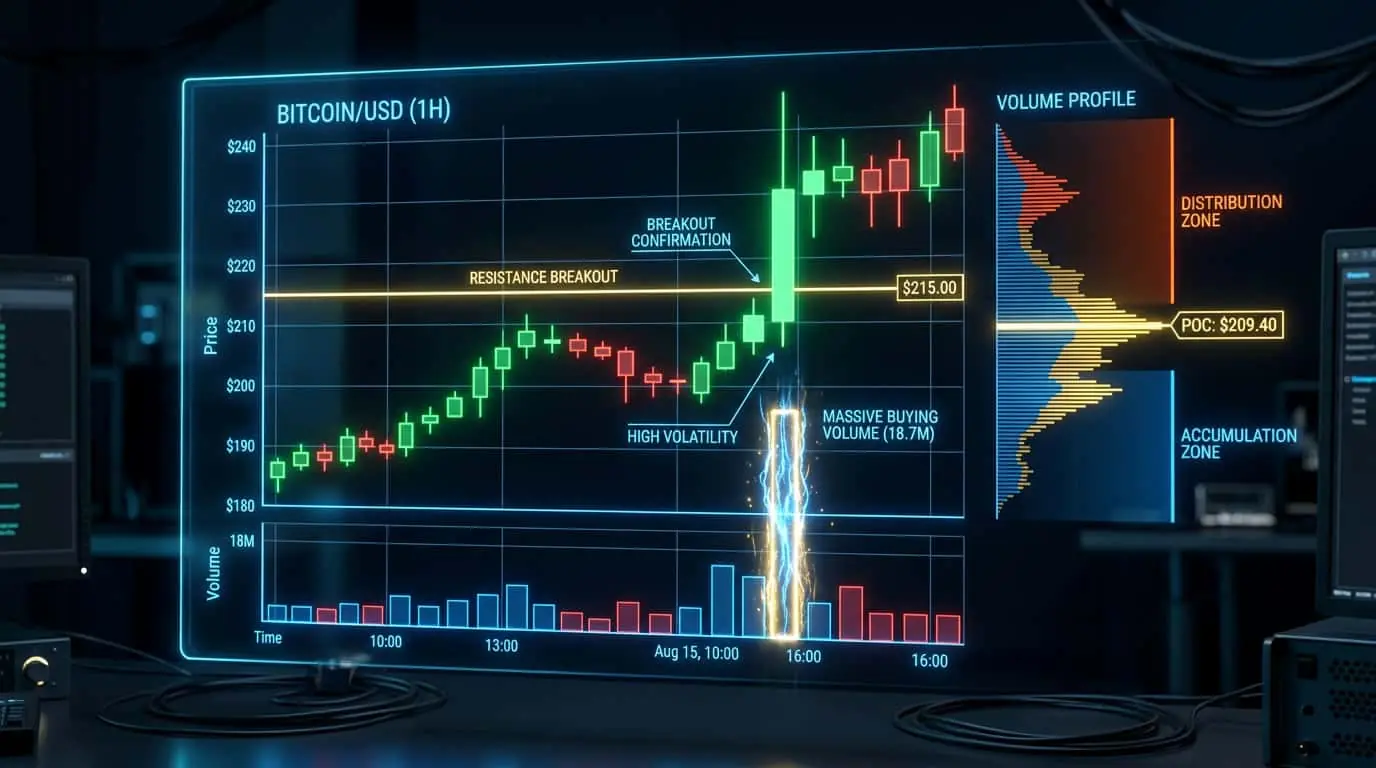
Technical analysts classify gaps into four distinct types based on where they occur within a price trend and what they signal about future price movement. Understanding the type of gap you are observing is essential for determining the appropriate trading response. Common gaps occur in the absence of a significant catalyst, typically in low-volume, range-bound markets. They are caused by minor overnight order flow imbalances rather than fundamental shifts. Common gaps tend to fill quickly -- often within the same session -- because there is no sustained directional pressure behind them. They are the most frequent type and the least significant from a trend perspective. Breakaway gaps occur at the start of a new trend, typically when price breaks out of a consolidation range, base pattern, or significant support/resistance level. They are accompanied by above-average volume, signaling strong institutional participation. Breakaway gaps often do not fill for an extended period because they represent a genuine shift in market structure. Trading against a breakaway gap (fading it) is one of the most common and costly mistakes traders make. Runaway gaps (also called continuation or measuring gaps) occur in the middle of an established trend, signaling that the trend is accelerating and that large participants are still entering. These gaps often appear after the trend has been underway for some time and indicate that buyers (in an uptrend) are so eager they are willing to pay significantly more than the previous close. Like breakaway gaps, runaway gaps tend to remain unfilled for extended periods. Exhaustion gaps occur near the end of a trend, representing a final burst of buying (in an uptrend) or selling (in a downtrend) before the trend reverses. They are characterized by high volume but are quickly followed by a reversal and gap fill. Distinguishing an exhaustion gap from a runaway gap in real-time is one of the most challenging aspects of gap analysis.
| Gap Type | Location in Trend | Volume | Fills Quickly? | Trading Implication |
|---|---|---|---|---|
| Common Gap | In range-bound market | Average or below | Yes, usually same session | Fade toward the fill -- high probability |
| Breakaway Gap | Start of new trend | Above average | No, may not fill for weeks/months | Trade in direction of gap -- do NOT fade |
| Runaway (Continuation) | Middle of established trend | Above average | No, trend continuation expected | Trade in direction of gap on pullbacks |
| Exhaustion Gap | End of extended trend | Very high (climactic) | Yes, often within 1-3 sessions | Watch for reversal confirmation, then fade |
The widely repeated claim that 'all gaps fill eventually' is one of the most dangerous half-truths in trading. While it is statistically true that a high percentage of gaps do eventually fill -- studies vary but commonly cite 70-90% within 90 days -- this statement is misleading for several important reasons. First, 'eventually' can mean months or years. A breakaway gap at the start of a major trend may not fill for years, if ever. The S&P 500 has numerous unfilled gaps from multi-decade bull market breakouts. Waiting for a gap to fill can tie up capital for an indeterminate period or, worse, result in holding a losing position as the market trends away from you. Second, the gap-fill statistic does not account for the drawdown endured before the fill occurs. If a stock gaps up 5%, the gap-fill trade (shorting the stock) might work eventually, but the stock could rally another 20% before pulling back to fill the gap. The theoretical eventual gap fill does not help if your account is destroyed by the drawdown. Third, and most critically, not all gaps are equal. Common gaps fill at very high rates (often 80%+ within a few sessions) and form the basis of profitable gap-fill strategies. Breakaway and runaway gaps fill at much lower rates and over much longer timeframes. Treating all gaps as equally likely to fill is a recipe for consistent losses when you fade breakaway gaps that never fill. The practical approach is to classify the gap type before deciding on a strategy. Fade common gaps with confidence. Respect breakaway and runaway gaps by trading in their direction. Exercise extreme caution with exhaustion gaps, waiting for reversal confirmation before attempting to fade them.
Pro Tip
For ES and NQ futures, track the gap-fill rate for RTH opening gaps. Historically, approximately 70% of RTH gaps on the ES fill within the same session, but this rate varies significantly by gap size. Gaps under 10 points fill at a higher rate than gaps above 20 points, which are more likely to be breakaway or continuation gaps.
Gap trading is one of the most popular strategies among futures day traders because the RTH opening gap creates a clear, measurable setup at the start of every session. The basic gap-fill strategy involves identifying the gap direction and size at the RTH open (9:30 AM EST), then looking for price to fill the gap (return to the previous RTH close level) during the session. For a gap-fill long, the market opens below the previous close. The trader waits for a bullish signal (such as a reversal candle at support, or the first 15-minute bar closing positive), then goes long with a target at the previous close (the gap fill level) and a stop below the session low. For a gap-fill short, the market opens above the previous close, and the trader looks for bearish confirmation before shorting toward the fill. The key refinement is filtering gaps by size and type. Small gaps (under 0.5% of the instrument price, or roughly 5-10 points on ES) are typically common gaps with high fill probabilities. These are the bread-and-butter gap-fill setups. Large gaps (above 1% or 20+ points on ES) are more likely to be breakaway or continuation gaps, especially if they occur with a catalyst (economic data, FOMC, earnings season). These should not be faded -- instead, trade in the gap direction on the first pullback. The 'gap and go' strategy trades in the direction of the gap, based on the premise that a large gap with strong volume signals institutional commitment to the direction. Wait for the first pullback after the open (typically 15-30 minutes in), confirm that the gap level holds as support (for gap-up) or resistance (for gap-down), and enter in the gap direction with a stop beyond the gap level.
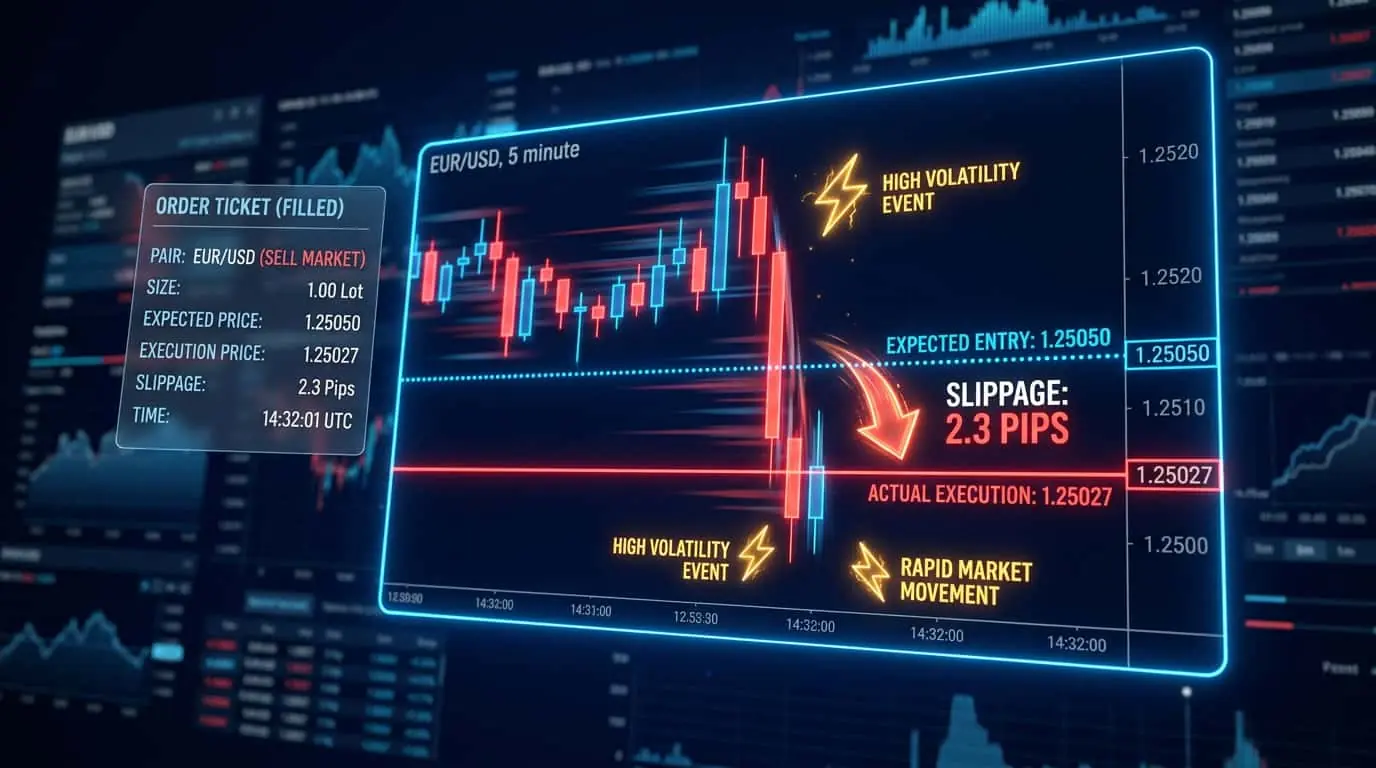
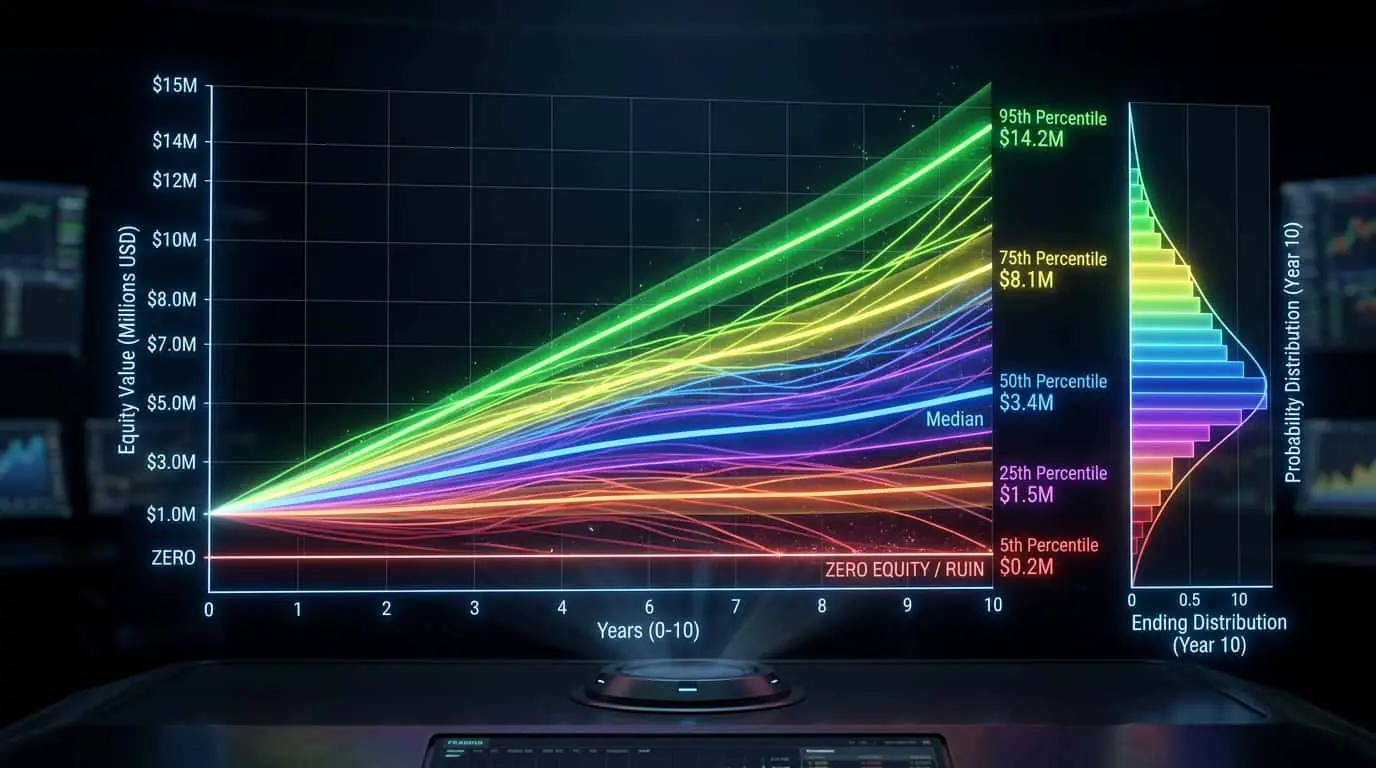
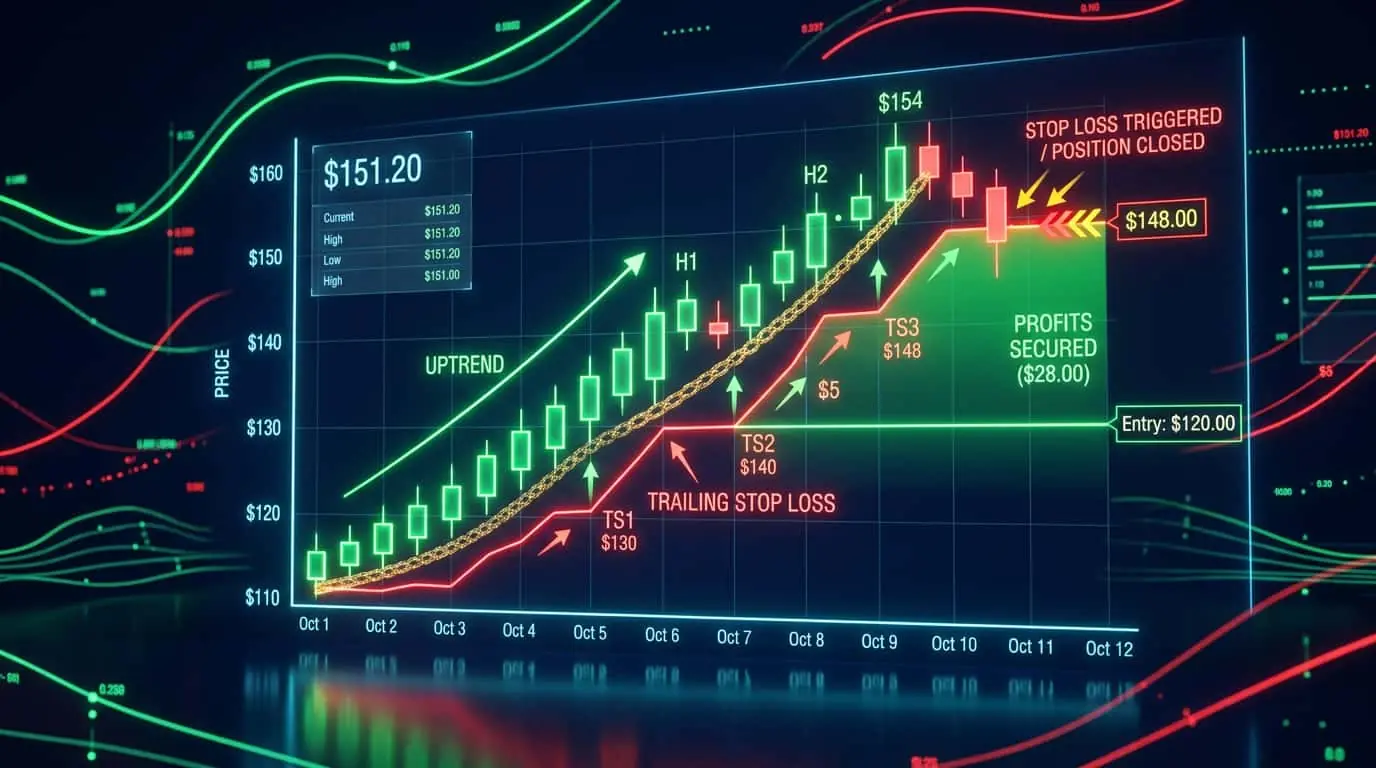
While gaps create trading opportunities, they also represent one of the most significant risks in trading: the risk of prices moving sharply against your position when you have no ability to exit. This gap risk primarily affects positions held overnight or over the weekend. If you hold an ES long position into the close on Friday and negative news breaks over the weekend, the market can open significantly lower on Sunday evening. Your stop loss, which was placed at a specific price level, will not fill at that level -- it will fill at the first available price after the gap, potentially much worse than planned. This is called 'gapping through your stop' and it means your actual loss can far exceed your planned maximum loss. For futures traders, weekend gap risk is the most acute form. Major geopolitical events, natural disasters, unexpected policy announcements, and earnings reports can all occur when the market is closed. Managing gap risk involves several practical steps. First, reduce position size or close positions entirely before the weekend if you are a day trader or short-term swing trader. The potential for a large gap is not compensated by two days of time decay or carry. Second, use options for overnight hedging. A protective put (for long positions) or call (for short positions) provides a defined maximum loss regardless of how large the gap is. Third, understand the gap profile of your specific instrument. Currencies gap primarily on weekends. Stocks gap daily (after-hours and pre-market trading creates regular overnight gaps). Futures gap primarily on weekends but can gap on RTH opens relative to the Globex session. Fourth, factor gap risk into your risk of ruin calculations. If your model assumes maximum per-trade losses of 1%, but a weekend gap can produce a 3-5% loss, your risk of ruin is significantly higher than your model suggests. Conservative position sizing is the best defense against gap risk.
Pro Tip
If you hold futures positions over the weekend, reduce your position size to 50% or less of your normal intraday size. This ensures that even a worst-case weekend gap (2-3% on equity indices) does not exceed your maximum acceptable loss. Many professional day traders go flat before the close on Friday.
Mistake
Fading every gap assuming it will fill
Correction
Classify the gap type first. Only fade common gaps in range-bound markets. Breakaway and runaway gaps should be traded in the gap direction, not against it. Fading a breakaway gap is a high-probability losing trade.
Mistake
Ignoring gap risk when holding positions overnight or over weekends
Correction
Factor gap risk into your position sizing. A stop loss cannot protect you from a gap that opens beyond your stop level. Reduce size for overnight holds and significantly reduce or eliminate positions before weekend closes.
Mistake
Trading the gap open immediately without waiting for confirmation
Correction
The first 15-30 minutes after a gap open can be chaotic as the market digests the new price level. Wait for the initial auction process to complete and for a clear signal (reversal candle for gap-fill, pullback and hold for gap-and-go) before committing capital.