TL;DR
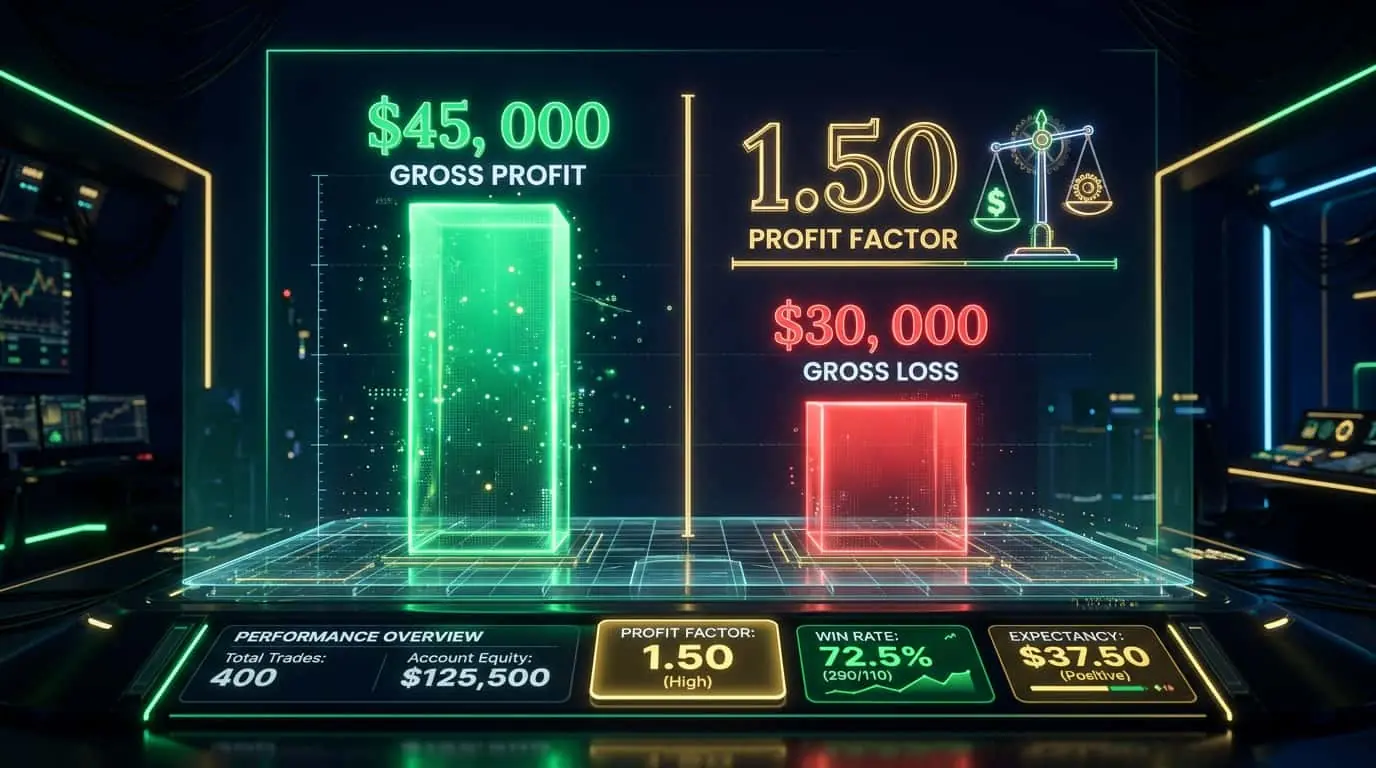
Expectancy is the average amount you expect to win or lose per trade over a large sample. It combines win rate and risk-reward ratio into a single number. Positive expectancy means the strategy makes money over time; negative expectancy means it loses money. It is the most important number in trading.
Table of Contents
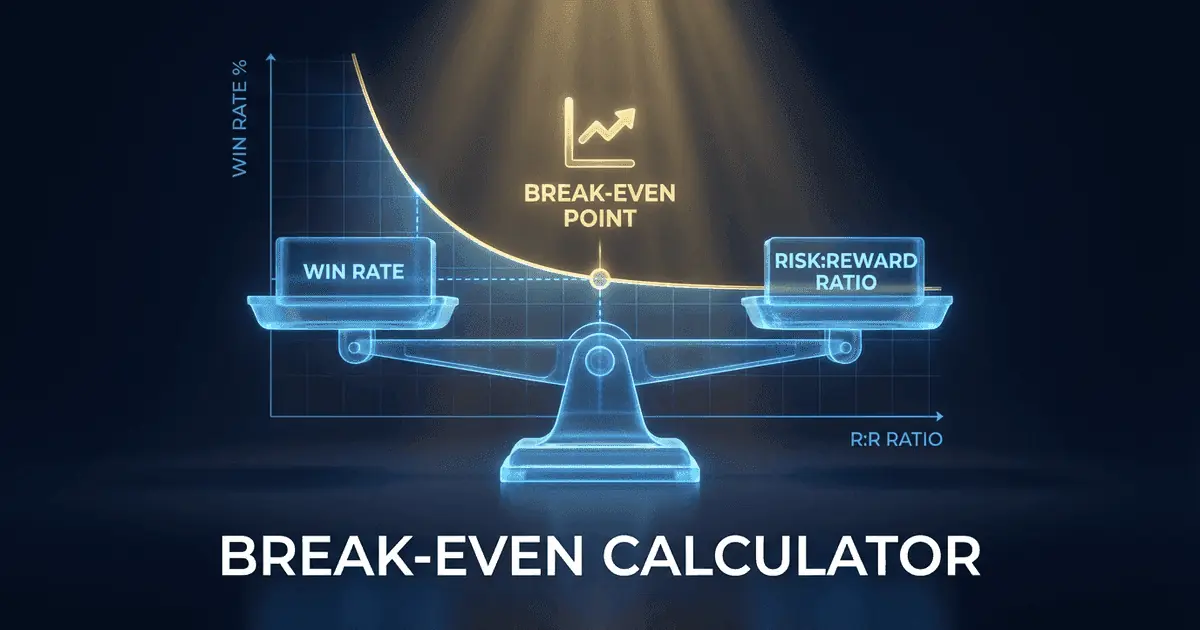
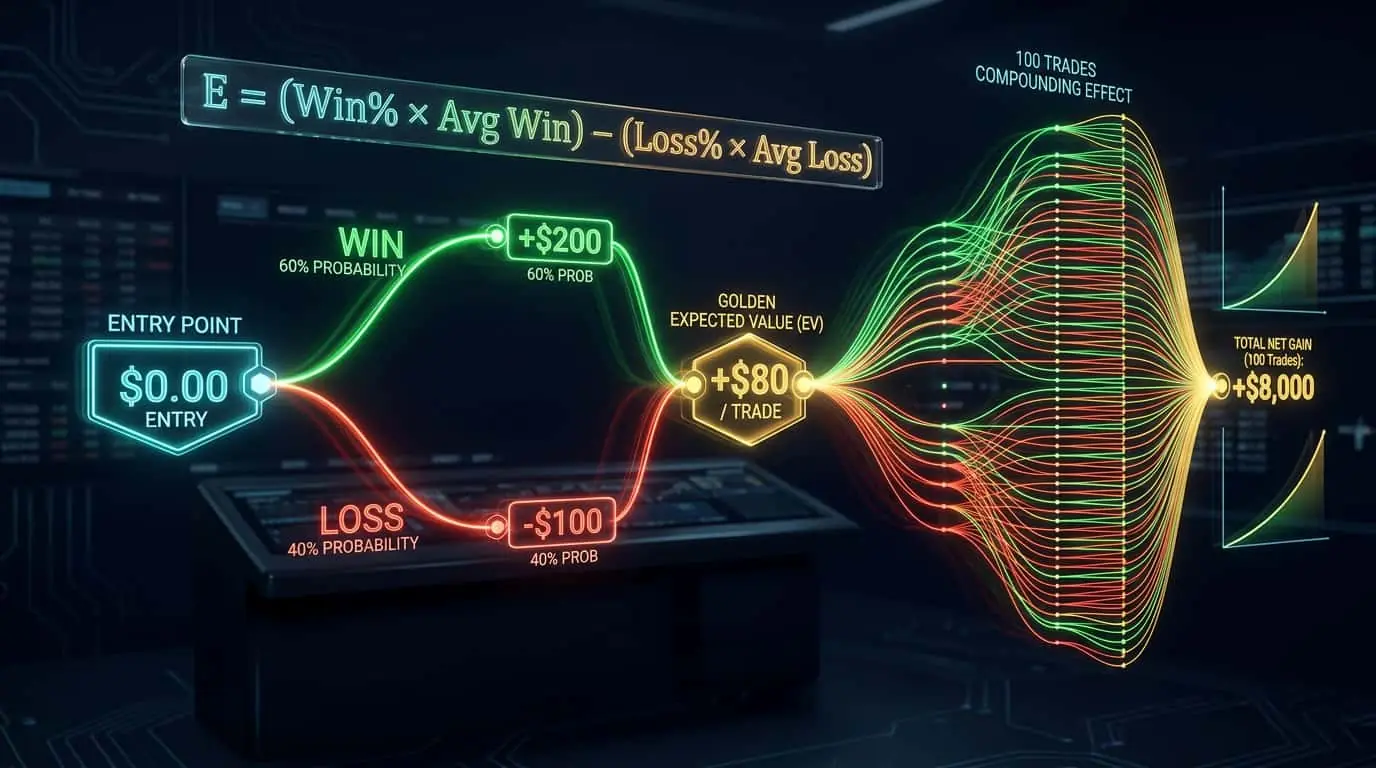
Expectancy is the average amount a trader expects to win or lose per trade over a statistically significant number of trades. It is often expressed in R-multiples (units of risk) or in dollar terms. Expectancy combines win rate and risk-reward ratio into a single, comprehensive measure of strategy profitability. A positive expectancy means the strategy will make money over time if executed consistently. A negative expectancy means the strategy will lose money over time regardless of how many trades are taken. Expectancy is arguably the single most important number in trading because it determines whether a strategy has a mathematical edge. No amount of discipline, psychology, or risk management can make a negative-expectancy strategy profitable in the long run. Conversely, a positive-expectancy strategy will make money over time as long as the trader executes consistently and manages risk properly.
Expectancy can be calculated in two ways: using R-multiples or using dollar amounts. The R-multiple method is preferred because it normalizes results across different position sizes and instruments. In R-multiples: Expectancy = (Win Rate x Average Win in R) - (Loss Rate x Average Loss in R). If your average winner is 2R and your average loser is 1R (consistent stop losses), with a 45% win rate: Expectancy = (0.45 x 2) - (0.55 x 1) = 0.90 - 0.55 = 0.35R. This means for every trade you take, you expect to earn 0.35 times your risk amount on average. In dollar terms: Expectancy = (Win Rate x Average Win $) - (Loss Rate x Average Loss $). With a 45% win rate, $400 average win, and $200 average loss: Expectancy = (0.45 x $400) - (0.55 x $200) = $180 - $110 = $70 per trade. Over 200 trades, expected profit is 200 x $70 = $14,000.
Expectancy (R) = (Win Rate x Avg Win in R) - (Loss Rate x Avg Loss in R)Win Rate — Percentage of winning trades as a decimal
Avg Win in R — Average winning trade expressed as multiples of risk (e.g., 2R)
Loss Rate — 1 - Win Rate
Avg Loss in R — Average losing trade in R (typically 1R with consistent stops)
Pro Tip
Use the R-multiple method rather than dollar amounts. R-multiples normalize results across different position sizes and markets, making it easier to compare strategies and track performance over time.
Expectancy alone does not determine total profit; it must be multiplied by the number of trades (opportunity frequency). Total Expected Profit = Expectancy x Number of Trades. A strategy with 0.50R expectancy that generates 10 trades per month produces 5R per month. A strategy with 0.15R expectancy that generates 100 trades per month produces 15R per month, which is three times more profitable despite having lower expectancy per trade. This is why high-frequency strategies can be extremely profitable even with small edges: the sheer number of trades multiplied by a small positive expectancy produces significant returns. Conversely, a strategy with excellent expectancy but very few trade signals may underperform a weaker strategy with more opportunities. The optimal strategy maximizes the product of expectancy and trade frequency, not either variable in isolation.
| Strategy | Expectancy per Trade | Trades per Month | Monthly Expected Profit |
|---|---|---|---|
| Swing trading | 0.50R | 10 | 5.0R |
| Day trading | 0.25R | 40 | 10.0R |
| Scalping | 0.10R | 200 | 20.0R |
| Position trading | 1.00R | 3 | 3.0R |
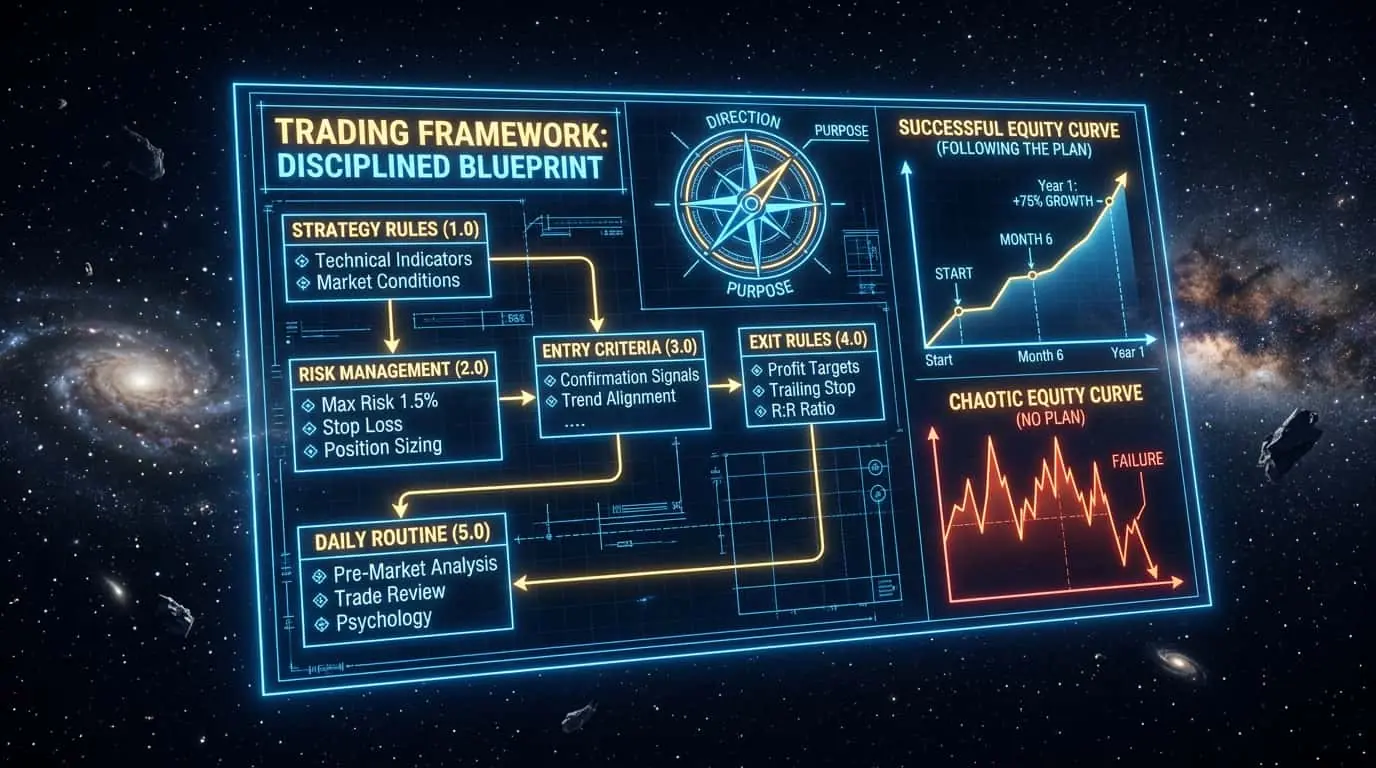
Creating a strategy with positive expectancy requires either a high win rate, a favorable risk-reward ratio, or a combination of both. There are only two ways to increase expectancy: increase the average win size (by improving trade selection, using better exit strategies, or holding winners longer) or increase the win rate (by adding confluence filters, trading with the trend, or improving timing). However, these two factors often trade off against each other: actions that increase win rate (tighter targets) tend to decrease average win size, and actions that increase average win size (wider targets) tend to decrease win rate. The goal is to find the combination that maximizes the product. Maintaining positive expectancy requires ongoing monitoring. Market conditions change, and a strategy that had positive expectancy in trending markets may have negative expectancy in ranging markets. Track your rolling expectancy (over the last 50-100 trades) to detect when your edge is degrading.
Pro Tip
Calculate your expectancy after every 50 trades using a rolling window. If it drops below 0.10R for two consecutive windows, reduce position size until the edge recovers. If it turns negative for three consecutive windows, stop trading the strategy and reassess.
The most common misconception about expectancy is that it guarantees a specific profit on the next trade. It does not. Expectancy is a long-run average; any individual trade can be a winner or a loser. A strategy with 0.35R expectancy might produce -1R on the next 10 trades in a row before the edge manifests. This is normal statistical variance, not evidence that the strategy is broken. Another misconception is that higher expectancy automatically means a better strategy. As discussed, a 0.10R expectancy strategy that generates 200 trades per month outperforms a 1.0R strategy with only 3 trades per month. Total profit, not per-trade expectancy, is what matters. A third misconception is that expectancy is stable. In reality, expectancy fluctuates with market conditions. A strategy might have 0.40R expectancy in trending markets and -0.10R in ranging markets. Understanding when your strategy has positive expectancy and when it does not is the key to long-term profitability.
To make expectancy truly actionable, let us walk through detailed calculations for different trading scenarios. Scenario 1: A forex day trader over the last 200 trades has 92 winners (46% win rate) with an average win of $320 and 108 losers (54%) with an average loss of $180. Dollar expectancy = (0.46 x $320) - (0.54 x $180) = $147.20 - $97.20 = $50.00 per trade. If the trader's average risk per trade is $200, the R-multiple expectancy is $50 / $200 = 0.25R. With 200 trades over 6 months (approximately 33 trades per month), the expected monthly profit is 33 x $50 = $1,650, or 33 x 0.25R = 8.25R per month. On a $20,000 account risking 1% ($200) per trade, that is $1,650 per month or roughly 8.25% monthly return. Scenario 2: A futures swing trader over 80 trades has 34 winners (42.5%) averaging $875 and 46 losers (57.5%) averaging $350. Dollar expectancy = (0.425 x $875) - (0.575 x $350) = $371.88 - $201.25 = $170.63 per trade. With average risk of $400, the R-expectancy is $170.63 / $400 = 0.43R. At 13 trades per month, the expected monthly profit is 13 x $170.63 = $2,218 or 5.59R. On a $50,000 account risking 0.8% ($400) per trade, that is approximately 4.4% monthly return. Scenario 3: A scalper over 500 trades has 325 winners (65%) averaging $45 and 175 losers (35%) averaging $60. Dollar expectancy = (0.65 x $45) - (0.35 x $60) = $29.25 - $21.00 = $8.25 per trade. Despite the small per-trade expectancy, at 100 trades per month, expected monthly profit is 100 x $8.25 = $825. The key insight from these examples is that expectancy must be evaluated alongside trade frequency and account size to determine whether a strategy is worth trading. Scenario 3 has the lowest per-trade expectancy but could be the most profitable in absolute terms if the trader scales up to 200+ trades per month.
| Scenario | Win Rate | Avg Win | Avg Loss | Expectancy ($) | Expectancy (R) | Trades/Mo | Monthly Profit |
|---|---|---|---|---|---|---|---|
| Forex Day Trader | 46% | $320 | $180 | $50.00 | 0.25R | 33 | $1,650 |
| Futures Swing | 42.5% | $875 | $350 | $170.63 | 0.43R | 13 | $2,218 |
| Scalper | 65% | $45 | $60 | $8.25 | 0.14R | 100 | $825 |
| Trend Follower | 28% | $2,400 | $500 | $312.00 | 0.62R | 5 | $1,560 |
One of the most critical aspects of expectancy that experienced traders understand is that it is not static — it changes over time as market conditions evolve. This phenomenon, known as expectancy decay, occurs when a strategy's edge erodes due to changes in market structure, increased competition, or shifts in volatility regimes. A strategy that showed 0.40R expectancy during a high-volatility trending market might produce only 0.10R during low-volatility range-bound conditions, and could even turn negative (-0.15R) during a regime that specifically counters the strategy's logic. Detecting expectancy decay early is essential for capital preservation. The best method is to track rolling expectancy over a moving window of 50-100 trades and compare it to the long-term average. If the rolling expectancy drops below 50% of the long-term average for more than 30-50 trades, the strategy is likely experiencing a regime change that reduces its effectiveness. At this point, you should reduce position sizes (e.g., cut to 50% of normal) to preserve capital while maintaining exposure in case the favorable regime returns. If the rolling expectancy turns negative for more than 50 trades, consider pausing the strategy entirely and paper trading it until the regime shifts back. Many professional quant firms maintain a portfolio of strategies specifically because individual strategies have expectancy cycles. By trading 3-5 uncorrelated strategies simultaneously, the portfolio maintains positive expectancy even when individual strategies are going through unfavorable periods. This diversification of expectancy sources is one of the key advantages institutional traders have over retail traders who typically rely on a single strategy. For retail traders, the practical takeaway is to always have a backup strategy that performs well in conditions where your primary strategy struggles. A trend follower should have a mean-reversion strategy on standby, and vice versa.
Pro Tip
Plot your monthly expectancy on a chart alongside a market regime indicator (such as ADX for trend strength or VIX for volatility). You will likely discover that your expectancy correlates with specific regimes. Use this knowledge to anticipate expectancy shifts before they appear in your trade results.
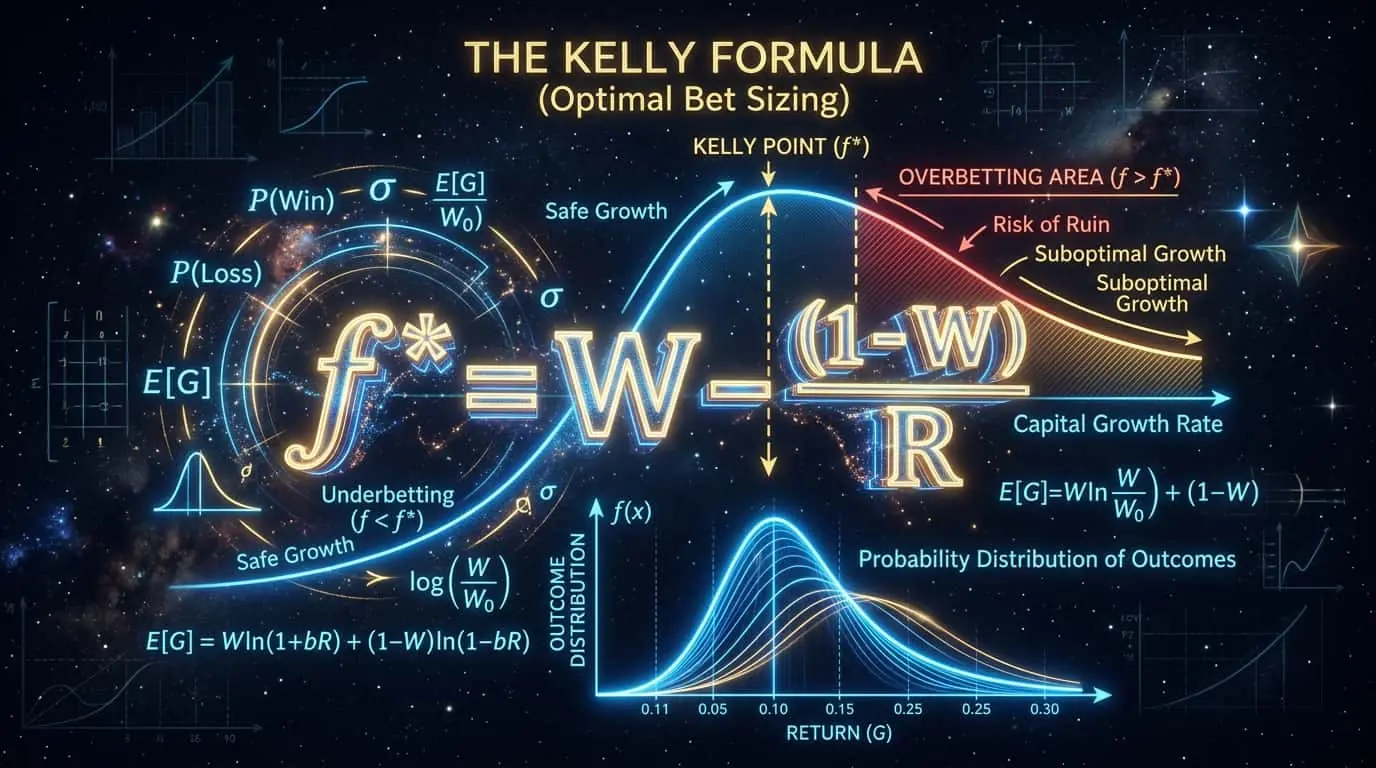
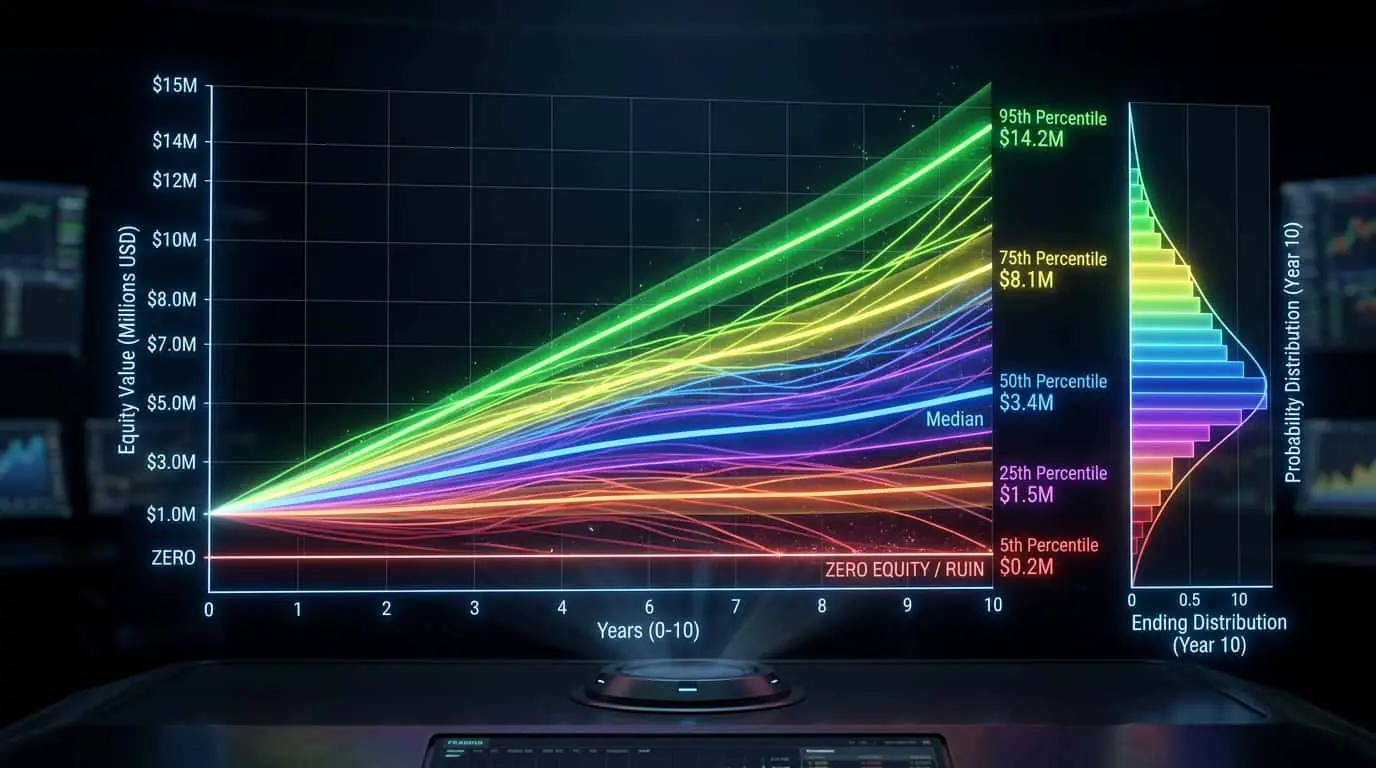
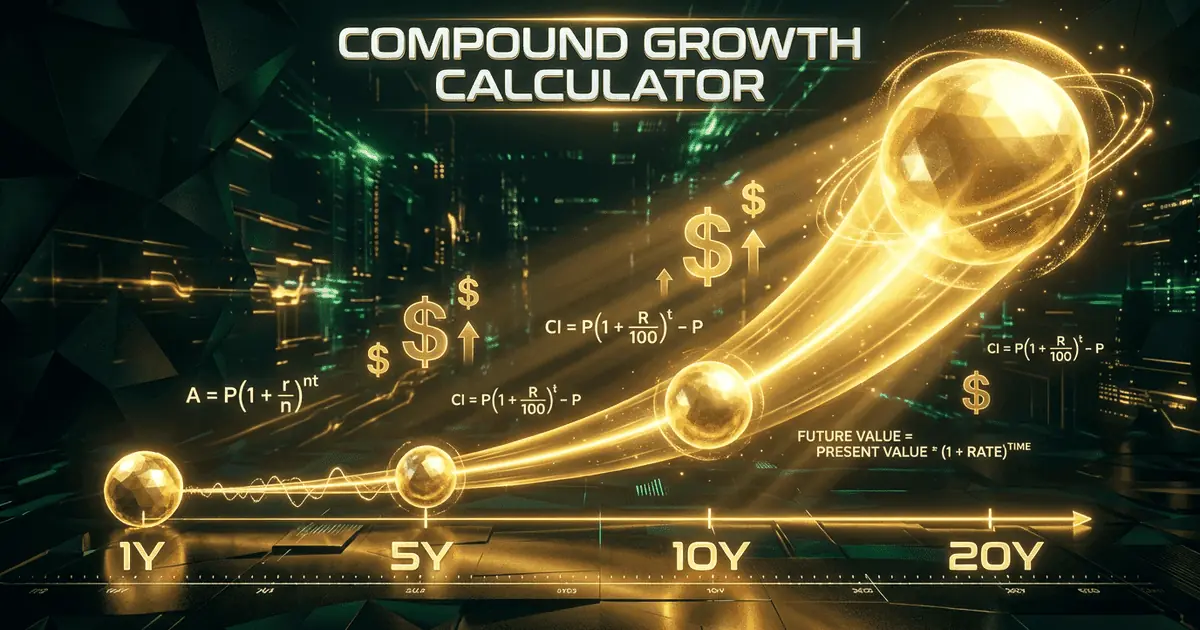
Understanding how expectancy translates into long-term account growth requires appreciating the power of compounding. When you risk a fixed percentage of your account on each trade (rather than a fixed dollar amount), your position sizes grow as your account grows, creating exponential rather than linear growth. Consider a strategy with 0.30R expectancy, 40 trades per month, and 1% risk per trade. The expected monthly R-gain is 40 x 0.30 = 12R. With 1% risk, each R represents 1% of the current account value. The monthly expected return is approximately 12% (slightly higher due to compounding within the month). Starting with $10,000: after month 1, the account grows to approximately $11,200. After month 2 (now risking 1% of $11,200 = $112 per trade), the account grows to approximately $12,544. After 12 months of consistent 12% monthly growth, the $10,000 account reaches approximately $39,000. After 24 months, it reaches approximately $152,000. This exponential growth only works if the expectancy remains positive and the trader maintains consistent position sizing discipline. However, this idealized projection assumes constant expectancy, which we know fluctuates in practice. A more realistic model accounts for expectancy variation by using Monte Carlo simulation to generate a range of outcomes. The median outcome represents the most likely growth path, while the 5th and 95th percentile outcomes show the range of possibilities. For the example above, Monte Carlo analysis might show the median 12-month outcome as $35,000, with a 5th percentile of $18,000 (unfavorable trade sequence) and a 95th percentile of $65,000 (favorable sequence). The critical requirement for compounding to work is survival: your position sizing must be conservative enough to survive the inevitable drawdowns without depleting the account. The Kelly Criterion provides a mathematical framework for optimal position sizing given your expectancy, but most professionals recommend using half-Kelly (risking half the Kelly-optimal amount) to reduce the variance and probability of deep drawdowns while still capturing most of the compounding benefit.
Expected Monthly Return = 1 - (1 - Risk% x Expectancy in R)^Trades per MonthRisk% — Percentage of account risked per trade (e.g., 0.01 for 1%)
Expectancy in R — Average profit per trade expressed as a multiple of risk
Trades per Month — Number of trades taken per month
| Starting Capital | Expectancy | Trades/Month | Risk % | 12-Month Projection | 24-Month Projection |
|---|---|---|---|---|---|
| $10,000 | 0.30R | 40 | 1% | ~$39,000 | ~$152,000 |
| $10,000 | 0.20R | 30 | 1% | ~$18,200 | ~$33,000 |
| $25,000 | 0.25R | 20 | 1.5% | ~$62,000 | ~$154,000 |
| $50,000 | 0.15R | 60 | 0.5% | ~$78,000 | ~$122,000 |
| $5,000 | 0.40R | 25 | 2% | ~$36,000 | ~$260,000 |
Pro Tip
Use half-Kelly position sizing for optimal risk-adjusted compounding. If your expectancy suggests risking 2% per trade (full Kelly), risk 1% instead. You capture approximately 75% of the growth rate with half the variance, dramatically reducing the probability of catastrophic drawdowns.
Mistake
Calculating expectancy without including trading costs
Correction
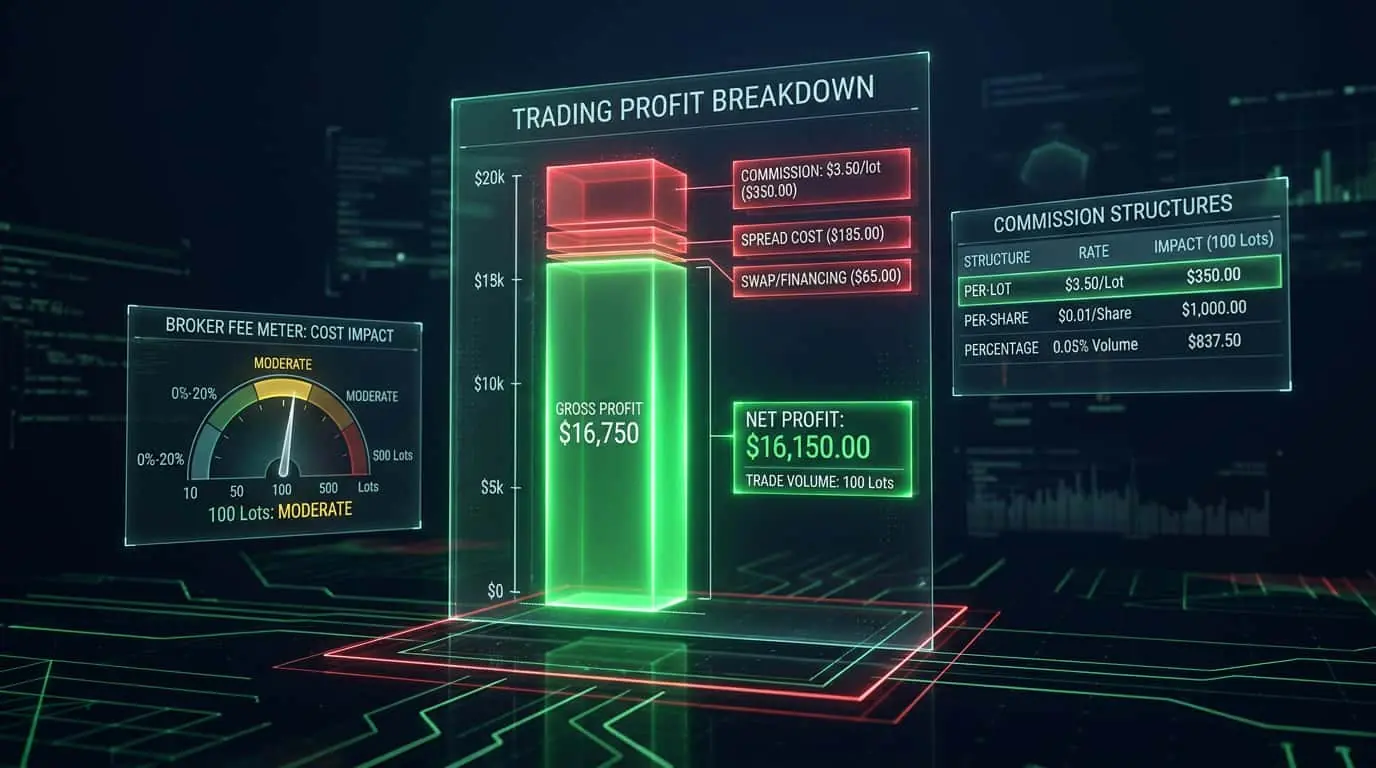
Always subtract commissions, spread costs, and estimated slippage from wins and add them to losses before calculating expectancy. A 0.30R expectancy before costs might be only 0.10R after costs.
Mistake
Assuming high expectancy per trade is always better
Correction
Total profit = expectancy x trade frequency. A strategy with 0.15R expectancy and 100 monthly trades produces 15R, outperforming a 0.80R strategy with only 5 monthly trades (4R). Evaluate both expectancy and opportunity frequency.
Mistake
Treating expectancy as a guarantee for the next trade
Correction
Expectancy is a long-run average, not a prediction for any individual trade. Any single trade can be a winner or loser. The edge only manifests over a large sample (100+ trades). This is why consistent execution is essential.